

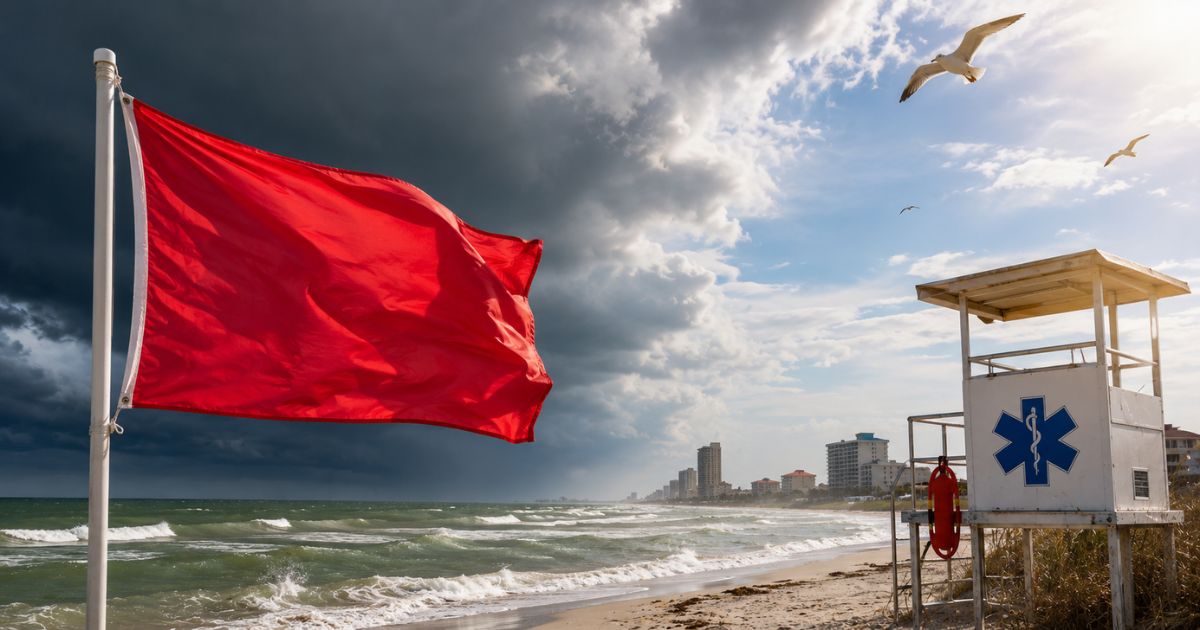
The Gulf Coast is one of America’s most beautiful and economically vibrant regions but it comes with real health risks that shift with the seasons. The Gulf Coast faces seasonal health risks year-round: Vibrio bacteria spikes in warm months, red tide blooms in summer, hurricane season brings waterborne illness, and heat injuries threaten anglers and beachgoers. If you live on or visit the Gulf especially anyone planning a Gulf fishing trip with the family understanding what’s happening right now and what to watch for in the months ahead could literally save your life.
This guide breaks down the current health alerts, seasonal patterns, and action steps you need to stay safe while enjoying everything the Gulf has to offer.
Breaking News: Vibrio Vulnificus Outbreak Intensifying in 2026
What’s happening right now is serious. Vibrio vulnificus, a naturally occurring bacterium in warm, brackish coastal waters, is surging along the Gulf Coast in summer 2026. As of August 2026, Louisiana has confirmed 9 cases with 5 deaths, while Florida has reported 14 cases and 2 deaths. That’s a spike: during the same period over the previous decade, Louisiana reported an average of 7 cases and 1 death annually.
Why is this happening? Vibrio bacteria thrive in seawater and brackish water (the mix of fresh and salt water in estuaries and lagoons). Most infections are reported from May to October, and most happen in states along the Gulf Coast. Doctors say the Gulf is an ideal environment with the right amounts of salt and heat to let this organism proliferate. Warm water + high humidity + coastal activity = peak risk season.
Who Is Most at Risk?
Not everyone who touches Gulf water will get sick. But some groups face dramatically higher risk:
- People with chronic liver disease if you have cirrhosis, hepatitis, or liver damage, your risk of severe Vibrio illness jumps exponentially
- Immunocompromised individuals cancer patients, organ transplant recipients, people on immunosuppressants, anyone with HIV
- Older adults age 65+ faces heightened susceptibility
- Diabetics blood sugar levels affect immune response
- Recent surgery, piercings, or tattoos any break in skin = potential entry point
- People taking acid-reducing medications stomach acid is a natural barrier to infection
Fishermen, oyster harvesters, and anyone handling raw seafood face elevated exposure.
Symptoms: Speed Is Everything
Vibrio doesn’t move slowly. Symptoms can appear within 24 hours of exposure, and progression is rapid. Watch for:
- Redness, swelling, or warmth at a cut or wound after water exposure
- Pain that gets worse (often dramatically)
- Discoloration the wound may turn dark red, purple, or black
- Blistering or discharge from the wound
- Fever and chills
- Nausea or vomiting
Severe infections can progress rapidly, especially in people with chronic liver disease or weakened immune systems, and can cause fever, chills, septic shock and blistering skin lesions. Some patients require intensive care, while others may need amputations.
The critical window: Get medical attention immediately if a wound exposed to Gulf water or raw seafood shows signs of infection. A small cut exposed at the beach on Saturday can mean the ICU by Sunday and the morgue by Monday. Time-to-treatment is everything.
How Vibrio Enters Your Body
Vibrio doesn’t just swim into healthy skin, it needs a door. Common entry points:
- Cuts and scrapes even tiny ones you didn’t notice
- Surgical incisions still healing wounds are vulnerable
- Piercings or tattoos especially if fresh or not fully healed
- Handling raw oysters then touching your face, mouth, or a cut
- Eating raw or undercooked shellfish especially oysters
People should immediately wash cuts and scrapes thoroughly with soap and clean running water after coming in contact with coastal waters or raw seafood. They should see a doctor if they start to develop symptoms such as fever, chills, and hot red areas on the skin that start to turn dark and blister.
Prevention by Activity
If you’re a fisherman:
- Inspect your hands, arms, and legs for cuts before heading out
- Wear cut-resistant gloves when handling fish, bait, and lines
- Keep a first aid kit with antiseptic and bandages on the boat
- Rinse any cuts or scrapes immediately with fresh water if possible
- Monitor wounds for 48 hours after fishing; don’t ignore redness or swelling
Not sure what belongs in that kit? Our essential first aid kit guide covers what to pack for your boat, tackle box, or beach bag.
If you’re swimming or wading:
- Stay out of brackish/salt water with any open wound cuts, scrapes, surgical incisions, tattoos, piercings
- If you have a recent tattoo or piercing, avoid saltwater for at least 2–4 weeks
- Shower and wash off with fresh water immediately after beach time
- Check for any new cuts you may not have noticed
If you’re handling raw seafood:
- Never touch your face, eyes, or mouth while handling raw oysters or fish
- Wash hands with soap and water after handing raw shellfish and wear protective gloves if they have a weakened immune system and are at a higher risk of infection
- Oysters are a particular risk, and there is no way to tell if an oyster is contaminated just by looking at it
- Store raw seafood at proper temperatures and cook thoroughly (boiling or steaming at 212°F for 3+ minutes)
If you have chronic liver disease or immunosuppression:
- Consider avoiding raw oysters entirely the risk outweighs the reward
- If you must eat seafood, cook it thoroughly
- Consult your doctor about Gulf water exposure during peak season (June–September)
Seasonal Health Hazards: A Gulf Year-Round Calendar
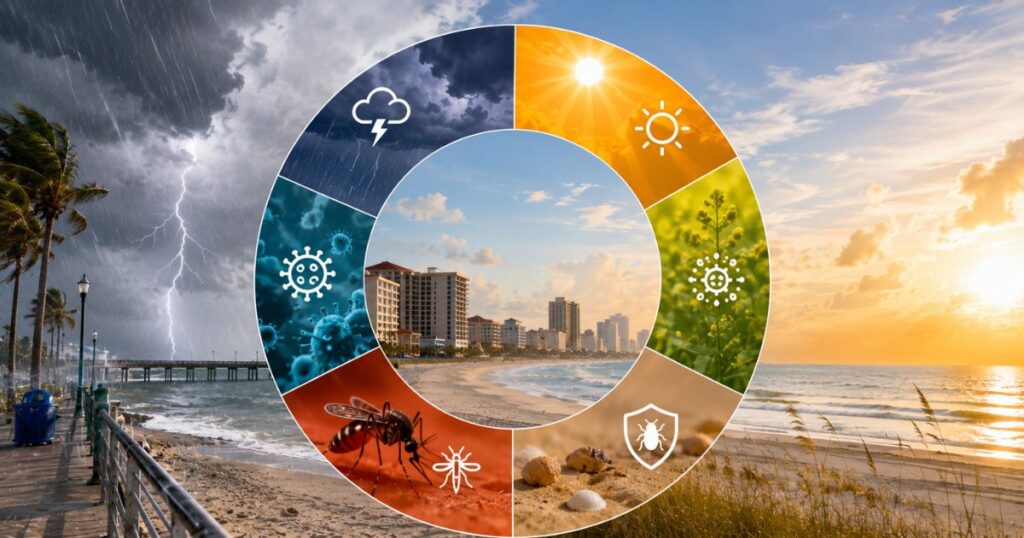
The Gulf doesn’t take a break from health threats, they just change. Here’s what to expect month by month:
Spring (March–May): Warming Water, Early Risk
As water temperatures climb into the 70s and 80s, Vibrio begins to emerge from dormancy. Early cases appear, and the oyster season ramps up in some areas. Anglers are back on the water, increasing exposure risk.
Watch out for:
- Sea lice (tiny larval jellyfish) causes itchy, red rashes
- First Vibrio cases of the season usually mild, but momentum builds
- Allergens from pollen + sea spray
Summer (June–August): Peak Danger Season
This is when everything converges. Water temps hit 85°F+, Vibrio thrives, red tide blooms peak, and tourists flood the beaches. Heat injuries spike as anglers spend long hours in intense sun and humidity the same stretch when many families head out for a day of Gulf fishing.
Watch out for:
- Vibrio vulnificus highest case counts, fastest progression
- Red tide (discussed below) respiratory and eye irritation
- Heat exhaustion and heat stroke especially for offshore anglers
- Swimmer’s ear and saltwater dermatitis
Fall (September–November): Hurricane Season, Water Contamination
Tropical storms and hurricanes churn up coastal waters, mixing sewage, agricultural runoff, and marine debris. Post-storm water quality plummets, and waterborne illness spikes. Storm surge and flooding create secondary health risks (mold, contamination in cleanup).
Watch out for:
- Post-storm waterborne illness hepatitis A, norovirus, cryptosporidium
- Vibrio surge storm surge warms water further and mixes bacteria into swimming areas
- Saltwater wound infection debris + bacteria = high-risk injuries
- Mental health impacts displacement, recovery stress, PTSD
Winter (December–February): Calm, Lower Risk
Cold water temperatures (60–70°F) slow bacterial growth. Vibrio cases drop dramatically, red tide retreats, and the season is generally safer. However, some bacterial presence persists and it doesn’t disappear entirely.
Watch out for:
- Lingering Vibrio cases (still a threat, just lower)
- Respiratory illness (non-water-related, from seasonal cold/flu)
Red Tide: Current Status & Health Impact
Red tide is a massive algae bloom that occurs naturally in Gulf waters, usually triggered by warm temps, nutrient runoff, and calm conditions. Despite the name, it’s not actually red, it’s caused by dinoflagellates (microscopic organisms) that contain a reddish pigment and can produce toxins.
Red Tide usually occurs in the summer months in the Gulf of Mexico. When red tide is present, large fish kills occur with dead fish littering the beaches. Red Tide is especially dangerous for people with asthma and respiratory problems. Symptoms are red, stinging eyes and a burning, hacking, dry cough. If you swim in water with the Red Tide algae present you may experience itchy skin.
Who’s Most Vulnerable to Red Tide?
- People with asthma or COPD respiratory systems take the hit first
- Elderly with respiratory conditions
- Young children smaller lungs, higher sensitivity
- People with allergies respiratory sensitivity carries over
Symptoms: What to Expect
Respiratory effects: Red, stinging eyes; burning, hacking cough; difficulty breathing; chest tightness Skin irritation: Itching, redness if you’ve been in the water during a bloom Gastrointestinal: Nausea if you’ve eaten contaminated shellfish
Shellfish Safety During Red Tide
Do not eat filter feeding mollusks (clams or oysters) taken from Florida red tide waters; fish, crabs, lobsters, and shrimp are not affected if they are healthy. Filter feeders concentrate the toxins; predatory fish do not.
Current 2026 status: Check NOAA’s Red Tide Forecast (updated regularly) and local health department alerts before harvesting or purchasing local shellfish.
Heat & Sun Injuries: A Gulf-Specific Threat
Offshore fishing in the Gulf is physically demanding in ways that landlocked activities aren’t. You’re exposed to intense, direct sun reflection from water, high humidity that prevents sweat evaporation, and a false sense of cooling from the breeze.
Heat Exhaustion vs. Heat Stroke: Know the Difference
| Heat Exhaustion | Heat Stroke (Medical Emergency) |
| Heavy sweating, weakness, dizziness, nausea | Little or no sweating, confusion, hot dry skin |
| Normal body temp or slightly elevated | Core temp 103°F+ |
| Responsive, alert | May lose consciousness |
| Action: Move to shade, drink water, cool down | Action: CALL 911 IMMEDIATELY |
How to Stay Safe on the Water
- Start hydration early don’t wait until you’re thirsty; drink 8 oz of water or electrolyte drink every 15–20 minutes
- Wear light-colored, long-sleeved UPF-rated clothing UV rays reflect off water and hit you from below too
- Use reef-safe sunscreen (SPF 30+) and reapply every 2 hours, especially after sweating or getting wet
- Take regular breaks in shade every 1–2 hours, if possible
- Avoid peak sun hours if possible 11 AM–3 PM is most intense
- Know the signs confusion, cessation of sweating, flushed skin, rapid heartbeat = seek help immediately
If you’re heading out on a chartered trip, it’s worth confirming these basics with your captain beforehand most Gulf fishing guides review safety gear and emergency procedures at check-in as standard practice.
Post-Storm Health Risks: Prepare Before, Recover After
Hurricane season (June–November) brings more than wind and rain. Florida’s 2024 post-Helene spike (82 cases) is the template for what happens when storm surge meets warm coastal waters. The hallmark is speed.
During & After a Storm: What Changes
- Saltwater surge contaminates freshwater wells, tanks, and coastal freshwater supplies become brackish
- Sewage and agricultural runoff mix into water supplies waterborne illness spikes (hepatitis A, norovirus, cryptosporidium)
- Debris creates wound risks cuts from cleanup carry saltwater + debris = high infection risk
- Mold and indoor air quality flooded homes breed mold; respiratory illness follows
- Mental health impact displacement, loss, recovery stress
Boat owners should also plan for storm prep specifically our Gulf Coast boat owner’s guide covers maintenance and protection steps worth doing before hurricane season peaks, not just after a trip.
Pre-Storm Prep Checklist
- Stock clean drinking water (1 gallon per person per day for 1 week minimum)
- Gather first aid supplies antiseptic, bandages, antibiotic cream, pain relievers
- Know your evacuation zone and have a plan
- Get vaccinated (tetanus, hepatitis A) if not current
- Identify a safe shelter outside the flood zone if needed
Post-Storm Recovery Safety
- Wear gloves and long sleeves during cleanup to protect against cuts and saltwater exposure
- Wash thoroughly after debris contact saltwater wounds are high-infection risk
- Use bottled or boiled water for drinking, cooking, and wound cleaning until water quality is confirmed safe
- Monitor for symptoms fever, abdominal pain, diarrhea, or respiratory distress warrant medical attention
Real-Time Monitoring: Where to Check Alerts & Status
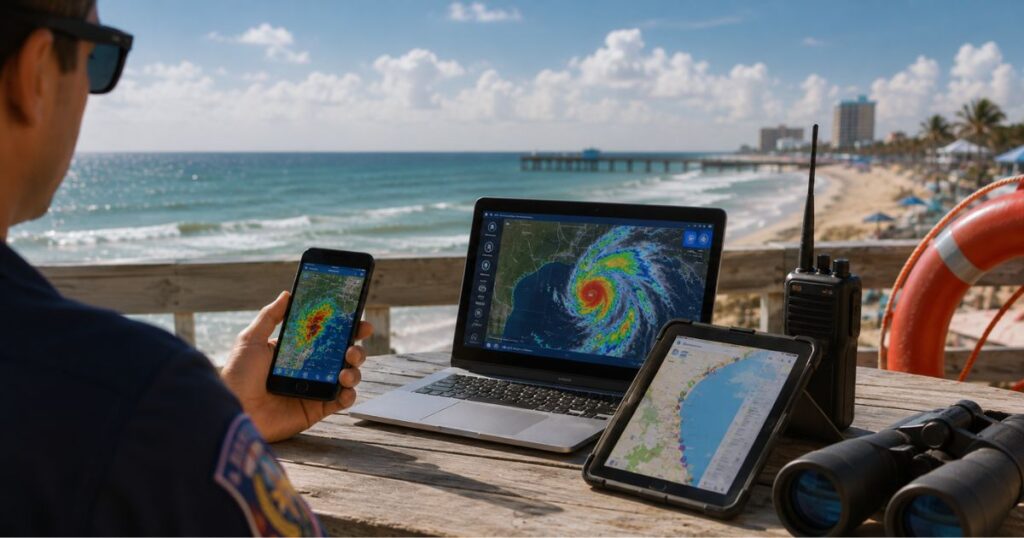
Knowing the hazards is step one. Monitoring current conditions is step two. Here’s where to look:
For Vibrio Updates
Florida Department of Health (Official Tracker)
- Visit: floridahealth.gov/diseases (Vibrio Vulnificus section)
- What you’ll find: Confirmed case counts by county, death reports, outbreak alerts
- Update frequency: Weekly
CDC Website
- Visit: cdc.gov/Vibrio (current guidance + outbreak tracking)
- What you’ll find: National trends, risk factors, prevention guidance
- Update frequency: Regular
For Red Tide Forecasts
NOAA Red Tide Forecast
- Visit: myfwc.com/redtide (official Florida Fish & Wildlife)
- What you’ll find: Current bloom locations, forecasted movement, severity levels, bloom maps
- Update frequency: Multiple times per week
Local Red Tide Hotline
- 1-888-232-8635 (Aquatic Toxins toll-free hotline)
- Call if you develop respiratory or skin symptoms during suspected red tide
For Beach Water Quality
Local Beach Water Quality Reports
- Check your county health department website (e.g., Gulf County DOH)
- Updates typically posted daily during swim season
- Flags/closures posted on beaches if conditions unsafe
NOAA Beach Hazards Forecast
- Visit: weather.gov (search your area + “beach hazards”)
- What you’ll find: Rip currents, wave height, water temp, bacteria alerts
For Shellfish Harvest Closures
Florida Fish & Wildlife Commission
- Visit: myfwc.com/shellfish (harvest closure maps)
- Shows which areas are closed due to red tide, bacteria, or other hazards
- Critical if you harvest oysters, clams, or mussels
For Storm Prep & Alerts
NOAA Hurricane Center
- Visit: hurricanes.gov (official tracking + forecasts)
- Bookmark this during hurricane season (June–November)
Immunity & Risk: Know Your Numbers
Not everyone needs to avoid the Gulf entirely but some groups should take extra precautions. Be honest about your health status:
Low-Risk Groups (Normal Precautions Sufficient)
- Healthy adults, no chronic conditions, no recent piercings/tattoos/surgery
- Can fish, swim, and eat raw oysters with standard wound care and hygiene
Elevated-Risk Groups (Extra Caution Recommended)
- Age 65+ immune system less robust; take precautions seriously
- Diabetics blood sugar management affects immune response; monitor carefully
- Recent surgery or piercings avoid saltwater until fully healed (2–4 weeks minimum)
- Asthma or COPD stay informed about red tide status; consider avoiding beaches during blooms
High-Risk Groups (Consider Avoiding Peak Season)
- Chronic liver disease (cirrhosis, hepatitis) Vibrio mortality rate is extremely high; consider avoiding Gulf waters June–September
- Immunocompromised (cancer treatment, organ transplant, HIV) risk-benefit calculation tips toward caution; consult your doctor
- Recent major wound any large cut or surgical site = saltwater avoidance until healed
- Immunosuppressive medications cortisone, biologics, others that suppress immune function
Honest assessment: If you fall into a high-risk category, it’s not about never entering the Gulf, it’s about timing, precautions, and honest conversation with your doctor about what’s safe for you. Anyone planning a Gulf Coast fishing adventure this season should build these health basics into trip planning the same way they’d check the weather or pack a life jacket.
FAQ: Your Health Questions Answered
Is it safe to fish in the Gulf right now?
Yes, with precautions. Vibrio cases are elevated but manageable if you follow wound-care protocols, monitor symptoms, and seek treatment immediately if infection develops. Avoid fishing if you have open wounds; wear gloves; keep a first aid kit on the boat.
What’s the difference between Vibrio and other bacteria in Gulf water?
Vibrio vulnificus is naturally in Gulf water year-round but thrives in warm (80°F+) water. It’s different from many other bacteria because it enters through cuts and causes rapid, severe infection especially in people with liver disease. Other bacteria cause swimmer’s ear or minor skin irritation; Vibrio can be fatal within 48 hours if untreated.
Can you get Vibrio from eating cooked fish?
No. Cooking kills Vibrio. The risk is from raw oysters, undercooked shellfish, or handling raw seafood then touching a cut on your body. Properly cooked fish and shellfish are safe.
How fast can Vibrio progress?
Extremely fast. Symptoms can appear within 12–24 hours. Severe illness can develop within 2–3 days. This is why immediate medical attention (within hours of symptom onset) is critical if you suspect infection.
Who should avoid Gulf waters entirely?
People with chronic liver disease should seriously consider avoiding saltwater (especially during June–September) unless medically cleared by their doctor. Immunocompromised individuals should consult their doctor about risk-benefit. Otherwise, precautions (gloves, wound care, hygiene) make it manageable for most.
Can Vibrio kill you?
Yes. About one in five people who develop a Vibrio vulnificus infection die, with mortality much higher in people with liver disease or weakened immune systems. Death can occur within 1–2 days of symptom onset if treatment is delayed. This is why rapid medical response is essential.
Should I cancel my Gulf vacation because of Vibrio?
No. Thousands of people visit the Gulf safely every year. Follow precautions (avoid swimming with open wounds, wear gloves if handling seafood, monitor symptoms), and enjoy yourself. The risk is real but manageable.
What do I do if I suspect a Vibrio infection?
Seek medical attention immediately. Tell your doctor: (1) you were exposed to Gulf water or raw seafood, (2) when exposure occurred, (3) what symptoms you have (wound changes, fever, etc.). Don’t wait to see if it improves. Vibrio requires aggressive antibiotic treatment, often in a hospital setting.
Key Takeaway
The Gulf Coast is a remarkable place to live and visit but it demands respect and awareness. Vibrio vulnificus is a real and current threat in summer 2026, red tide blooms are predictable, and heat injuries are preventable. The good news? Most risks can be managed with basic hygiene, wound care, and real-time monitoring.
Stay informed through official channels (Florida DOH, CDC, NOAA). Avoid saltwater if you have open wounds. Know your health status and take precautions accordingly. And if symptoms develop after water exposure, seek medical care immediately not tomorrow, not after a home remedy today.
The Gulf has nourished Gulf Coast communities for generations. Respect its beauty, know the hazards, and you’ll safely enjoy everything it offers.
