

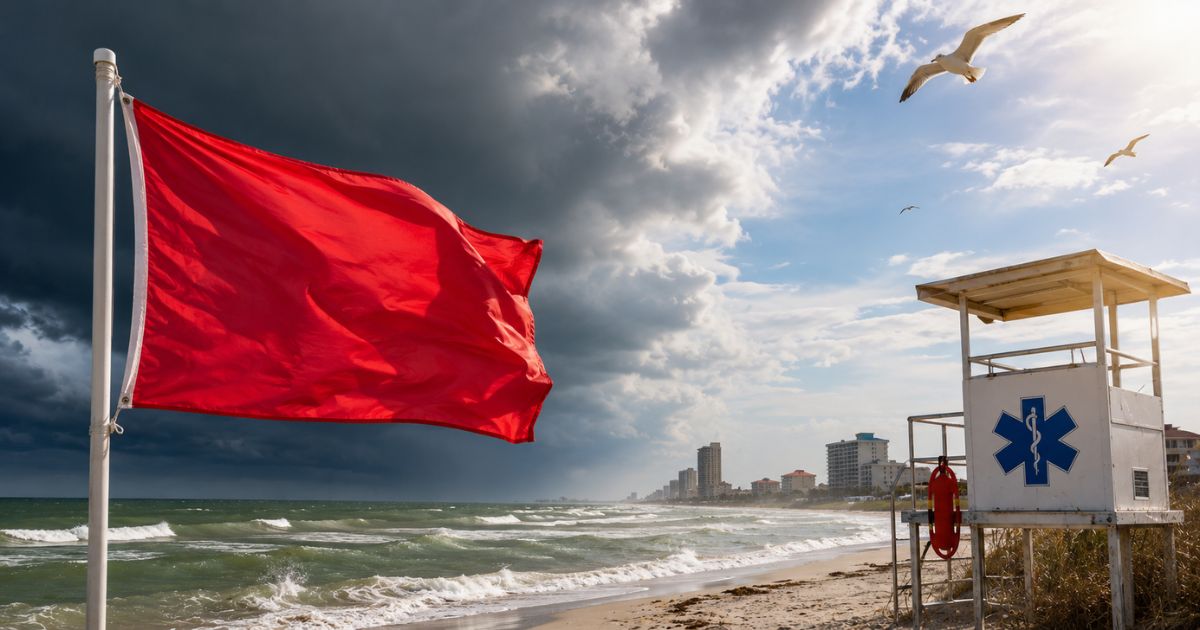
If you’re heading to the Gulf Coast, health conditions can vary from one beach, county, or state to another. Red tide, harmful algal blooms, bacterial contamination, Vibrio, mosquito-borne illness, and storm-related hazards can all affect coastal health.
The safest approach is simple: check the specific beach or coastal area you’re visiting, review the latest official health and water-quality information, and follow any local advisory before swimming, fishing, harvesting seafood, or entering the water.
Are There Gulf Coast Health Alerts Right Now?
There may be health advisories in some Gulf Coast communities while nearby beaches have no advisory at all.
That’s because Gulf Coast health alerts are location-specific. A red tide bloom can be patchy, bacterial water contamination can affect one monitoring site, and mosquito-borne illness alerts may apply to a particular county rather than an entire state.
NOAA’s Gulf Coast harmful algal bloom system, for example, explains that red tide impacts can vary by beach and throughout the day. Its forecasts cover Florida and Texas and can expand to other Gulf Coast areas when conditions warrant.
For that reason, don’t rely on a general statement such as “the Gulf is safe” or “the Gulf is contaminated.” Check the exact place and the latest available information.
The main Gulf Coast health risks to check
| Potential alert | Main exposure | What it can mean for you |
| Red tide | Airborne toxins, water, seafood | Respiratory or eye irritation and other health concerns |
| Vibrio | Coastal water, open wounds, raw seafood | Gastrointestinal or wound infection |
| Bacterial water contamination | Swimming or swallowing contaminated water | Gastrointestinal illness and other infections |
| Harmful algal blooms | Contact with affected water | Possible toxin exposure |
| Mosquito-borne illness | Mosquito bites | Diseases such as West Nile virus |
| Floodwater and storm hazards | Contact with contaminated water | Infection and other environmental hazards |
| Shellfish advisories or closures | Eating affected seafood | Foodborne illness or toxin exposure |
These hazards do not all behave the same way, which is why checking the right official source for the right risk matters.
Is It Safe to Swim in the Gulf Coast?
It depends on the specific beach and current conditions.
Before swimming, check for a local beach advisory, water-quality warning, harmful-algal-bloom information, or other public-health notice. NOAA advises avoiding swimming after heavy rains or when water looks unusual until you have checked with local or state health authorities.
A beach can remain open while a swimming advisory is in effect. An advisory and a complete beach closure are not necessarily the same thing.
When should you avoid the water?
Pay particular attention when:
- A local or state authority has issued a swimming advisory.
- A beach has been closed because of contamination or another hazard.
- Red tide or another harmful algal bloom is affecting the area.
- You have an open wound that could contact salt or brackish water.
- You are considering entering floodwater after a hurricane or major storm.
- Officials have issued a seafood or shellfish warning affecting what you plan to eat.
- The water has an unusual color, odor, or visible contamination and you have not verified its safety.
When conditions are uncertain, checking an official source before entering the water takes only a few minutes and can give you much more useful information than relying on what another beach looked like yesterday.
What Health Risks Should Gulf Coast Beachgoers Know About?
The Gulf Coast is a large and environmentally diverse region, so several different health risks can occur.
Red tide
Red tide along the Gulf Coast is commonly associated with the microscopic algae Karenia brevis. Blooms can produce toxins that irritate the eyes and respiratory system, and they can affect marine life and lead to shellfish closures. NOAA monitors and forecasts these blooms.
Vibrio
Vibrio bacteria naturally occur in coastal waters. People can become infected when an open wound comes into contact with coastal water or through eating raw or undercooked shellfish, particularly oysters.
Bacterial water contamination
Beach monitoring programs test recreational waters for bacteria associated with contamination. Louisiana, for example, tests coastal beach sites for Enterococcus bacteria and issues advisories when monitoring results meet its advisory criteria.
Harmful algal blooms
Not every harmful algal bloom is the same as Florida or Texas red tide. Other algae, including cyanobacteria, can create health concerns in different bodies of water.
Mosquito-borne disease
Mosquito-borne illnesses can also produce localized public-health alerts. These are not necessarily related to beach-water conditions.
For example, the Florida Department of Health in Duval County reported locally acquired West Nile virus cases and issued mosquito-borne illness alerts in 2026.
Hurricanes and flooding
After a hurricane or flood, contaminated water can create additional health risks. Floodwater may contain sewage, animal waste, chemicals, debris, and microorganisms.
CDC specifically advises avoiding floodwater, saltwater, or brackish water when you have an open wound because exposure can lead to infection, including infections caused by Vibrio.
What Is Red Tide and How Does It Affect Your Health?
Red tide is a harmful algal bloom involving Karenia brevis in the Gulf of Mexico, particularly along Florida and Texas. When the organism becomes abundant, it can release toxins that affect marine life and can become airborne near affected beaches.
The health effects can vary depending on the location and conditions.
What symptoms can red tide cause?
NOAA identifies temporary respiratory and eye irritation as possible effects, including:
- Coughing
- Sneezing
- Itchy throat
- Eye irritation
People with existing respiratory conditions such as asthma may experience more severe symptoms.
If you develop significant breathing difficulty, seek immediate medical advice.
Can red tide affect breathing?
Yes.
During a red tide bloom, toxins can become airborne when waves break along the shore. NOAA notes that this can cause irritation of the eyes, nose, and throat, while people with asthma or other respiratory conditions may be more affected.
That’s one reason a beach can have a red-tide-related respiratory risk even when the water itself does not look dramatically different.
Can you swim during a red tide?
There isn’t one answer for every beach.
NOAA’s Gulf Coast system provides location-specific respiratory forecasts because bloom impacts can vary between beaches. Its forecasts can provide a more useful picture than simply knowing that a red tide exists somewhere in the region.
If an affected beach has an official health warning, follow that warning.
Does red tide affect seafood?
Harmful algal blooms can lead to shellfish closures and other restrictions. NOAA notes that red tide and other harmful blooms can affect seafood safety and that state and local resources provide information about affected areas.
Never assume that seafood is safe simply because it was harvested locally. Check the applicable official harvesting or closure information.
What Is Vibrio Vulnificus and How Can You Avoid It?
Vibrio vulnificus is a species of Vibrio bacteria that can cause serious illness. It naturally occurs in coastal saltwater and brackish water, and people can be exposed through open wounds or contaminated seafood.
CDC identifies two especially important prevention steps:
- Don’t eat raw or undercooked seafood.
- Don’t let coastal water contact an open wound.
Can Vibrio enter through a cut?
Yes.
An open wound can become infected after contact with saltwater or brackish water containing Vibrio.
Open wounds can include cuts, scrapes, surgical sites, recent piercings, and tattoos. CDC recommends staying out of coastal water when you have an open wound if possible. If exposure could occur, protect the wound with a waterproof bandage and wash it thoroughly afterward with soap and clean running water.
Can you get Vibrio from oysters?
Yes.
Vibrio can naturally occur in coastal waters and can become concentrated inside oysters and other shellfish because these animals filter water. Eating raw or undercooked oysters can therefore expose you to Vibrio.
Cooking seafood properly kills harmful bacteria.
Who should take extra precautions?
Anyone can become infected, but CDC identifies people with certain underlying medical conditions, particularly liver disease, as being at increased risk of severe Vibrio infection.
Mississippi health officials likewise emphasize increased concern during warmer months and note that many reported cases in the state occur in Gulf Coast counties.
If you have a medical condition that increases your risk, follow your healthcare professional’s advice about coastal-water and seafood exposure.
How Do You Check Gulf Coast Water Quality?
Don’t search only for “Gulf Coast water quality.”
Start with the exact beach, county, or coastal community you’re visiting.
Use this six-step process:
1. Find the exact beach
A state-wide status may not tell you what is happening at the beach you plan to visit.
Write down the beach name and county.
2. Check the state or local health department
State and local agencies are often responsible for beach advisories and public-health notifications.
For example, Louisiana’s Beach Monitoring Program tests coastal recreational sites and publishes advisory information.
3. Check for red tide or harmful algal blooms
For Florida and Texas, NOAA’s Gulf Coast HAB Forecast provides information about Karenia brevis, bloom conditions, and potential respiratory irritation.
4. Check the latest water-quality result
Look at the sample date, not just the existence of a monitoring page.
A result from several weeks ago may not describe today’s conditions.
5. Check for shellfish restrictions
If you’re planning to harvest or eat local shellfish, look specifically for harvesting closures or advisories.
Swimming conditions and seafood safety are related but not interchangeable.
6. Recheck shortly before entering the water
Coastal conditions can change.
NOAA notes that harmful algal bloom impacts can vary by beach and throughout the day, which is why location-specific forecasts matter.
What About Seafood During a Gulf Coast Health Alert?
A water-quality advisory does not automatically answer every seafood-safety question.
Different hazards affect seafood in different ways, and official harvesting restrictions should take precedence over general assumptions.
Raw oysters deserve particular caution
CDC says people can become very sick from eating raw oysters. You cannot reliably determine whether an oyster contains harmful bacteria simply by looking at it.
If you’re eating shellfish:
- Choose properly cooked seafood.
- Avoid raw or undercooked oysters.
- Prevent juices from raw seafood from contaminating other foods.
- Wash your hands after handling raw shellfish.
- Check official shellfish advisories or closures where applicable.
This is particularly important during periods of warm coastal-water conditions.
What Health Risks Increase After Gulf Coast Hurricanes?
A hurricane can change coastal health conditions even when a beach had no previous advisory.
Flooding can introduce sewage, animal waste, chemicals, debris, and other contaminants into water and surrounding areas. Storm surge can also expose people to saltwater and brackish water in places where they would not normally encounter it.
CDC recommends avoiding floodwater and coastal water when you have an open wound and keeping wounds clean and covered.
Why is floodwater a health concern?
Floodwater may contain harmful microorganisms and contaminants that can cause illness.
Even water that looks relatively clear may not be safe.
Avoid unnecessary contact, especially if you have cuts, scrapes, or other breaks in the skin.
Can floodwater increase Vibrio exposure?
Yes.
CDC has specifically warned about severe Vibrio vulnificus infections associated with coastal waters and explains that wounds exposed to saltwater, brackish water, or contaminated seafood can become infected.
When should you avoid coastal water after a storm?
Follow local and state health guidance.
Don’t assume that reopening a road, park, or beach means every water-related risk has disappeared. Post-storm advisories can be issued or maintained until testing and local conditions support reopening.
Gulf Coast Health Alerts by State
The Gulf Coast stretches across several states, and each state has its own monitoring and public-health systems.
Florida
Florida is especially important for red tide, harmful algal blooms, beach water quality, and mosquito-borne illness.
The Florida Department of Health maintains health notifications related to harmful algal blooms and red tide. Its 2026 listings include alerts, cautions, and alert lifts for specific locations, demonstrating why checking the exact county or site matters.
Florida visitors should also check local county health department alerts.
Alabama
Alabama’s Department of Public Health works with the Alabama Department of Environmental Management on coastal beach monitoring.
The program monitors selected Gulf beaches and Mobile Bay locations for bacteria including fecal coliform and Enterococcus.
For Alabama beaches, check the state’s current monitoring information before swimming.
Mississippi
Mississippi health officials provide information about Vibrio and Gulf Coast exposure.
The Mississippi State Department of Health reported in June 2026 that Vibrio bacteria live in warm coastal waters and can cause illness after exposure through open wounds or contaminated seafood.
Louisiana
Louisiana operates a Beach Monitoring Program that tests coastal recreational waters against EPA water-quality criteria.
The program’s current information includes monitoring sites, sample dates, and advisory status.
This makes the Louisiana system particularly useful when you need to check a specific beach rather than a general Gulf Coast forecast.
Texas
Texas has important red-tide monitoring needs along its Gulf Coast.
Texas DSHS has issued public-health advisories for red tide caused by Karenia brevis, while NOAA provides Gulf Coast HAB forecasts and Texas-specific satellite and respiratory information.
For Texas visitors, check both the relevant state/local health information and NOAA’s current HAB information.
Where Should You Get Official Gulf Coast Health Alerts?
Use the source that matches the risk you’re trying to verify.
| What you want to know | Best place to start |
| Red tide / harmful algal bloom | NOAA National Centers for Coastal Ocean Science |
| Vibrio prevention and illness | CDC |
| Florida red tide notifications | Florida Department of Health |
| Alabama beach monitoring | Alabama Department of Public Health / Alabama environmental authorities |
| Mississippi coastal health information | Mississippi State Department of Health |
| Louisiana beach advisories | Louisiana Department of Health |
| Texas red tide/public-health information | Texas DSHS + NOAA |
| Local beach status | State or local health/environmental authority |
NOAA’s Gulf Coast forecast is particularly useful for red tide because it combines monitoring and forecasting information rather than relying on a single observation.
For infectious-disease questions, CDC should be your primary reference. Its Vibrio guidance covers both foodborne exposure and coastal-water exposure.
The Before-You-Go Gulf Coast Health Check
Use this five-part check before swimming, fishing, harvesting seafood, or spending extended time at a coastal location.
1. Check the PLACE
What’s the exact beach, inlet, bay, county, or coastal community?
Don’t treat the entire Gulf Coast as one location.
2. Check the WATER
Look for:
- Swimming advisories
- Water-quality results
- Beach closures
- Bacterial warnings
- Harmful algae
3. Check the AIR
If a red tide is present, check the latest respiratory irritation forecast, especially if you have a respiratory condition.
NOAA provides location-specific respiratory forecasts for Gulf Coast red tide.
4. Check your EXPOSURE
Ask:
- Do I have an open wound?
- Am I planning to eat raw seafood?
- Has there been recent flooding?
- Am I entering water under an advisory?
- Are mosquito-borne illnesses being reported locally?
5. Check the OFFICIAL UPDATE
Finally, verify the information with the relevant government health, environmental, or coastal monitoring agency.
This five-minute check is more useful than relying on a general “Gulf Coast is safe” or “Gulf Coast is unsafe” label.
What Should You Do If You Develop Symptoms After Coastal Exposure?
Symptoms depend on the type of exposure.
After red-tide exposure, NOAA identifies temporary coughing, sneezing, itchy throat, and eye irritation as possible symptoms. Seek immediate medical advice if you experience respiratory difficulty.
Vibrio infections can cause watery diarrhea, abdominal cramps, nausea, vomiting, and fever. Wound infections can cause redness, pain, swelling, warmth, discoloration, or discharge.
Tell a healthcare professional about relevant exposure. For example, mention if you recently ate raw or undercooked oysters or if an open wound came into contact with coastal water.
For severe symptoms, rapidly worsening wound changes, breathing difficulty, signs of a serious infection, or other emergencies, seek urgent medical care.
FAQs
What are Gulf Coast health alerts?
Gulf Coast health alerts are public-health warnings or advisories concerning hazards that may affect people along the Gulf Coast. They can involve red tide, harmful algal blooms, bacterial water contamination, Vibrio, mosquito-borne illness, shellfish restrictions, or storm-related hazards.
Is it safe to swim in the Gulf?
Safety depends on the specific beach and current conditions. Check the latest local or state beach advisory, water-quality information, and relevant harmful-algal-bloom information before entering the water.
What is red tide?
Red tide is a harmful algal bloom commonly associated with Karenia brevis along Florida and Texas Gulf Coast waters. The toxins produced by these blooms can affect marine life and may cause respiratory or eye irritation in people exposed near affected beaches.
What are red tide symptoms?
Possible symptoms include coughing, sneezing, an itchy throat, and eye irritation. People with existing respiratory conditions may experience more severe effects.
What is Vibrio vulnificus?
Vibrio vulnificus is a bacterium that naturally occurs in coastal saltwater and brackish water. Infection can occur when an open wound contacts contaminated coastal water or when someone eats raw or undercooked seafood containing Vibrio.
Can you get Vibrio from swimming?
Yes. An open wound exposed to saltwater or brackish water can provide a route for Vibrio infection. CDC recommends staying out of coastal water when you have an open wound when possible.
How do I check Gulf Coast beach water quality?
Start with the official health or environmental authority for the exact beach or county you’re visiting. State programs can publish monitoring results and swimming advisories, while NOAA provides harmful-algal-bloom information for Gulf Coast red tide.
Are Gulf Coast health alerts the same across all states?
No. Gulf Coast conditions and alert systems vary by state, county, beach, and hazard. Florida, Alabama, Mississippi, Louisiana, and Texas each maintain their own health or environmental monitoring resources, while federal agencies such as NOAA and CDC provide broader information.
Is it safe to eat Gulf Coast oysters?
Don’t assume raw oysters are safe because they come from the Gulf Coast. CDC warns that raw or undercooked oysters can expose people to Vibrio and other germs. Proper cooking kills harmful bacteria, and you should follow all applicable shellfish harvesting and closure advisories.
What should I do after swimming in floodwater?
Avoid unnecessary contact with floodwater, particularly if you have an open wound. If a wound contacts floodwater, saltwater, or brackish water, wash it thoroughly with soap and clean running water and monitor it for signs of infection.
