

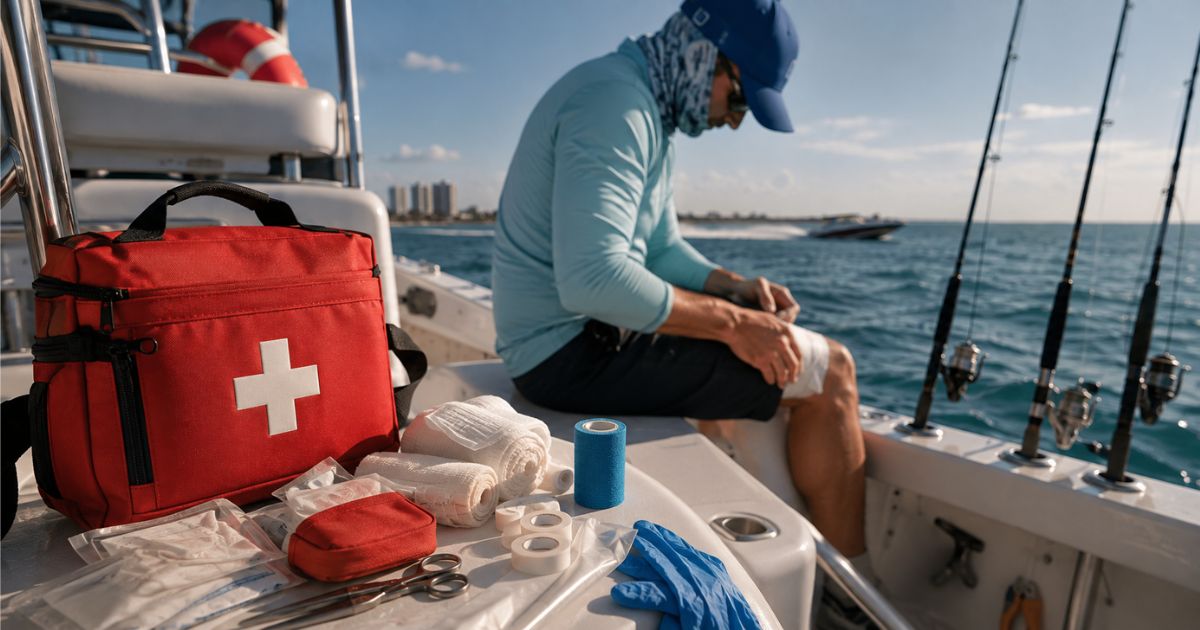
Most fishing injuries are minor and treatable on the spot. Superficial fish hooks can often be removed with the string-yank method, catfish and stingray stings respond well to hot-water immersion, and overuse injuries like tennis elbow improve with rest and ice. But hooks near the eye or a joint, deeply embedded barbs, and stings on the chest, neck, or abdomen need a doctor not a tackle box.
If you’re planning a family fishing trip on the Gulf this season, bookmark this guide alongside your packing list a little first-aid know-how goes a long way on the water.
The Most Common Fishing Injuries
Fishing looks low-risk compared to contact sports, but the numbers say otherwise. The Bureau of Labor Statistics found that contact with objects and equipment hooks, gaffs, lines, propellers accounted for about a third of all reported injuries among fishers and fishing-related workers over a recent six-year study period. Sprains and strains made up another third.
| Injury type | How it usually happens | Typical severity |
| Fish hook puncture | Snagged finger, hand, or scalp during casting or unhooking | Minor to moderate |
| Catfish spine sting | Stepping on or handling hardhead/gafftopsail catfish | Painful, low complication risk if treated |
| Stingray sting | Stepping on a ray buried in shallow sand | Moderate to serious — venomous |
| Overuse injuries (tennis elbow, rotator cuff) | Repetitive casting and reeling motion | Chronic, builds over time |
| Slip-and-fall on deck | Wet boat decks or docks | Minor bruises to fractures |
| Boat propeller contact | Swimming or wading near running props | Serious — roughly 200–250 non-fatal U.S. cases reported yearly |
Two of these catfish spines and stingray barbs are the ones every other Gulf Coast fishing-safety article skips. They’re also two of the most common injuries anglers in this region will actually run into.
How to Remove a Fish Hook From Skin Safely
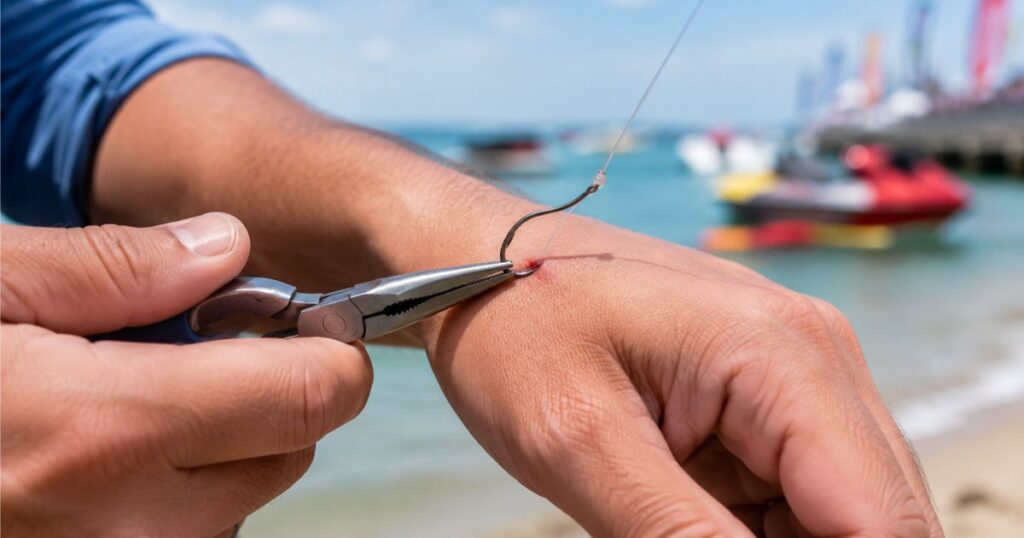
Before doing anything, check the location and depth. Never attempt self-removal if the hook is near the eye, on the face, in a joint, or deeply embedded go straight to urgent care.
For a shallow, superficial hook, medical references including the Florida Health Department’s health encyclopedia and MedlinePlus describe two accepted field methods:
The string-yank method:
- Wash your hands and the skin around the hook with soap and water.
- Loop a length of fishing line or string around the bend of the hook, close to the skin.
- Press the eye of the hook down against the skin this disengages the barb.
- Holding that pressure, give one quick, firm jerk on the string, straight back along the line the hook entered.
- Clean the wound, apply a loose sterile dressing, and don’t tape it shut that can trap bacteria.
The advance-and-cut method (when the tip is close to breaking through the skin):
- Push the point of the hook forward until it exits through the skin.
- Cut the hook just behind the barb with wire cutters or a side cutter.
- Back the rest of the hook out the way it went in.
- Clean and dress the wound the same way.
Watch for redness, swelling, warmth, or drainage over the next few days those are signs of infection, not a normal healing wound.
What to Do If a Catfish Spine Stings You
Hardhead and gafftopsail catfish both common in the Gulf carry venomous spines near their fins, and getting “finned” hurts far more than the puncture size suggests. Smaller, younger catfish often have sharper, more effective spines than larger ones.
First aid for a catfish sting:
- Soak the area in water as hot as you can tolerate this breaks down the venom’s proteins and eases pain.
- Remove any visible spine fragments with tweezers.
- Scrub and irrigate the wound with clean water.
- Don’t tape or stitch it closed.
- Watch for infection, and get a tetanus booster if yours isn’t current.
Saltwater catfish stings carry an added risk: Vibrio vulnificus, a bacteria that lives in warm coastal waters and can cause serious wound infections. Any sting that gets more painful, swollen, or discolored after the first day or two warrants a medical check this isn’t the kind of infection to wait out.
Treating a Stingray Sting
Stingrays aren’t aggressive most stings happen when someone steps on a ray buried in the sand and it strikes defensively with a barbed, venomous tail spine. The U.S. sees an estimated 1,500 to 2,000 stingray injuries a year.
Immediate steps:
- Get out of the water and control any significant bleeding first.
- Soak the wound in hot water (as hot as tolerable, not scalding) this is the standard first-line treatment for the pain.
- Do not pull out a deeply embedded barb yourself, especially if it’s in the chest, abdomen, neck, or near a major joint.
- Clean visible debris from the wound, but leave deep fragments for a medical provider to remove.
Because stingray venom and retained barb fragments carry real complication risk, most stingray stings deserve a same-day medical evaluation not a “wait and see.”
Prevention is simple: shuffle your feet through shallow sand instead of stepping down firmly. A resting ray will almost always move off before you make contact.
Preventing Overuse Injuries From Casting and Reeling
Not every fishing injury happens in an instant. Repetitive casting and reeling puts steady strain on the shoulder and forearm the same motion pattern behind tennis elbow and rotator cuff tendinitis in other sports.
Ways to reduce your risk:
- Warm up your shoulder and forearm before a long session on the water.
- Take rest breaks during extended casting, rather than pushing through fatigue.
- Use ergonomic rod grips and well-balanced reels to reduce strain per cast.
- Pay attention to early symptoms elbow tenderness, shoulder weakness, or wrist numbness before they become chronic.
These injuries build slowly, which is exactly why they’re easy to ignore until they’re bad enough to sideline you for weeks. If you’re new to it altogether, our guide to planning a Gulf fishing trip covers pacing yourself over a full day on the water.
Building a Fishing First Aid Kit
A stocked kit is the difference between handling an injury on the boat and cutting a trip short. Keep this in your tackle box or on the boat:
- Waterproof bandages and gauze
- An antiseptic wipe or solution (povidone-iodine or chlorhexidine)
- Antibiotic ointment
- Tweezers (for spine removal)
- Heavy fishing line or braid (for the string-yank method)
- Wire cutters or a side cutter
- A basic pain reliever
- A note of your last tetanus booster date
Not sure what else belongs in your bag? Our breakdown of an essential first aid kit for your home, office, or boat walks through a more complete supply list you can adapt for the water.
Gulf Coast Conditions to Watch For
Hooks and stings aren’t the only risk on the water. Gulf Coast conditions add their own layer of hazard:
- Heat and sun exposure: Long hours on open water mean high UV exposure and real dehydration risk, even on cloudy days. Reapply sunscreen and drink water on a schedule, not just when you notice thirst.
- Warm saltwater and Vibrio risk: Any open wound exposed to Gulf water not just from a catfish spine carries some Vibrio infection risk in warmer months. Cover cuts before you fish if possible, and treat any wound that worsens after water exposure seriously.
- Wet decks: Anti-slip footwear and a fighting chair reduce fall risk when you’re battling a fish that’s putting up a real fight.
Wet decks: Anti-slip footwear and a fighting chair reduce fall risk when you’re battling a fish that’s putting up a real fight. Keeping your boat itself in good shape matters too see our Gulf Coast boat owner’s guide to protecting your boat between trips for maintenance that keeps decks and gear safer.
When to Seek Emergency Care

Most fishing injuries resolve with basic first aid. Go to urgent care or the ER if you notice any of the following:
- A hook embedded near the eye, face, or a joint
- A hook or barb that won’t disengage with gentle field methods
- A stingray barb embedded in the chest, abdomen, neck, or groin
- Heavy or uncontrolled bleeding
- Signs of infection: increasing redness, warmth, swelling, or drainage days after the injury
- Your last tetanus booster was more than five years ago
- Numbness, spreading pain, or symptoms of an allergic reaction after a sting
A Local Angler’s Perspective
Anglers who fish these waters regularly tend to build the same habits: gloves on for anything with teeth or spines, a first aid kit that actually gets restocked, and a healthy respect for what’s buried in the sand at their feet. The injuries that send people to the ER are rarely the ones they saw coming. Families booking a trip through local fishing guides can also ask their captain about onboard first-aid supplies before heading out.
FAQ
Is it safe to remove a fish hook yourself?
For a shallow hook away from the eyes, face, or joints, the string-yank or advance-and-cut method is generally safe to try. If the hook is deep, near sensitive areas, or won’t budge with gentle pressure, stop and see a doctor.
What do you do if a catfish spine stings you?
Soak the area in hot water, remove visible spine fragments with tweezers, and scrub the wound with clean water. Watch closely for infection, since saltwater catfish stings carry Vibrio risk.
How do you treat a stingray sting?
Control any bleeding, then soak the wound in hot water for pain relief. Leave deeply embedded barb fragments for a medical provider, and seek care right away for stings to the chest, abdomen, or neck.
Do you need a tetanus shot for a fish hook injury?
If it’s been more than five years since your last tetanus booster, get one within 24 hours of the injury even if you removed the hook successfully yourself.
What’s the most common fishing injury?
Contact with fishing equipment hooks, lines, and gaffs is the single largest category, followed closely by sprains and strains from casting, reeling, and hauling gear.
