

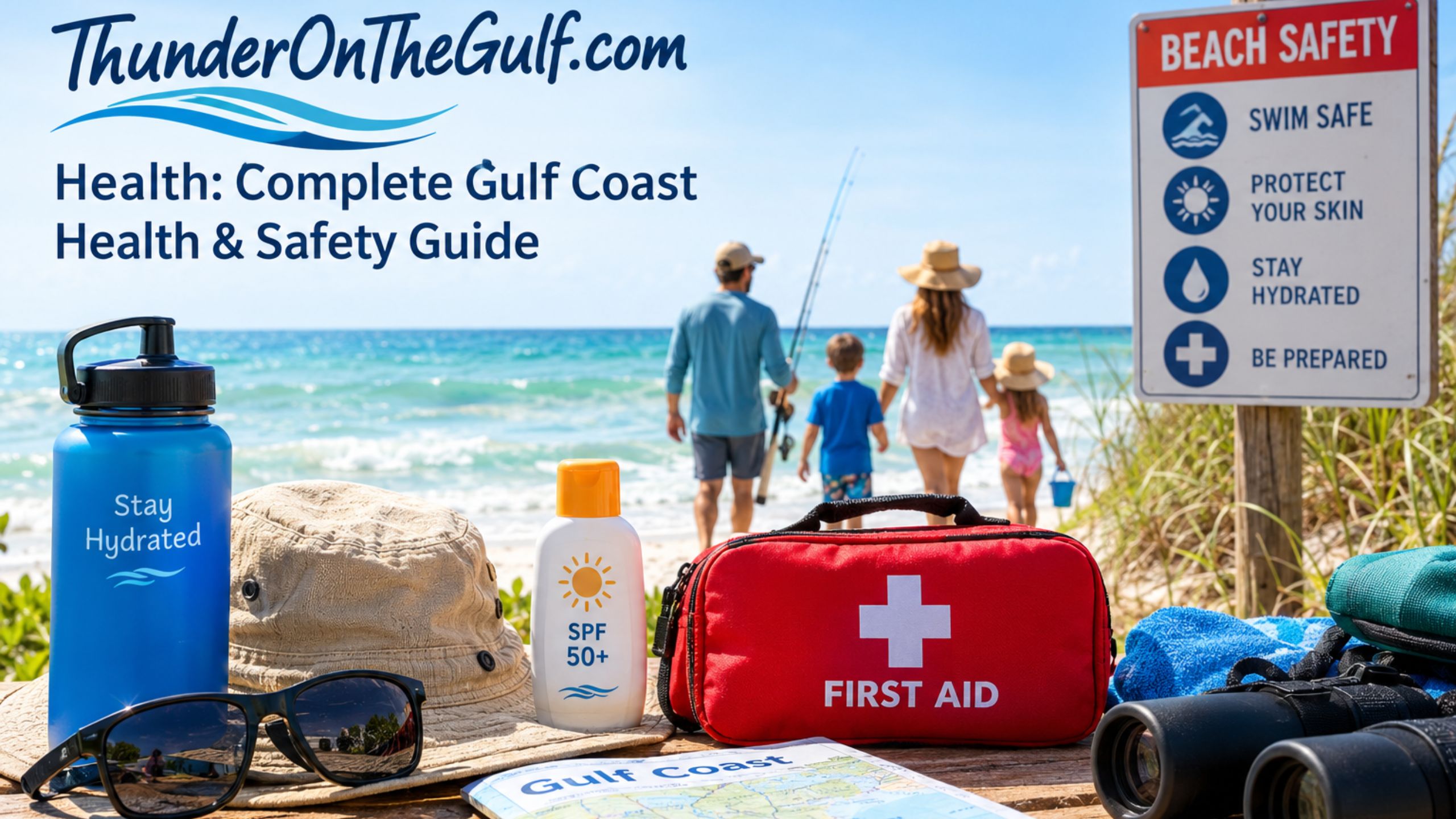
Gulf Coast health and safety depend on current local conditions. Before entering the water or eating recreationally caught seafood, check official beach, water-quality, harmful-algal-bloom, and fish-consumption advisories. Protect open wounds from coastal water, take heat and sun precautions, and follow local warnings.
What Does Gulf Coast Health Include?
Gulf Coast health covers the ways coastal environmental conditions and outdoor activities can affect people living in or visiting the Gulf region.
It includes more than medical conditions. A practical Gulf Coast health plan also considers recreational water quality, beach advisories, harmful algal blooms, seafood safety, heat exposure, sun protection, fishing risks, boating hazards, and emergency conditions.
Because coastal conditions can change by location and time, there is no single answer to whether a particular Gulf beach, fishing area, or seafood product is safe every day.
That is why current local information matters.
What Are the Biggest Gulf Coast Health Risks?
The risks you encounter depend on what you are doing and the conditions at the time.
| Gulf Coast risk | Where you may encounter it | Main concern | Smart precaution |
| Poor recreational water quality | Beaches and coastal swimming areas | Exposure to harmful microorganisms | Check local advisories |
| Red tide | Areas affected by Karenia brevis blooms | Respiratory and eye irritation; shellfish concerns | Check HAB forecasts and harvesting information |
| Vibrio bacteria | Saltwater and brackish water | Wound infections and foodborne illness | Keep open wounds out of coastal water |
| Seafood hazards | Certain fish and shellfish areas | Foodborne or contaminant exposure | Follow local consumption advisories |
| Heat | Beaches, boats, piers and fishing areas | Dehydration and heat illness | Stay hydrated and take cooling breaks |
| Sun exposure | Any outdoor coastal activity | UV exposure and sunburn | Use shade, protective clothing and sunscreen |
| Rip currents and other water hazards | Surf and swimming areas | Drowning and injury | Follow signs, flags and lifeguard instructions |
| Storm and flood conditions | Coastal communities and waterways | Physical injury and contaminated water exposure | Follow official emergency guidance |
EPA notes that polluted beach water can expose swimmers to bacteria, viruses, protozoa and parasites. Rainfall runoff and untreated sewage can contribute to recreational-water contamination, which is why local monitoring and advisories matter.
Is It Safe to Swim in the Gulf of Mexico?
It can be, but safety depends on the specific beach and current conditions. Do not assume that every Gulf Coast beach has the same water quality or health conditions.
State and local agencies monitor many public beaches and issue advisories or closures when conditions warrant them. EPA’s beach resources allow you to check whether a particular beach is monitored and whether an advisory or closure has been reported.
When should you avoid swimming?
Pay attention to:
- Beach closure signs
- Health advisories
- Poor water-quality notices
- Harmful algal-bloom warnings
- Strong surf or dangerous-current warnings
- Unusual water conditions
- Severe weather
- Recent heavy rainfall when local authorities advise caution
NOAA advises avoiding swimming after heavy rain or when water has an unusual appearance until you have checked with local or state health authorities.
EPA also recommends paying attention to posted signs, avoiding polluted areas, and keeping open wounds out of potentially contaminated recreational water.
How do you check Gulf Coast beach conditions?
Use this simple process:
- Identify the exact beach or coastal area.
- Check the state or local beach-monitoring program.
- Look for current closures or health advisories.
- Check NOAA harmful-algal-bloom information where relevant.
- Check weather and coastal hazard information before leaving.
- Follow posted signs and lifeguard instructions when you arrive.
The EPA’s National List of Beaches connects users with monitoring information and state or local beach programs.
Red Tide and Gulf Coast Health
What is red tide?
One of the best-known Gulf Coast harmful algal blooms is caused by the microscopic organism Karenia brevis.
The organism produces a toxin called brevetoxin. When waves and surf break up the organisms near the water’s surface, toxins can become part of the sea spray and affect people near the shore.
Red tide blooms can also affect marine life and may result in shellfish-harvesting restrictions.
What symptoms can red tide cause?
Exposure to Karenia brevis can cause:
- Coughing
- Wheezing
- Shortness of breath
- Eye irritation
- Burning or sore eyes
- Skin irritation or rashes
- Respiratory discomfort
NOAA says people with existing respiratory illnesses such as asthma may experience more severe symptoms during exposure.
Can you swim during a red tide?
NOAA does not recommend swimming in or around Karenia brevis blooms because exposure can cause skin and respiratory irritation. Bloom conditions can also vary significantly from one location to another because blooms are patchy and affected by wind, currents and surf.
That means you should check the specific local forecast and beach conditions, rather than assuming that an entire coastline is affected.
Is seafood safe during red tide?
Do not assume that recreationally harvested shellfish are safe simply because they look normal.
NOAA advises people to check the status of shellfish harvesting areas before collecting or consuming recreationally harvested shellfish during a harmful algal bloom. Commercial seafood sold through regulated channels is subject to safety controls.
Vibrio vulnificus: What Gulf Beachgoers Need to Know
Vibrio are bacteria that naturally occur in certain coastal waters. They can be found in both saltwater and brackish water, where fresh and salt water mix.
People can become infected by eating raw or undercooked shellfish or when an open wound comes into contact with coastal water.
How does Vibrio enter the body?
Common exposure routes include:
- Swimming or wading with an open wound
- Getting a cut while in coastal water
- Handling raw or undercooked seafood
- Eating raw or undercooked shellfish, particularly oysters
CDC recommends keeping open wounds out of saltwater and brackish water when possible. If exposure cannot be avoided, a waterproof bandage can help protect the wound.
What are the warning signs?
Symptoms depend on the type of infection.
A gastrointestinal infection may involve:
- Watery diarrhea
- Stomach cramps
- Nausea
- Vomiting
- Fever
- Chills
A wound infection can involve:
- Redness
- Pain
- Swelling
- Warmth
- Discoloration
- Drainage
- Fever
Some Vibrio vulnificus infections can become severe and life-threatening. CDC advises seeking medical attention promptly for signs of an infected wound, particularly after coastal-water or raw-seafood exposure.
Who should take extra precautions?
Everyone should protect open wounds from coastal water, but CDC identifies certain people as having a higher risk of severe Vibrio vulnificus infection, including people with conditions such as liver disease and people with weakened immune systems.
How can you reduce your risk?
Before entering coastal water:
- Keep open wounds out of saltwater and brackish water when possible.
- Cover wounds completely with a waterproof bandage if exposure could occur.
- Wear protective footwear or clothing when appropriate.
After exposure:
- Wash cuts and wounds thoroughly with soap and clean running water.
- Monitor the area for signs of infection.
- Tell a healthcare professional about coastal-water or seafood exposure if symptoms develop.
Is Gulf Seafood Safe to Eat?
There is no single yes-or-no answer for every Gulf seafood product.
Seafood safety depends on the species, harvest location, current advisory or closure status, and how the seafood is handled and prepared.
Fish vs. shellfish
Fish and shellfish can face different risks.
For recreational fishing, always check the local fish-consumption advisory before eating your catch. EPA specifically directs recreational anglers to consult local advisories when determining whether caught fish are appropriate to consume.
For shellfish, harvesting-area restrictions are particularly important during harmful algal blooms and other contamination events.
Why local advisories matter
A seafood advisory is tied to a particular location, species or condition. Therefore, information from one Gulf Coast area should not automatically be applied to another.
Before eating recreationally harvested seafood:
- Identify exactly where it was caught.
- Check the relevant state/local consumption advisory.
- Check shellfish-harvesting status if applicable.
- Follow any species-specific restrictions.
- Cook seafood properly.
What about oil-spill concerns?
The FDA’s Gulf oil-spill guidance illustrates the basic safety principle: authorities can close affected harvest waters and test seafood before reopening areas. Seafood from reopened or unaffected areas can be considered safe under the applicable regulatory process.
For any current incident, however, rely on the latest official closure, reopening and consumption information rather than an old oil-spill article.
Gulf Coast Health for Anglers, Boaters and Families
Different activities create different health considerations.
For anglers
Before fishing:
- Check weather and marine conditions.
- Check fish-consumption advisories.
- Check for harmful algal blooms.
- Protect cuts and scrapes from coastal water.
- Bring drinking water and sun protection.
- Handle your catch safely.
If you plan to eat your catch, the location where the fish was caught matters. Always check the current advisory for that area.
For boaters
Boating health is closely connected to general water safety.
Before leaving:
- Check weather and marine forecasts.
- Wear appropriate safety equipment.
- Bring enough drinking water.
- Protect yourself from prolonged sun exposure.
- Know where you can obtain emergency assistance.
- Avoid entering the water when official conditions indicate a hazard.
For families and beachgoers
Keep the plan simple:
- Check beach conditions before leaving.
- Follow posted signs and warnings.
- Watch children closely around water.
- Keep open wounds out of coastal water.
- Bring water and sun protection.
- Do not collect or eat shellfish unless you have checked the applicable harvesting information.
- Leave the water if conditions become unsafe.
How to Build a Gulf Coast Health Check Before You Go
A five-minute check can prevent many avoidable problems.
1. Check the water
Look for the latest beach advisory, closure and water-quality information.
EPA provides tools for finding information about specific monitored U.S. beaches and their advisory status.
2. Check harmful algal blooms
If you are visiting areas where Karenia brevis occurs, check the latest NOAA Gulf harmful-algal-bloom forecast.
NOAA notes that blooms can be patchy, meaning conditions can differ between nearby locations.
3. Check the weather
Heat, thunderstorms, wind and changing marine conditions can turn an enjoyable coastal outing into a dangerous one.
4. Check seafood advisories
If you are fishing for food, check the current consumption advisory for your location and species.
5. Protect your skin and wounds
Use appropriate sun protection and keep open wounds away from saltwater and brackish water.
6. Prepare for heat
CDC recommends staying cool, staying hydrated, taking breaks and recognizing symptoms of overheating. Symptoms can include heavy sweating, dizziness, headache, weakness, nausea and muscle cramps.
7. Know when to stop
If a beach is closed, an advisory has been issued, weather becomes dangerous, or you begin feeling unwell, do not ignore the warning simply because other people are still outside.
Gulf Coast Heat and Sun Safety
A Gulf Coast trip can involve long periods outdoors, often with limited shade.
Heat illness can affect anyone, and risk can increase during prolonged outdoor activity.
CDC recommends staying cool, drinking fluids, taking breaks and scheduling outdoor activities during cooler periods when possible.
Practical beach and fishing precautions
- Bring plenty of drinking water.
- Take regular breaks in shade or a cool location.
- Avoid unnecessary exposure during the hottest part of the day.
- Wear lightweight protective clothing.
- Use sunscreen according to its label.
- Wear a hat or other appropriate sun protection.
- Pay attention to dizziness, weakness, headache, nausea or unusual sweating.
If someone develops signs of serious heat illness, seek emergency medical help.
Gulf Coast Health and Environmental Hazards
The Gulf Coast is a dynamic environment.
GCOOS identifies several human-health and safety concerns connected with Gulf coastal conditions, including harmful algal blooms, oil spills, severe weather and dangerous currents.
The important lesson is that environmental health is not just about whether water looks clean.
Some hazards require monitoring, laboratory testing, forecasts or official advisories. A clear-looking beach does not replace official information when an advisory is active.
Where to Find Reliable Gulf Coast Health Information
For current conditions, start with authoritative sources rather than old articles or social-media posts.
| Resource | Best use |
| NOAA | Harmful algal blooms, coastal conditions and marine information |
| CDC | Vibrio, infectious disease and health guidance |
| EPA | Beach water quality, monitoring and advisories |
| FDA | Seafood safety and food-related emergencies |
| GCOOS | Gulf environmental and human-health information |
| State health departments | Local health alerts |
| Local beach programs | Beach closures and water-quality notices |
EPA’s beach system can help you identify monitored beaches and connect you with the appropriate state, territorial, tribal or local information.
For harmful algal blooms, NOAA’s Gulf Coast forecast is particularly useful because conditions can vary by location and change over time.
The Gulf Coast Health Check: A Simple 5-Part Framework
Before a Gulf Coast outing, remember:
WATER
Check beach advisories, closures and water-quality information.
WEATHER
Review heat, storms, wind and marine conditions.
WILDLIFE
Pay attention to harmful algal blooms and other marine hazards.
FOOD
Check fish-consumption and shellfish-harvesting advisories before eating recreationally harvested seafood.
BODY
Protect your skin, stay hydrated and keep open wounds away from coastal water.
This framework does not replace official warnings or medical advice. Its purpose is simple: help you remember the main things to check before you go.
Conclusion
Before you swim, fish, boat or spend the day at the beach, check water quality, beach advisories, harmful algal blooms, weather and seafood advisories. Protect open wounds from coastal water, take heat and sun precautions, and follow official local warnings.
The Gulf Coast is not a single set of conditions. Your safest decision comes from combining general precautions with current, location-specific information from authoritative sources.
FAQs
Is it safe to swim in the Gulf of Mexico?
Swimming safety depends on the specific beach and current conditions. Check local beach advisories, closures, water-quality information and harmful-algal-bloom forecasts before entering the water.
What are the biggest Gulf Coast health risks?
Important concerns include contaminated recreational water, harmful algal blooms such as red tide, Vibrio exposure, seafood advisories, heat, sun exposure and coastal hazards. The specific risks vary by location and conditions.
What is red tide?
Gulf red tide commonly refers to a harmful algal bloom caused by Karenia brevis. It produces brevetoxin, which can become airborne in sea spray and cause respiratory or eye irritation. It can also affect marine life and shellfish harvesting.
Can you swim during red tide?
NOAA does not recommend swimming in or around Karenia brevis blooms because exposure can cause respiratory and skin irritation. Check the latest local conditions because blooms can be patchy and change over time.
What is Vibrio vulnificus?
Vibrio vulnificus is a bacterium found naturally in coastal waters. People can become infected when an open wound contacts saltwater or brackish water, or by consuming raw or undercooked shellfish. Some infections can become severe.
Is Gulf seafood safe to eat?
Safety depends on where the seafood was harvested, the species, current advisories and how it is prepared. Recreational anglers should check local fish-consumption advisories, while recreational shellfish harvesters should check current harvesting-area restrictions.
How do I check Gulf Coast beach conditions?
Start with the relevant state or local beach-monitoring program and EPA’s beach resources. Also check NOAA for harmful-algal-bloom information when appropriate.
What should I do if seawater gets into an open wound?
Wash the wound thoroughly with soap and clean running water. CDC recommends avoiding saltwater or brackish water when you have an open wound and seeking medical attention promptly if the wound develops signs of infection.
How can I stay safe from Gulf Coast heat?
Stay hydrated, take cooling breaks, seek shade or air conditioning when needed, and avoid prolonged outdoor activity during the hottest periods when possible. Learn the symptoms of heat illness, including dizziness, weakness, headache, nausea and heavy sweating.
