

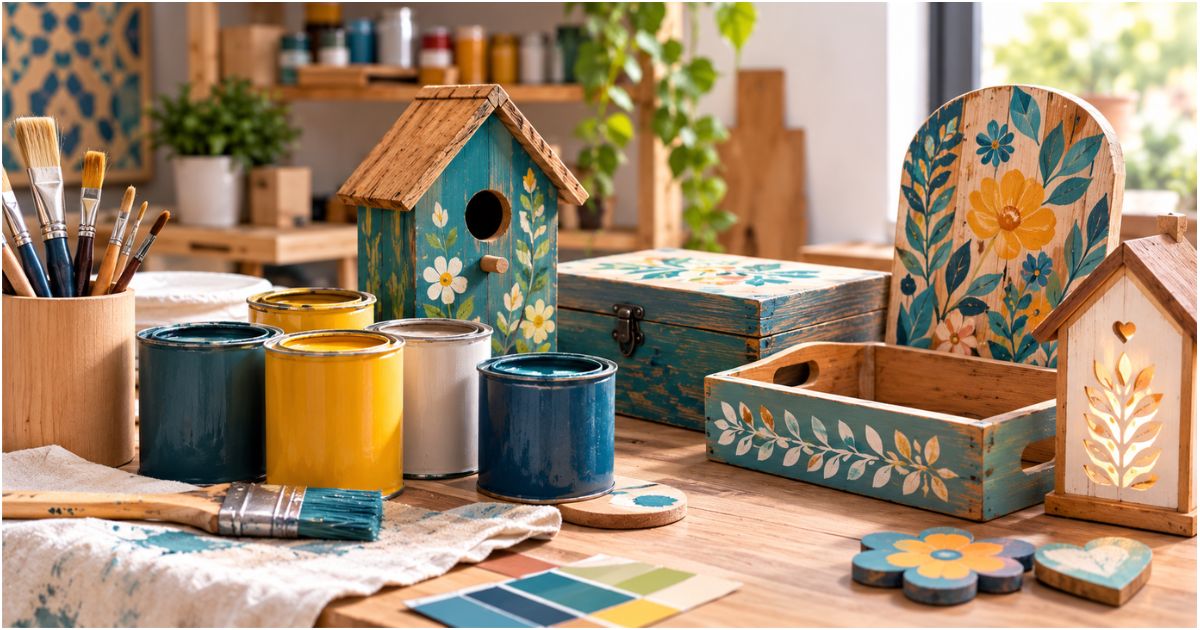
If you’re standing in front of a blank wooden sign, birdhouse, or seasonal decoration wondering which paint will actually stick and last, you’re asking the right question. The wrong paint choice can mean streaks, peeling, fading or a project that looks great for a month and then falls apart. The right one becomes a foundation you can trust.
The best paint for wood crafts depends on your project. Use acrylic craft paint for small, colorful indoor pieces. It’s fast, affordable, and comes in endless colors. Choose latex paint for outdoor durability and large surfaces it’s built to handle weather and traffic. Pick specialty outdoor formulas (FolkArt Outdoor, DecoArt Patio) if you’re painting birdhouses, planters, or yard art that’ll face sun and rain. For every choice, prep with sanding, consider priming, and seal outdoor projects to extend their life.
Let me walk you through the exact steps to choose the right paint, apply it flawlessly, and keep your work looking fresh for years.
Quick Decision Tree: Which Paint is Right for Your Project?
Starting point: Is your project indoors or outdoors?
INDOOR CRAFTS:
- Small signs, plaques, wooden letters? → Acrylic craft paint
- Large wooden furniture or wall art? → Latex paint
- Vintage, matte look? → Chalk paint
OUTDOOR PROJECTS:
- Birdhouses, planters, yard art? → FolkArt Outdoor or DecoArt Patio
- Large fence sections, exterior trim? → Latex exterior paint
- Maximum weather resistance needed? → Acrylic latex or oil-based
Budget-first decision?
- Tight budget, small projects → Acrylic craft paint ($3–8 per bottle)
- Medium budget, durability matters → Latex paint ($30–60 per gallon)
- Premium, outdoor exposure → Specialty formulas ($8–15 per bottle)
Paint Types Compared: Pros, Cons & When to Use Each
Acrylic Craft Paint
What it is: Water-based paint with synthetic polymer binders, designed for small craft projects. Thin, porous, fast-drying.
Best for: Indoor wood crafts, detail work, colorful pieces, kids’ projects, small seasonal decorations.
Pros:
- Affordable: $3–8 per 2–8 oz bottle
- Vast color range: Hundreds of shades available
- Fast drying: 1–2 hours between coats (or less)
- Non-toxic: Safe for children and pets (when used as directed)
- Easy cleanup: Water-based; just rinse brushes
Cons:
- Less durable on high-traffic items: Can chip or scratch if painted surfaces get heavy handling
- Not naturally weatherproof: Needs sealing for outdoor use
- Thinner coverage: May require 2–3 coats
- Water-sensitive when dry: Acrylic paint is water-resistant once cured, but repeated exposure can wear it
Best Brands: FolkArt Acrylics, Craftsmart, Delta Ceramcoat, Liquitex Basics
Pro Tip: Acrylic dries quickly, so work in manageable sections and keep your brush wet. Mix colors on a palette to expand your options.
Latex Paint
What it is: Water-based paint with PVA (polyvinyl acetate) binders and a thicker formula than craft acrylics. Built for durability.
Best for: Large wood surfaces, outdoor projects needing longevity, furniture, fence sections, extensive coverage.
Pros:
- Durable: Withstands weather, moisture, and UV exposure well
- Excellent coverage: Goes further; fewer coats needed
- Premium finish: Smooth, polished appearance; available in matte, eggshell, satin, gloss
- Lower VOC: Less odor and fumes than oil-based paints
- Weather-resistant: Rated for exterior use; resists peeling and cracking
Cons:
- Higher cost: $30–60+ per gallon (but covers more area)
- Longer drying time: 1–2 hours per coat, up to 4 hours full cure
- Thicker, needs technique: Harder to apply smoothly if you’re not practiced; risks brush marks
- Heavy: Requires effort to apply evenly
Best Brands: Sherwin-Williams, Behr, Rust-Oleum, Benjamin Moore
Pro Tip: Use a high-quality brush or roller for smooth coverage. Thin coats beat thick ones. Plan projects that let you finish in good weather.
Chalk Paint
What it is: Specialty acrylic paint formulated for a matte, velvety finish with a rustic or vintage aesthetic.
Best for: Indoor decorative pieces, furniture, signage with a weathered or shabby-chic look.
Pros:
- Beautiful matte finish: No shine; sophisticated look
- Vintage aesthetic: Naturally reads as aged or rustic
- Adheres well to finishes: Can paint over stained or previously painted wood without primer (though prep helps)
- Rich color depth: Colors look sophisticated and intentional
Cons:
- Higher cost: $10–20+ per 8 oz bottle
- Less durable than latex: Requires sealing for protection
- Limited color range: Fewer options than craft acrylics
- Slow coverage: Porous, may need multiple coats
Best Brands: Annie Sloan, Rust-Oleum Chalked, FolkArt Home Décor, Americana Décor
Pro Tip: Chalk paint pairs beautifully with wax finishes. Apply a clear or tinted wax topcoat for protection and a subtle sheen.
Oil-Based Paint
What it is: Paint made with linseed oil or alkyd resin binders. Provides a waterproof, durable finish.
Best for: Outdoor wood projects, preserving natural wood grain, maximum durability and water resistance.
Pros:
- Waterproof: Seals wood naturally; excellent for exterior use
- Rich appearance: Brings out natural wood beauty; warm, deep tones
- Durable: Resists weather, moisture, and fading
- Excellent coverage: Smooth, professional finish
Cons:
- High VOC: Strong odor; requires ventilation
- Slow drying: 4–24 hours between coats; 1 week full cure
- Cleanup hassle: Requires paint thinner or turpentine to clean brushes (flammable, toxic)
- Fewer colors: Limited to earthy, traditional tones
- More expensive: $40–80+ per gallon
- Odor persistence: Lingers indoors for days
Best Brands: Rust-Oleum, Minwax, Behr Premium Plus (alkyd)
Pro Tip: Use oils outdoors or in well-ventilated spaces. Plan projects that give you several days of drying time before handling.
Spray Paint
What it is: Aerosol paint in acrylic or enamel formulation. Quick, diffuse application.
Best for: Small items, detail work, hard-to-reach areas, quick coverage on compact pieces.
Pros:
- Speed: Even coat in minutes
- No brush marks: Smooth, uniform finish
- Good for details: Perfect for filigree, texture, or crevices
- Wide color range: Hundreds of spray paint shades
Cons:
- Must use outdoors: Fumes require ventilation
- Overspray waste: Some paint escapes; not economical for large areas
- Less durable than brushed latex: Thinner coverage
- Risk of drips: Requires technique to avoid runs
- Not suitable for high-traffic areas: Chips easily
Best Brands: Rust-Oleum, Krylon, Rust-Oleum Specialty (outdoor formulas)
Pro Tip: Light, overlapping coats beat one thick coat. Shake well and apply in short bursts for even coverage.
Specialty Outdoor Formulas (FolkArt Outdoor, DecoArt Patio, Americana Outdoor Living)
What it is: Acrylic craft paint engineered for outdoor durability thicker, more weather-resistant than standard craft acrylics.
Best for: Outdoor wood crafts, birdhouses, planters, yard art, small-scale exterior projects.
Pros:
- Weather-ready: Formulated to resist fading, peeling, and moisture
- No sealer needed: Many require no topcoat finish (though sealing adds life)
- Vibrant colors: Wider range than standard exterior paints; craft-paint brightness
- Affordable: $8–15 per bottle; costs less than full-size exterior latex
- Easy application: Brushable, water-based, minimal odor
Cons:
- Smaller sizes: 2–8 oz bottles; not ideal for large projects
- Less durable than latex: Still may fade after 2–3 years in harsh sun
- May need sealing in extreme weather: Storm exposure or year-round outdoor use benefits from topcoat
Best Brands:
- FolkArt Outdoor: Most popular for crafts; excellent reviews
- DecoArt Patio Paint: High durability; “no sealer needed” formula
- Americana Décor Outdoor Living: Rich colors; premium finish
Pro Tip: These paints work great for detailed outdoor crafts where latex would be overkill. Pair with a water-based sealant (like polyacrylic spray) for extra protection in direct sun or rain zones.
Paint Comparison Table: All Types at a Glance
| Paint Type | Best For | Cost | Drying Time | Indoor Durability | Outdoor Durability | Ease of Use | Color Range | Brands |
| Acrylic Craft | Small indoor crafts, detail work | $3–8/bottle | 1–2 hrs | Fair (needs sealing for high-traffic) | Poor (needs sealing) | Excellent | Vast (100+) | FolkArt, Craftsmart, Delta |
| Latex | Large projects, outdoor durability | $30–60/gal | 1–2 hrs | Excellent | Excellent | Good (technique matters) | Extensive | Sherwin-Williams, Behr, Rust-Oleum |
| Chalk | Furniture, vintage aesthetic | $10–20/bottle | 2–3 hrs | Fair (needs wax/sealing) | Poor (needs sealing) | Good | Limited (30–50) | Annie Sloan, Rust-Oleum Chalked |
| Oil-Based | Outdoor durability, natural wood | $40–80/gal | 4–24 hrs | Excellent (waterproofed) | Excellent | Fair (slow drying, cleanup) | Limited (earthy tones) | Minwax, Rust-Oleum, Behr Premium |
| Spray | Small items, detail work | $5–12/can | 15–30 min | Fair | Fair | Excellent | Very extensive | Krylon, Rust-Oleum |
| Specialty Outdoor | Outdoor crafts, birdhouses | $8–15/bottle | 1–2 hrs | Good | Very Good (with sealer) | Excellent | Extensive | FolkArt Outdoor, DecoArt Patio |
Do You Need a Primer? When & Why
Short answer: It depends on your wood surface. Raw, unfinished wood takes paint directly. But some surfaces absolutely need primer to avoid disaster.
When Primer is Essential
Previously stained or varnished wood: If you see a glossy finish or stain color, the paint won’t adhere without first sanding and priming. The slick surface has nothing for paint to grab.
Glossy plywood or treated wood: Plywood often ships with a glossy finish. Primer helps water-based latex or acrylic grip the surface.
Painting white over raw, knotty wood: This is critical. Bare wood especially pine or knotty lumber releases tannins that bleed through light paint, turning white yellow or cream over time. A shellac primer (like Zinsser Bulls Eye) blocks tannin bleed. Then apply white primer, then white topcoat for true white.
Covering dark or bold colors: Priming helps the new color cover in fewer coats and prevents the old color from showing through.
When You Can Skip Primer
Raw, unfinished wood being painted any color other than white: Acrylic, latex, or craft paint sticks fine to bare wood without primer. You might need extra coats for full opacity, but it’ll adhere.
Interior acrylic on raw wood: Craft acrylics bond well to unfinished wood indoors without primer.
Best Primers for Wood
Zinsser Bulls Eye 1-2-3
- Multi-surface primer; works on wood, metal, plastic
- Water-based; low VOC
- Spray or liquid form
- Best for: Blocking tannins, prepping glossy surfaces
- Cost: $10–20 per quart
Zinsser Bulls Eye Shellac Spray
- Shellac-based; fast-drying
- Specifically targets tannin bleed
- Quick coat (dries in 15 minutes)
- Best for: White paint on knotty wood, emergency quick primer
- Cost: $8–15 per can
Kilz Original
- Budget-friendly; oil-based
- Excellent stain-blocking
- Best for: Covering dark surfaces, blocking water stains
- Cost: $15–25 per gallon
Paint + Primer Combos
Some latex and acrylic paints include primer, saving a step. Read the label: “Paint & Primer in One” means no separate primer needed (though separate primer still helps durability).
How to Prepare Wood for Paint
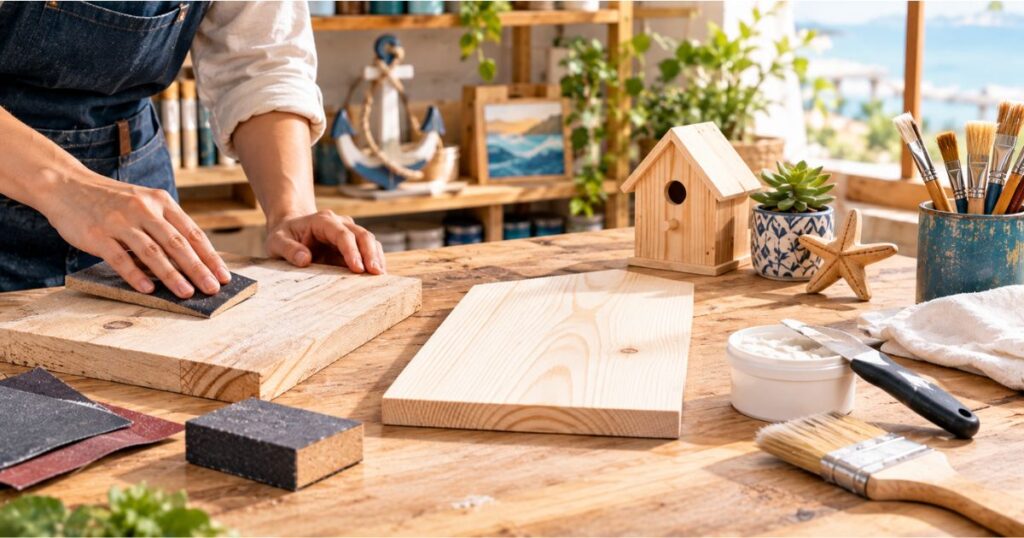
This is where most failures happen. Skipping prep means paint won’t stick, dust gets trapped, and projects fail faster.
Step 1: Assess Your Wood
Raw, unfinished wood? → Light sand only (120–150 grit), then wipe dust.
Stained or varnished wood? → Heavy sand (80–100 grit) to dull the finish, then prime and paint.
Previously painted wood? → Sand lightly (120 grit) to help the new paint stick. Fill gaps or holes with wood filler.
Plywood with glossy finish? → Sand (80–120 grit), wipe dust, prime with bonding primer, then paint.
Knotty wood (lots of knots)? → Sand gently (120 grit), prime with shellac to block tannin bleed, then paint.
Step 2: Sand & Clean
Grit sizes:
- 80–100 grit: Heavy sanding for dull finishes or remove old paint
- 120–150 grit: Standard prep for bare wood
- 220 grit: Light sanding between coats; finishing sand
Process:
- Sand in the direction of the wood grain (follow the line of the wood, don’t sand against it).
- Use steady, even pressure. Don’t over-sand you just want to rough up the surface, not wear through.
- Wipe away dust with a tack cloth (sticky cloth that grabs dust) or damp rag. Let dry if using water.
- Inspect: surface should feel slightly gritty, not smooth.
Pro tip: If you sand plywood and see the glossy finish still shining, sand more paint won’t stick to shiny surfaces.
Step 3: Fill & Repair
- Holes or gaps? Use wood filler (DAP Fast ‘N Final or Minwax). Let dry, sand flush.
- Cracks? Fill with wood filler or caulk designed for wood. Sand once dry.
- Splinters? Sand smooth or fill, depending on size.
Step 4: Prime (If Needed)
Based on your surface and paint choice (see Primer section above), apply primer. Let dry per manufacturer instructions (usually 1–2 hours for water-based; 4+ for oil-based).
Sealing & Protecting Your Painted Wood
Paint isn’t the end sealing extends life dramatically, especially outdoors.
Why Seal?
- Indoors: Protects high-traffic areas from chipping, scratching, and wear
- Outdoors: Blocks UV fading, moisture penetration, and weather damage
- Extends paint life: A sealed piece lasts 2–3x longer than unsealed
Indoor Sealants
MinWax Polycrylic Crystal Clear
- Water-based; low odor; safe for indoors
- Creates hard, protective finish
- Comes in spray or brush-on
- Dries clear with slight satin/gloss sheen
- Cost: $8–15 per can (spray), $12–20 per quart (brush)
- Best for: Furniture, indoor signs, high-traffic pieces
Rust-Oleum Polyurethane
- Water-based option available
- Very durable topcoat
- Available in matte or gloss
- Cost: $10–20 per quart
Outdoor Sealants
Helmsman’s Spar Urethane
- Water-based polyurethane
- Specifically formulated for exterior wood
- Resists water, UV, and temperature swings
- Flexible; won’t crack as wood expands/contracts
- Cost: $15–25 per quart
Rust-Oleum Varathane Water-Based Polyurethane
- Outdoor-rated, clear finish
- Good UV protection
- Fast-drying (3–4 hours)
- Cost: $12–20 per quart
Oil-Based Tung Oil (for natural wood look)
- Enhances wood grain instead of glossy plastic look
- Not as durable as polyurethane but more aesthetic
- Requires 2–3 coats, day drying between coats
- Cost: $15–30 per quart
Application Tips
- Brush vs. Spray: Spray is faster and more even; brush is more controlled. For crafts, spray topcoat is simpler.
- Thin coats: Better than thick coats. 1–2 coats are usually sufficient; sand lightly between coats.
- Dry time matters: Let each coat dry fully before recoating or handling.
- Outdoor weather: Apply sealant when temps are 50–85°F and humidity is low. Avoid rainy forecasts (wait 48 hours after rain).
Best Paints by Project Type
Indoor Wood Signs & Decorative Pieces
The choice: Acrylic craft paint + optional sealing with wax or polycrylic.
Why: Signs live indoors and rarely get handled roughly. Acrylic’s bright colors and fast drying work well. Sealing isn’t mandatory but adds durability.
Process:
- Sand (120 grit), wipe dust
- Paint with 2–3 coats acrylic (FolkArt, Craftsmart)
- (Optional) Seal with MinWax Polycrylic spray or chalk paint wax for protection
Brands to pick: FolkArt Acrylics, Delta Ceramcoat, DecoArt Americana
Budget: $10–20 per project (paint only)
Outdoor Birdhouses & Planters
The choice: FolkArt Outdoor, DecoArt Patio, or Americana Outdoor Living + water-based sealant.
Why: These specialty outdoor formulas are made for small outdoor items and perform well in sun/rain. They’re cheaper than full-size exterior latex for small projects.
Process:
- Sand lightly (120 grit), wipe dust
- Prime if previously painted (skip if raw wood)
- Paint with 2 coats outdoor formula
- Seal with polyacrylic spray or water-based polyurethane (optional but recommended for longevity)
Brands to pick: FolkArt Outdoor, DecoArt Patio Paint, Americana Outdoor Living
Budget: $15–30 per project (including sealer)
Pro tip: Seal the interior of birdhouses too moisture inside shortens their life.
Large Outdoor Projects (Fence Sections, Deck Furniture)
The choice: Latex exterior paint + water-based polyurethane sealant.
Why: Latex covers large areas efficiently and lasts for years. Sealant protects against UV and moisture.
Process:
- Sand (80–120 grit), wipe dust, assess for primer need
- Prime if wood is stained or glossy
- Paint 2 coats latex exterior (Sherwin-Williams, Behr, Rust-Oleum)
- Seal with Helmsman’s Spar Urethane or equivalent (1–2 coats)
Brands to pick: Sherwin-Williams Duration, Behr Premium Plus Ultra, Rust-Oleum Varathane
Budget: $60–120 (paint + sealer for 100 sq ft)
Kids’ Wooden Projects & Toys
The choice: Non-toxic acrylic craft paint on unfinished wood.
Why: Craft acrylics are explicitly non-toxic. Unfinished wood is safe. No need to seal if it’s not a high-contact surface (like a toy being handled constantly).
Process:
- Sand very lightly (just smooth edges; 120 grit)
- Paint with 2 coats acrylic
- (For high-contact toys) Seal with non-toxic, food-safe topcoat (check label for toy/food-contact rating)
Brands to pick: FolkArt Acrylics, Craftsmart, any craft acrylic explicitly labeled non-toxic
Budget: $5–15 per project
Safety note: Always check paint labels for “non-toxic” and “ASTM D4236” certification when painting items for young children.
Seasonal Wood Crafts (Christmas, Halloween, Spring)
The choice: Acrylic craft paint; no sealing needed for indoor seasonal items.
Why: These pieces are temporary; durability over a year is fine. Acrylic’s fast drying and color range are perfect.
Process:
- Sand lightly (120 grit)
- Paint 2–3 coats
- Done no sealer needed for indoor seasonal pieces
Brands to pick: FolkArt Acrylics, Delta Ceramcoat
Budget: $8–15 per piece
Common Paint Problems & Fixes
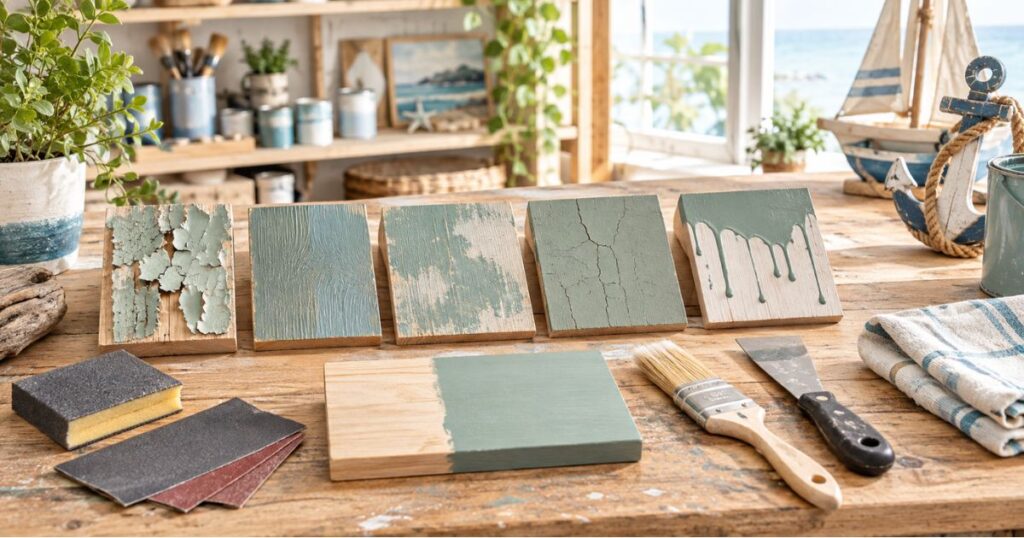
Paint Streaks or Uneven Coverage
Cause: Thin paint, wrong technique, or dry brush.
Fix:
- Use thin, overlapping strokes (don’t scrub; let the brush glide)
- Keep your brush wet reload often
- Apply 2–3 thin coats instead of one thick coat
- For latex paint, use a roller instead of a brush for smoother coverage
- Use a brush with soft bristles (natural bristle for oils, synthetic for water-based)
Paint Peeling or Chipping
Cause: Poor surface prep, moisture trapped under paint, or low-quality paint.
Fix (prevention):
- Sand glossy surfaces before painting so paint adheres
- Seal the back/underside of outdoor items to prevent moisture seep
- Use primer on stained or previously painted wood
- Let paint cure fully (48 hours) before handling or exposing to weather
- Use quality paint budget craft acrylic won’t last outdoors; use outdoor formulas instead
Fix (already peeling):
- Scrape off loose paint, sand, prime, and repaint
Yellowing White Paint (Especially Indoor)
Cause: Tannin bleeds from knotty wood.
Fix:
- Use shellac primer (Zinsser Bulls Eye) under white paint it blocks tannins
- Prime → White primer → White paint (three layers)
- Seal with clear topcoat to protect
Paint Won’t Stick (Beads Up)
Cause: Glossy surface, contamination (dust, oil), or wrong paint for substrate.
Fix:
- Sand the surface to dull the gloss
- Wipe with tack cloth to remove dust
- Use primer if surface is very slick or stained
- Check that your paint is compatible with the surface (water-based on glossy plywood? Might need primer)
Brush Marks Visible After Drying
Cause: Paint too thick, cheap brush, or applied against the grain.
Fix:
- Thin your paint slightly with a few drops of water (for acrylics/latex)
- Use a better quality brush (soft bristles, full bristle spread)
- Apply thin coats and let dry between
- Paint with the wood grain, not against it
- For latex, use a foam roller instead of a brush smoother finish
Top Paint Brands for Wood Crafts
FolkArt Acrylics
- What: Premium craft acrylic, available in 100+ colors
- Best for: Indoor crafts, small projects, vibrant colors
- Durability: Fair (needs sealing for outdoors)
- Cost: $3–5 per bottle
- Where: Craft stores, online
- Notable: FolkArt Outdoor line is excellent for outdoor crafts
DecoArt Americana & Patio Paint
- What: Craft acrylic line with specialty outdoor formulas
- Best for: Crafts, outdoor patio items, furniture
- Durability: Very good (especially Patio line)
- Cost: $4–6 per bottle (craft), $8–12 per bottle (Patio)
- Where: Craft stores, online
- Notable: Patio Paint requires no sealer (though sealing adds life)
Rust-Oleum
- What: Wide range: spray paints, latex, polyurethane, chalk paint
- Best for: Outdoor projects, DIY budget-friendly work
- Durability: Good to excellent depending on line
- Cost: $5–15 per can/quart
- Where: Hardware stores, online
- Notable: Polyurethane topcoats are durable and affordable
Sherwin-Williams
- What: Professional exterior latex paint
- Best for: Large outdoor projects, longevity
- Durability: Excellent
- Cost: $40–70 per gallon
- Where: Sherwin-Williams stores, some hardware stores
- Notable: Duration line is premium exterior; pricey but lasts
Behr
- What: Widely available exterior paint
- Best for: Large outdoor projects, good value
- Durability: Good
- Cost: $25–50 per gallon
- Where: Home Depot, online
- Notable: “Premium Plus Ultra” line offers good durability at mid-range price
Minwax & Helmsman’s (Sealants)
- What: Polyurethane, polyacrylic, oil-based finishes
- Best for: Protecting painted wood
- Durability: Excellent
- Cost: $10–25 per quart
- Where: Hardware stores, online
- Notable: Helmsman’s is gold standard for outdoor wood sealant
Cost Breakdown by Project Type

| Project Type | Size | Paint Cost | Primer/Sealer | Total Budget |
| Small indoor sign | 12″×24″ | $5–10 (acrylic) | $0–5 (optional wax) | $5–15 |
| Birdhouse | 8″×8″×12″ | $8–12 (outdoor paint) | $5–10 (sealant) | $13–22 |
| Wooden planter | 12″ dia | $10–15 (outdoor) | $5–10 (sealant) | $15–25 |
| Large wooden sign | 24″×36″ | $20–30 (latex) | $10–15 (primer + sealer) | $30–45 |
| Fence section | 8’×4′ | $40–60 (latex/gal) | $15–25 (primer + sealant) | $55–85 |
| Kids’ wooden toys (5 items) | Mixed small | $10–15 (acrylic) | $0–5 (optional) | $10–20 |
| Seasonal crafts (3 pieces) | Mixed small | $10–20 (acrylic) | $0 | $10–20 |
Cost-saving tips:
- Buy craft acrylic in bulk: Larger bottles cost less per ounce
- Use spray sealants: Faster application, less product waste
- Skip sealing for indoor pieces: Only seal if the item gets heavy handling or high traffic
- Buy “paint + primer” combos: Saves one step and money (though separate primer is better for durability)
- Compare cost per coverage: Latex costs more upfront but covers more area, so cost-per-square-foot may be lower
FAQs
Can you use acrylic paint on unfinished wood?
Yes, absolutely. Acrylic paint adheres well to raw wood without primer. You might need 2–3 coats for full coverage, but it works.
Should I use primer on raw wood?
Not required for craft acrylics on raw wood. Primer becomes essential if: (1) painting over stain, (2) painting white on knotty wood (use shellac primer to block tannins), (3) using latex paint on glossy plywood.
What’s the difference between acrylic and latex paint?
Both are water-based, but latex is thicker, more durable, and covers larger areas. Acrylic is thinner, faster-drying, and cheaper but less durable for outdoor or high-traffic use. Use acrylic for small crafts; latex for large or outdoor projects.
How long does paint last on outdoor wood?
Unsealed acrylic or craft paint: 1–2 years before fading. Sealed craft paint: 2–3 years. Latex exterior paint: 5–7 years. Oil-based paint: 7–10 years. Sealing adds 1–3 years to any paint’s life.
Is acrylic paint waterproof when dry?
Acrylic becomes water-resistant when cured (fully dry) but is not fully waterproof. Outdoor exposure will eventually break it down. Seal acrylic paint outdoors for true water resistance.
Why did my paint peel off outdoor wood?
Common causes: (1) poor surface prep paint didn’t adhere, (2) moisture trapped under paint seal the underside of outdoor pieces, (3) using interior paint outdoors use exterior-rated paint, (4) no primer on stained/glossy wood.
Can I paint over stained wood without a primer?
Not recommended. Stain sits on top of the wood; paint won’t adhere. Sand the stain dull, then prime before painting. If you skip primer, paint will peel within months.
Is acrylic paint safe for kids’ wooden toys?
Yes, if labeled “non-toxic” and “ASTM D4236 certified.” Most craft acrylics meet this standard. Confirm the label. Avoid painting items babies put in mouths unless using food-safe, toy-certified finishes.
