

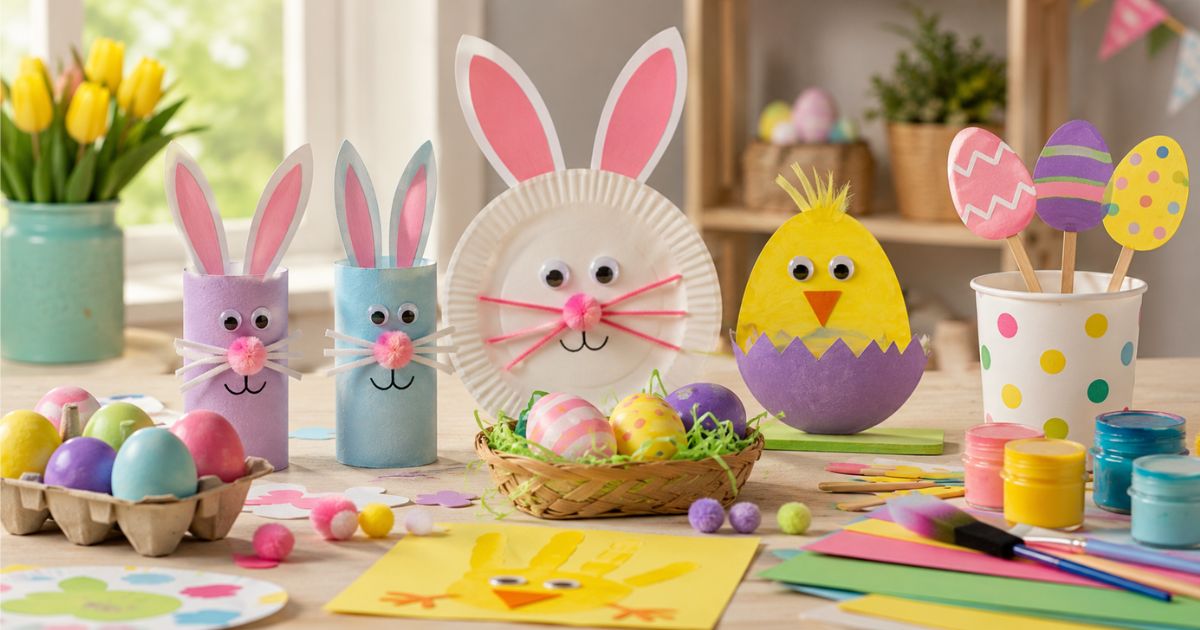
Easy Easter crafts for kids don’t have to be complicated or messy. The best craft projects use simple supplies you already have at home: paper plates, paint, glue sticks, googly eyes and come together in under 30 minutes. Most importantly, they’re designed so that kids (and parents) can actually enjoy the process without stress.
In this guide, you’ll find 25 genuinely easy Easter crafts sorted by age, time, and mess level, plus the master supply checklist, budget-friendly hacks, and troubleshooting tips that will save you from the Pinterest trap.
The Real Why Behind Easter Crafts
Easter crafts aren’t just about making something cute for Instagram. They’re about fine motor skill development, seasonal connection, and creating a screen-free memory together. When kids paint, cut, glue, and assemble, they’re building hand-eye coordination, problem-solving ability, and confidence. And honestly? The time you spend together even if the finished product looks a little wonky is what sticks with them.
The permission you need: Your Easter crafts don’t need to look like a magazine. They need to be done in 20 minutes without anyone losing it. Perfectly imperfect is the goal.
The Low-Mess Manifesto: How to Make Easter Crafts Stress-Free
The biggest barrier to Easter crafts isn’t ideas, it’s the fear of mess. Here’s the honest truth: messy projects don’t have to be part of the deal.
The Supplies That Save Your Sanity
Only use washable paints. Period. Non-washable paint is a security risk, not a design choice.
Glue sticks over liquid glue. Liquid glue is runny, spreads everywhere, and takes forever to dry. Glue sticks are precise, fast, and contained.
Paper plates and plastic eggs over real eggs. Real eggs are fragile, break mid-craft, and create actual messes. Save them for dyeing if you want, but for crafting, use pre-made options.
Pre-cut or simple-to-cut materials. Construction paper, tissue paper, and pipe cleaners are forgiving. Intricate stencil work and hot glue projects belong in someone else’s house.
Hand wipes at the table. Have wet wipes sitting right there. Kids can wipe their hands mid-craft without running to the sink and spreading paint through your home.
Your Master Easter Craft Toolkit: What to Buy vs. What to Repurpose
Building a proper craft toolkit with the right storage makes every project below faster to set up and easier to clean up.
| Supplies | Where to Get | Cost | Why It Works |
| Washable paint (8–10 colors) | Dollar store or Amazon | $3–6 | Core ingredient; reusable for months |
| Construction paper (pack of 50) | Dollar store | $1–2 | Versatile; holds paint, markers, glue |
| Googly eyes (assorted sizes) | Dollar store | $1 | Instant personality; kids love adding them |
| Paper plates (bulk pack) | Grocery store | $2–3 | Free base for so many crafts |
| Glue sticks (multi-pack) | Any store | $2–3 | Essential; safe for young kids |
| Tissue paper (assorted colors) | Dollar store | $1–2 | Lightweight, easy to tear, colorful |
| Markers or crayons | You probably have these | $0 | Drawing, facial features, details |
| Scissors (child-safe) | You probably have these | $0 | Cardboard-safe; easier for kids |
| Pipe cleaners (assorted) | Dollar store | $1 | Fuzzy, bendable, no glue needed |
| Cotton balls or pom-poms | Dollar store | $1–2 | Fluffy textures; easy to glue |
| Markers or paint brushes | You probably have these | $0 | Application tools |
| Washi tape (optional) | Dollar store | $1–2 | Mess-free decoration |
| TOTAL STARTUP COST | $15–25 | Enough for 8–12 crafts across multiple kids |
What to raid from your junk drawer:
- Newspaper or paper towels (table cover)
- Egg cartons
- Paper bags
- Old magazines
- Yarn or ribbon scraps
- Plastic bags (for treats)
Setup Tricks That Actually Work
1. Newspaper down first. Tape it to your table. Paint, marker, and glue accidents stay contained. When you’re done, roll it up and toss it.
2. Aprons or old t-shirts. Keep painting clothes. Kids feel official and creative in an apron.
3. One wet wipe per child. Place it at their spot. When hands get sticky, they wipe. No running to the sink mid-craft.
4. Work on a tray or shallow container. Keeps small pieces (googly eyes, sequins, pom-poms) from rolling across the table.
5. Dry craft items separately. If paint or glue is involved, set the finished piece on a designated drying shelf (a windowsill works great). Don’t stack wet crafts; they’ll stick together.
Easter Crafts by Age: Which Crafts Fit Your Kid’s Skills
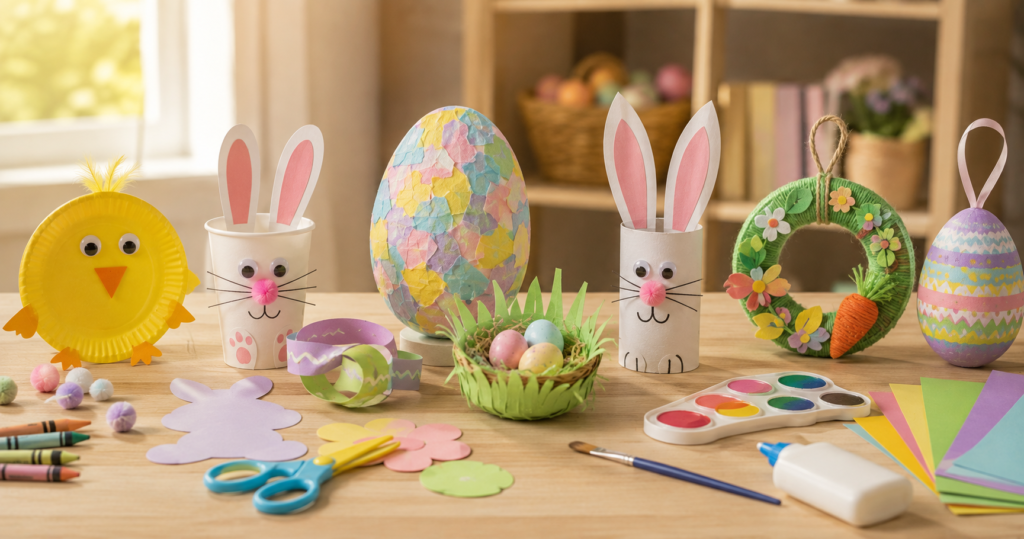
Not all Easter crafts are created equal. A craft that’s fun for a 5-year-old might frustrate a toddler and vice versa. Here’s how to match the craft to the child.
Ages 2–4: The Sensory Zone (Toddlers & Preschool)
At this age, kids are exploring textures and colors, not precision. They want to paint, stamp, and stick things down. Projects that involve cutting, assembling tiny pieces, or multiple steps will lead to frustration (and tears).
What works: Painting on large surfaces, stamping with pads or sponges, placing stickers, tearing tissue paper, gluing big pieces.
Craft 1: Paper Plate Chick (15 minutes)
- Paint a paper plate yellow. While wet, have your toddler press tissue paper squares onto it (you did the setup they do the sticking). Add a googly eye and a construction paper triangle beak. Done. Minimal precision needed; maximum sensory fun.
Craft 2: Fingerprint Bunnies & Chicks (10 minutes)
- Use a washable stamp pad (or paint on a sponge). Press fingers onto paper. Add simple marker details: bunny ears, chick beak, bunny whiskers. Kids this age love seeing their fingerprints turn into animals.
Craft 3: Egg Sticker Scene (15 minutes)
- Print a simple spring scene or draw a landscape on paper. Give your toddler stickers shaped like eggs, chicks, flowers, or bunnies to place wherever they want. No glue required if you use reusable stickers.
Ages 5–7: Early Elementary (Growing Independence)
Kids this age are ready for cutting with supervision, simple assembly, and following two or three steps. They’re proud when they do something “all by themselves,” so projects that let them lead (with your safety net nearby) are ideal.
What works: Cutting along simple lines, gluing pieces together, decorating with details, projects with a clear beginning and end.
Craft 1: Pipe Cleaner Bunny Ears Headband (15 minutes)
- Bend two white pipe cleaners into ear shapes. Twist them onto a plastic headband. Let your child add pink pipe cleaner accents inside the ears (you hold, they twist). Glue on googly eyes with a marker nose. They wear it immediately for instant gratification.
Craft 2: Cotton Ball Lamb (20 minutes)
- Cut a large oval from black construction paper (body). Cut a smaller circle for the head. Cut four small rectangles for legs. Your child glues these together, then glues cotton balls all over the body (the messy part they love). Add googly eyes and a marker smile. Soft, sweet, doable.
Craft 3: Washi Tape Decorated Eggs (20 minutes)
- Use plastic or real hard-boiled eggs. Give your child washi tape and let them tear strips and stick them onto the egg in patterns. No cutting required; just tearing and sticking. Low pressure, high creativity.
Ages 8+: Multi-Step & Detail Work
Older kids can handle multiple steps, fine detail work, planning, and problem-solving. They might lose interest in simple projects, so give them room for creativity and a little complexity.
What works: Tie-dye and dyeing techniques, basket design, step-by-step assembly, projects where they make decisions about design.
Craft 1: Tie-Dye Easter Eggs (30 minutes, plus drying time)
- Wrap hard-boiled eggs in paper towels and secure with a twist tie or rubber band. Drip or spray food coloring onto the towel in different colors. Let it sit and dry. Unwrap to reveal a marbled pattern. This feels like a real “technique,” and they control the color placement.
Craft 2: Paper Basket Design Challenge (45 minutes)
- Give your child construction paper, markers, stickers, and tape. Challenge them to design and build their own Easter basket from scratch. No template; just guidelines. This taps into problem-solving and creativity.
Craft 3: Easter Garland from Paint Samples (30 minutes)
- Visit a hardware or paint store and grab free paint sample swatches (ask nicely). Your child cuts egg shapes from the samples (the colors are beautiful and varied). Hole-punch the tops and thread them onto yarn or string for a garland. Upcycled, easy, and looks surprisingly sophisticated.
25 Easy Easter Crafts: Sorted by Time, Mess Level, and Materials
Below are 25 easy Easter crafts organized so you can scan by time and mess level. Each craft includes a quick tip for success.
Under 15 Minutes, Very Low Mess
| Craft | Age | Time | Supplies | Why It Works |
| Fingerprint Bunnies | 2+ | 10 min | Stamp pad, paper, markers | No setup; instant fun |
| Washi Tape Eggs | 4+ | 15 min | Plastic/real eggs, washi tape | Tear-and-stick; no precision |
| Sticker Egg Scene | 2+ | 15 min | Paper, stickers, markers | Reusable stickers, optional |
| Paper Cone Carrots | 5+ | 10 min | Construction paper, tape, candy | Simple rolling and taping |
| Googly Eye Decorating | 3+ | 10 min | Pre-made cardboard shapes, googly eyes, glue | Just gluing; instant results |
| Paint Sample Eggs (simple) | 3+ | 12 min | Paint swatches, scissors, markers | Colorful bases; just decorate |
Quick Tip: These are perfect for busy mornings, last-minute ideas, or when your kid has low frustration tolerance that day.
15–30 Minutes, Low Mess
| Craft | Age | Time | Supplies | Why It Works |
| Paper Plate Chick | 2+ | 15 min | Paper plate, yellow paint, tissue paper, googly eyes | Large surface; no precision cutting |
| Pipe Cleaner Bunny Ears | 5+ | 15 min | Pipe cleaners, plastic headband, glue, googly eyes | Minimal assembly; wearable result |
| Cotton Ball Lamb | 4+ | 20 min | Construction paper, cotton balls, glue, googly eyes | Tactile; soft texture appeals to kids |
| Paper Bag Bunny | 4+ | 20 min | Paper lunch bag, construction paper, googly eyes, markers | Fold-and-decorate; puppet playable |
| Fork-Painted Chick | 3+ | 15 min | Fork, yellow paint, paper, markers, googly eyes | Unique texture tool; interesting result |
| Egg Carton Caterpillar (paint) | 3+ | 15 min | Egg carton, paint, googly eyes, marker | Pre-segmented base; just paint |
| Painted Rock Eggs | 5+ | 20 min | River rocks, paint, paintbrush, clear sealer (optional) | Looks like a real egg when done |
| Yarn-Wrapped Eggs | 5+ | 20 min | Plastic eggs, yarn, glue stick | Textured; no paint mess |
Quick Tip: These hit the sweet spot enough activity to feel like a “project,” but not so complicated that kids get bored.
30+ Minutes (Or Worth the Time)
| Craft | Age | Time | Supplies | Why It Works |
| Tie-Dye Eggs | 7+ | 30 min | Hard-boiled eggs, paper towels, food coloring, twist ties | Feels like a real technique; marbled results |
| Easter Basket from Scratch | 8+ | 45 min | Paper bag, construction paper, tape, markers, stickers | Problem-solving; creative freedom |
| Coffee Filter Flowers | 5+ | 30 min | Coffee filters, markers, water spray bottle, glue | Dye-bleed effect looks magical |
| Bunny Bum Planter | 5+ | 25 min | Terracotta pot, paint, pom-poms, glue gun (adult), markers | Decorative; functional; adorable |
| Paper Doily Sheep | 4+ | 20 min | Paper doilies (multiple sizes), construction paper, googly eyes, glue | Layered; elegant-looking |
| Easter Garland from Paint Samples | 7+ | 30 min | Paint swatches, scissors, hole punch, yarn | Upcycled; surprisingly pretty |
Quick Tip: These are better for a dedicated craft afternoon or a weekend project—not a Tuesday after school.
Budget-Friendly Hacks: Make 8+ Easter Crafts for Under $20
Easter craft season can feel expensive if you’re buying specialty supplies. It doesn’t have to be. Here’s how to stay on budget.
Supplies You Probably Already Have
Raid your junk drawer first:
- Newspaper or paper towels (table protection, stuffing for baskets)
- Egg cartons (bases for caterpillars, storage, or individual paint pots)
- Paper bags (bunny baskets, puppets)
- Old magazines or catalogs (collage base, Easter pictures to cut out)
- Yarn or string scraps (bunny whiskers, garland, handles)
- Plastic grocery bags (tissue paper alternative, stuffing)
- Rubber bands or twist ties (tie-dye, securing things)
- Buttons or beads (eyes, decoration)
- Plastic containers (paint mixing, water for brushes)
Supplies you have from other projects:
- Markers and crayons (details, facial features)
- Scissors (cutting paper, construction paper)
- Paint or markers (if you have them from other crafts)
- Glue stick (safer than liquid glue, often already in the house)
Cost saved by repurposing: $5–8
Where to Shop Cheap
Dollar stores are your Easter craft MVP. You’ll find:
- Washable paint ($1–2 for a set)
- Construction paper ($1–2 for a pack)
- Googly eyes ($1 for a huge bag)
- Pipe cleaners ($1 for a pack)
- Tissue paper ($1–2)
- Markers and crayons ($1–2)
- Glue sticks ($1–2)
One trip to a dollar store: $10–12 for enough supplies for 8–12 crafts.
Other budget-friendly sources:
- Grocery stores: Paper plates, napkins, plastic eggs (often on clearance after holidays)
- Amazon or Walmart: Bulk packs of supplies (washable paint, googly eyes, pipe cleaners) often cost less than specialty stores
- Thrift stores: Vintage terra cotta pots, yarn, and fabric (great for bunny basket projects)
- Free materials: Paint samples from hardware stores (ask the paint desk), newspaper, cardboard boxes
DIY Substitutions (Zero-Cost Hacks)
Make your own paint:
- Mix 1 tablespoon dish soap + 1 tablespoon tempera powder + a few drops of water. Instant washable paint.
Dye pasta or paper naturally:
- Boil water with beet juice for pink, turmeric for yellow, spinach for green. Soak dried pasta or paper in the mixture. Unique, eco-friendly, no food coloring needed.
Use egg shells as planters:
- Carefully crack eggs from the top (save for cooking). Rinse and dry the shells. Paint them, fill with soil, and add a small plant or seed. Doubles as craft and garden project.
Make confetti from newspaper:
- Tear old newspapers into small pieces. Colorful headlines = free confetti for Easter baskets or craft embellishment.
Budget-conscious family goal: Spend $15–20 total and have enough supplies to make multiple crafts with multiple kids over the course of a few weeks.
What to Do When Things Go Wrong
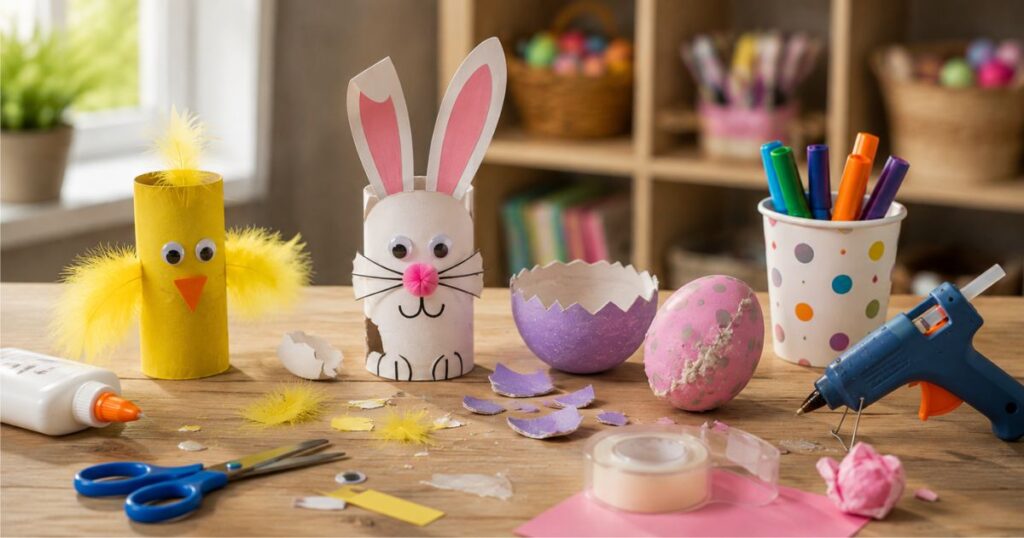
Easter crafts don’t always go perfectly, and that’s OK. Here’s how to handle common hiccups.
“The Paint Won’t Dry”
Problem: Your child finished their masterpiece 20 minutes ago, but it’s still wet and smudging.
Fix: Use washable paint, not food coloring or watercolor. Washable paint dries faster. If you’re in a hurry, set the finished craft in direct sunlight (speeds drying) or use a hair dryer on a cool setting held a few inches away.
Pro tip: Accept that some pieces take time to dry. Set them on a shelf where they won’t be disturbed and return to them later.
“The Glue Took Forever to Dry”
Problem: You used liquid glue, and now it’s been 30 minutes and things are still sliding around.
Fix: Switch to glue sticks. They set immediately and are way less messy. If you must use liquid glue, applying just a tiny bit of a dime-sized dot is enough to hold most craft pieces. More glue doesn’t equal stronger bonds.
Pro tip: Hot glue (adult-supervised only) is the fastest setter, but it’s overkill for most kids’ crafts.
“My Kid’s Craft Looks ‘Ugly'”
Problem: Your child was excited to make the craft, but the finished product looks… rough. They’re discouraged.
Fix: Reframe it. “That’s modern art,” or “I love how you mixed those colors,” or “That chick has so much personality.” Kids take emotional cues from their parents. If you’re disappointed, they’ll be disappointed. If you’re genuinely pleased with their effort, they’ll beam.
Reality: A “wonky” craft made with their hands is infinitely more valuable than a Pinterest-perfect one. The memory and the experience matter more than the result.
“Paint Splattered Everywhere”
Problem: Despite your newspaper setup, paint is now on the floor, the wall, and your sleeve.
Fix: Prevention: Keep paint in shallow, wide containers (less likely to tip). Stay near the table while they’re painting. Have wet wipes immediately available. Use washable paint—that’s non-negotiable.
After the spill: Washable paint wipes off most surfaces with water and a cloth. Calmly wipe it up while your child watches (modeling composure). No big drama.
“They’re Bored Halfway Through”
Problem: You set up an ambitious multi-step craft, but your kid lost interest after step one.
Fix: Keep it short. Kids have attention spans tied to their age (roughly 2 minutes per year of age). A 5-year-old can focus for about 10 minutes; a 7-year-old for 15. If you sense boredom, pivot: “That looks great! Want to add one more thing, or are we done?” Let them finish on their terms.
Pro tip: Have 2–3 backup, ultra-simple crafts ready. Fingerprints or stickers take two minutes and feel like a win.
“They Want to Do a Craft, But I Don’t Have Time”
Fix: Keep a “Grab & Go Easter Craft Kit” in your closet. It’s a shoebox or small bin with:
- Pre-cut construction paper shapes
- A pack of markers
- Googly eyes
- A glue stick
- Maybe some stickers
When your kid says, “I’m bored,” you hand them the kit. They can make a craft while you handle dinner, work, or life. No setup required.
What Your Kid is Learning (Beyond Just Fun)
Easter crafts aren’t frivolous. Here’s what’s actually happening in their brain.
Fine Motor Skills
Cutting, painting, gluing, and decorating all build hand-eye coordination and muscle control. These skills directly support handwriting and dexterity. By age 5, most kids should be able to cut basic shapes and hold scissors correctly. Easter crafts are a low-pressure way to practice.
Color Theory & Creativity
Choosing colors, mixing paints, deciding where to place elements these are all creative decisions. Kids are learning that there’s no “right” answer, which builds confidence and experimentation.
Seasonal Awareness & Cultural Connection
Easter crafts tie into a larger narrative: seasons change, holidays arrive, families gather. Kids are building a sense of time, tradition, and belonging.
Problem-Solving
“My glue isn’t working.” “The paint is too runny.” “This piece won’t stick.” Real obstacles teach kids to think creatively and try solutions. That’s actual skill-building.
Following Directions (Without Perfectionism)
Crafts teach kids to follow steps while also knowing that exact precision isn’t the goal. This is different from academic work, where mistakes feel like failures. In crafts, mistakes are part of the process.
FAQ
What’s the easiest Easter craft for a 2-year-old?
Fingerprint Bunnies or Paper Plate Painting. Both require minimal setup, no cutting, and give toddlers complete control. Fingerprints especially are perfect because they take 10 minutes and are sensory-focused (not result-focused).
Can I make Easter crafts with no glue?
Absolutely. Washi tape, stickers, and tape are glue-free options. Fingerprinting requires only a stamp pad and markers. Sticker scenes, marker decorating, and tissue paper tearing also work without glue. These are ideal if your child has sensory sensitivities or if you’re working with a very young toddler.
How do I make low-mess Easter egg dye at home?
Use food coloring + vinegar (for hard-boiled eggs). Soak hard-boiled eggs in a mixture of water, vinegar, and food coloring. Or try the rice-dye method: Fill a plastic bag with 1 cup rice, add food coloring, shake, then roll eggs in the colored rice for a speckled effect. Both are less messy than traditional dye kits and keep the process contained.
What supplies should I buy before Easter season (to save money)?
The essentials: washable paint, construction paper, googly eyes, glue sticks, markers, and pipe cleaners. These six items cost about $12–15 at a dollar store and cover the majority of easy Easter crafts. Buy them in March before Easter season demand drives up prices.
Are Easter crafts good for classroom activities?
Yes, especially low-mess ones. Paper plate chicks, fingerprint bunnies, washi tape eggs, and pipe cleaner ears are classroom-friendly because they’re quick, require minimal setup, and produce minimal mess. Avoid anything with liquid glue, extensive cutting, or drying time. Teachers often do 2–3 simple crafts during an Easter party rather than one elaborate project.
Can I prepare Easter crafts ahead of time?
Yes, but selectively. You can pre-paint paper plates, pre-cut construction paper pieces, and pre-gather supplies in individual bags. However, don’t glue things together in advance; kids should be the ones assembling. The assembly is where the fun and learning happen.
