

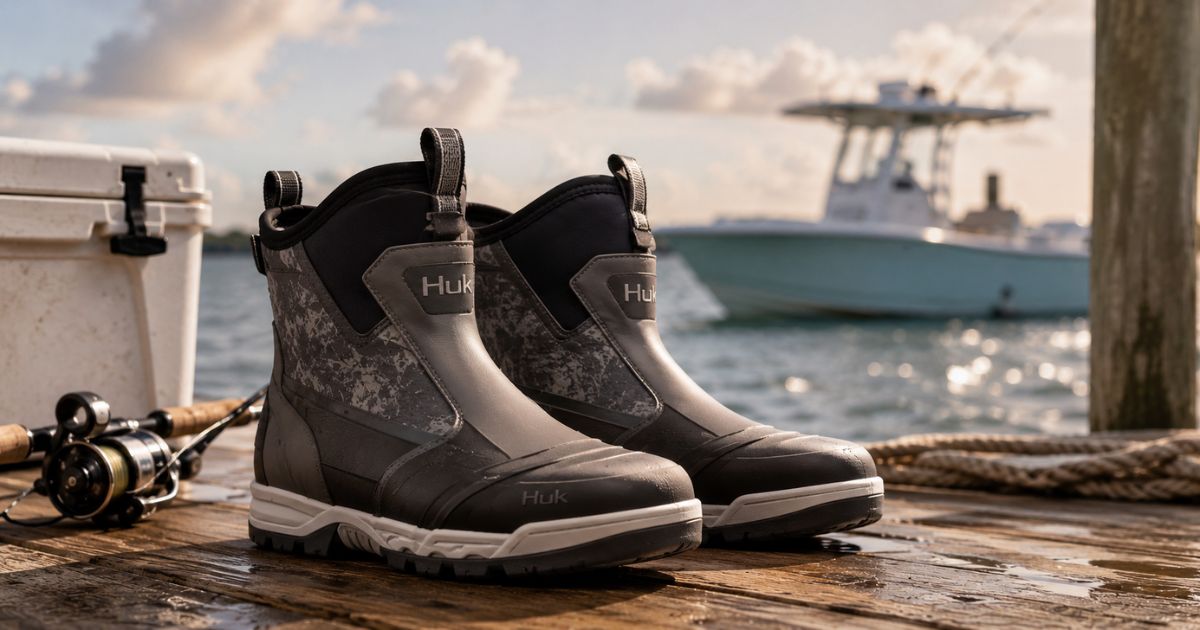
If you’ve spent any time on a boat deck, a muddy riverbank, or even a pool deck in the rain, you already know: the wrong footwear can ruin an otherwise great day. Huk fishing boots have become one of the most talked-about options in the fishing world over the last few years, but “popular” and “right for you” aren’t always the same thing.
This guide breaks down exactly what Huk fishing boots are, how they perform, who they’re actually built for, and how they stack up against the boots most anglers compare them to: Xtratuf. Boots are just one piece of the puzzle pair this guide with our broader rundown of must-have fishing equipment for anglers to make sure the rest of your kit is dialed in too.
Quick Answer: Huk fishing boots (most notably the Rogue Wave line) are neoprene-and-rubber deck boots built for waterproofing, wet-surface traction, and all-day comfort. They run true to size but snug, hold up well for boat and bank fishing, and are a budget-friendlier alternative to Xtratuf, though Xtratuf still edges them out on long-haul comfort and traction for some wearers.
What Are Huk Fishing Boots?
Huk fishing boots are purpose-built deck boots designed for anglers who spend hours around water, mud, and slippery surfaces. The flagship model, the Rogue Wave, is a slip-on ankle boot made from thick neoprene rubber, designed to keep feet dry while providing stable footing on wet boat decks and docks.
Unlike a generic rubber rain boot, Huk’s boots are engineered specifically around the fishing experience, with quick on/off, wet-surface grip, and comfort for standing or walking for long stretches. The same category of purpose-built gear we cover in our comprehensive guide to essential fishing gear.
Key Features That Matter
Here’s what actually separates a good fishing boot from a mediocre one, and how Huk’s Rogue Wave stacks up on each:
| Feature | What It Does | Huk Rogue Wave |
| Waterproofing | Keeps feet dry in rain, spray, and standing water | 8mm neoprene rubber upper |
| Traction | Prevents slips on wet decks, docks, rocks | Grip-X outsole with multi-directional microchannels |
| Comfort | Reduces fatigue on long days | Cushioned dual insole, molded EVA footbed |
| Breathability | Keeps the inside dry and cool | Mesh liner |
| Ease of use | Fast on/off without a fight | Slip-on design, reinforced pull loops and heel tab |
| Weight | Less leg fatigue over hours of wear | Roughly 19 oz per boot (size 9), notably lighter than most deck-boot competitors |
The non-marking outsole is also worth calling out if you’re boat-proud: it won’t scuff the deck the way some rubber boots will.
Are Huk Boots True to Size?
This is the single most common question anglers ask before buying, and it’s a fair one, since fit problems are the #1 reason people return boots.
Direct answer: Huk boots generally run true to size, but with a snug, close fit, especially around the ankle. If you have wider feet, plan to size up half a size, particularly if you’ll be wearing thicker socks in cold weather. Anglers coming from a roomier boot like Xtratuf sometimes find the Huk fit noticeably tighter on first wear.
A few practical fit tips:
- Try them with the socks you’ll actually fish in (thick socks change the math).
- The snug fit is intentional; it’s part of what keeps water and debris from working their way in at the ankle.
- If you’re between sizes, most experienced wearers recommend sizing up rather than down.
Can You Wear Huk Boots on Land?
Short answer: yes. While Huk boots are designed and marketed around boat decks, testers and everyday anglers alike have found them comfortable enough for general outdoor wear: walking to a fishing spot, working around the yard, or even wearing them as a low chore boot. They’re not marketed as an all-day walking boot the way a hiking boot is, but the cushioned footbed and lighter weight (compared to bulkier rubber boots) make them more wearable off the water than you might expect.
One niche but telling data point: pool service technicians have started adopting Huk boots as a daily-wear option because of their traction on wet pool decking and their pull-on convenience, a use case Huk never designed for but that speaks to how versatile the boot actually is.
Huk vs Xtratuf: Full Comparison
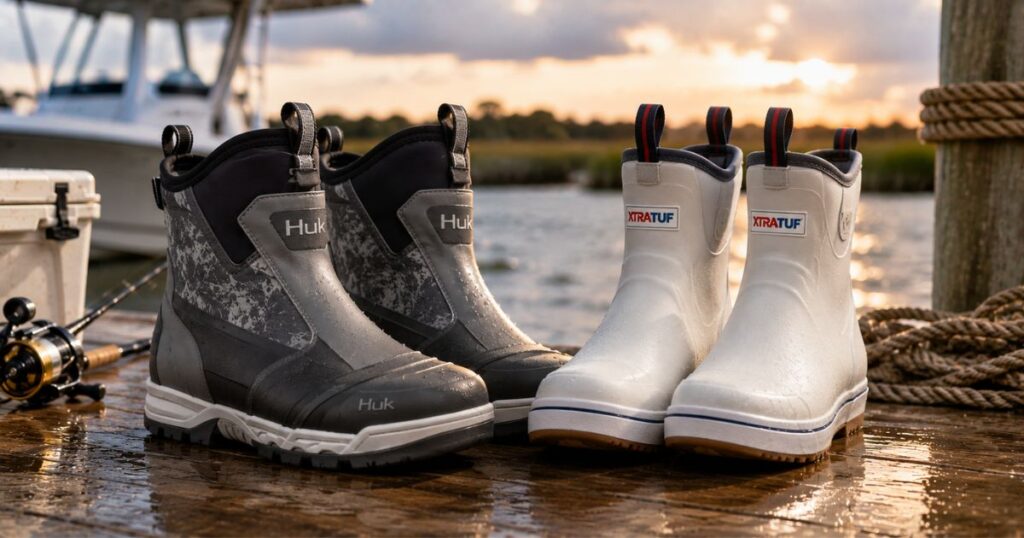
Xtratuf is the boot most anglers cross-shop against Huk, so here’s how they compare across the factors that actually matter:
| Huk Rogue Wave | Xtratuf Ankle Deck Boot | |
| Price | Generally more affordable | Higher price point |
| Fit | True to size, snug | Tends to run slightly small; size up recommended |
| Comfort (long wear) | Very good, some report fatigue over very long days | Frequently rated as more comfortable for extended wear |
| Traction | Strong wet-surface grip via Grip-X | Slightly better slip resistance per several side-by-side testers |
| Durability | Solid; a minority of users report cracking over time | Long-standing reputation for durability in commercial fishing |
| Weight | Lighter | Comparatively heavier |
| Best for | Budget-conscious anglers, boat + everyday wear | Anglers prioritizing max comfort and long-term durability |
Bottom line: if budget and weight matter most, Huk is the stronger pick. If you want the boot with the longer commercial-fishing pedigree and don’t mind paying more, Xtratuf edges ahead, a difference several independent gear testers and boating-forum communities have echoed consistently.
Best Use Cases: Boat, Bank, Cold Weather, Warm Weather
Not every fishing boot fits every kind of fishing. Here’s how to match Huk boots to your actual habits:
- Boat/deck fishing: This is Huk’s home turf. The Grip-X outsole and non-marking sole were built for exactly this. The same conditions covered in our complete guide to fishing equipment for the Gulf of Mexico, which walks through matching gear to saltwater and open-water conditions.
- Bank/shore fishing: Works well for muddy banks and uneven terrain, though if you’re walking long distances, factor in the snug fit over hours of wear.
- Cold weather: The Rogue Wave isn’t heavily insulated, so pair it with thicker socks for winter trips; don’t expect the warmth of a dedicated insulated boot.
- Warm weather: The mesh liner and lighter weight make it a solid warm-weather choice compared to heavier rubber boots that trap heat.
If you’re planning a longer trip and want to make sure the rest of your packing list is covered clothing, first aid, and camp basics see our full checklist for heading out on a fishing adventure in the wild.
How Long Do Huk Boots Last, and How Do You Care for Them?
There’s no fixed lifespan; it depends heavily on how often you’re in saltwater, how much walking you do, and how well you maintain them. Most wearers report months to a couple of years of solid use before any real wear shows.
To extend the life of your boots:
- Rinse off mud, sand, and especially salt after every trip.
- Let them air-dry naturally, and avoid direct heat, which can damage the rubber and neoprene.
- Check the outsole tread periodically; reduced tread means reduced traction.
- Store them somewhere ventilated, not sealed in a hot trunk or garage.
This same rinse-and-dry discipline applies to the rest of your saltwater gear too our Gulf of Mexico fishing equipment guide covers the basic care rules for rods, reels, and gear that see regular saltwater exposure.
A balanced note: a small share of reviewers report cracking or leaking after extended use. This isn’t universal, but it’s worth knowing going in, since proper care (especially saltwater rinsing) appears to meaningfully reduce this risk based on wearer reports.
Where to Buy & Price Range
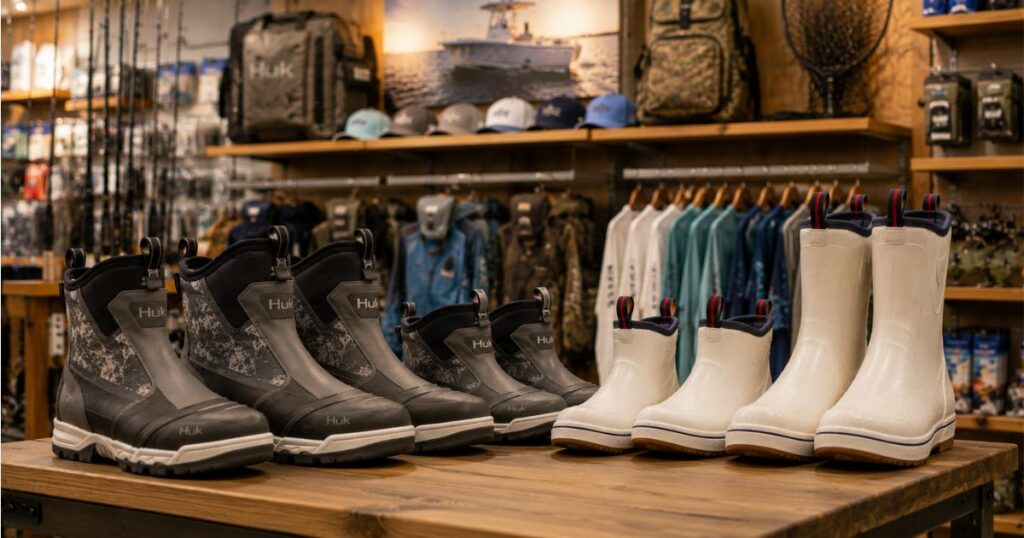
Huk fishing boots are sold directly through Huk’s own site, through outdoor retailers like Academy Sports, and through major marketplaces including Amazon and Walmart. Pricing typically runs from around $60 to $150 depending on the style, colorway, and retailer promotions, noticeably below Xtratuf’s typical price bracket for a comparable ankle deck boot.
If you’re just getting into the sport and building out your first kit from scratch, our guide to fishing gear for beginners covers what to prioritize and where boots fit into that budget before you spend on anything more advanced.
Key Takeaway
- Huk fishing boots (led by the Rogue Wave) are waterproof, lightweight, budget-friendly deck boots built for boat and bank fishing.
- They run true to size but fit snug; size up if you have wider feet or wear thick socks.
- They’re comfortable enough for land use, not just the boat deck.
- Versus Xtratuf: Huk wins on price and weight; Xtratuf wins on long-wear comfort and traction for some users.
- Rinse and air-dry after every trip, especially in saltwater, to maximize lifespan.
FAQs
Are Huk fishing boots waterproof?
Yes. The Rogue Wave uses an 8mm neoprene rubber upper designed to keep feet dry in rain, spray, and standing water.
Are Huk boots true to size?
Generally yes, but the fit is snug, especially at the ankle. Size up half a size if you have wider feet or plan to wear thick socks.
Can you wear Huk boots on land, not just on a boat?
Yes. Many wearers use them as everyday outdoor or chore boots thanks to their comfort and lighter weight, even though they’re marketed primarily for boat decks.
Is Huk or Xtratuf better?
It depends on priorities. Huk is lighter and more affordable; Xtratuf is generally rated higher for long-wear comfort and traction, at a higher price point.
How do I make Huk fishing boots last longer?
Rinse off mud and salt after each use, air-dry away from direct heat, and check the outsole tread periodically for wear.
