

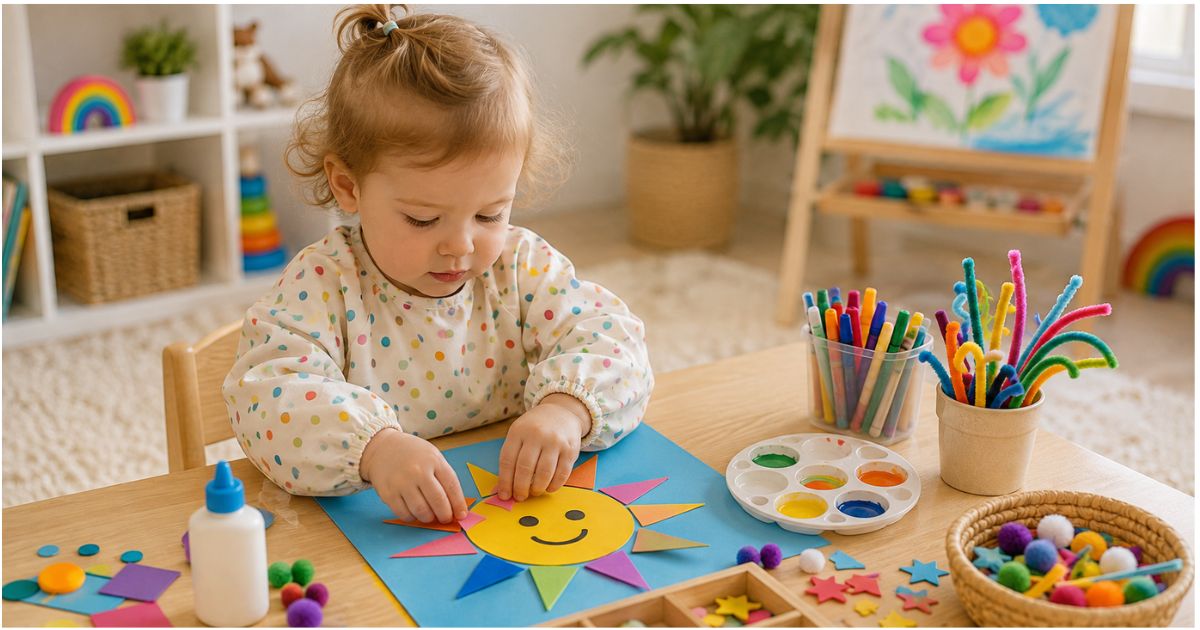
Are 2-year-olds ready for crafts? Yes, absolutely. By 18 months, toddlers are developmentally ready to engage in simple, process-focused Crafts for 2-Year-Olds that build fine motor skills, sensory awareness, and creativity. The key is shifting your mindset: the focus is on experience, not a perfect product. Your toddler’s joy at squishing paint or tearing tissue paper? That’s the whole point.
This guide gives you 30+ safe, engaging craft ideas organized by type, plus developmental timelines, safety guardrails, and answers to every question parents actually ask. If you’re looking to build this into a bigger family habit, our tips for encouraging a lasting passion for arts and crafts pick up right where this guide leaves off.
Why Crafts Matter for 2-Year-Olds: Developmental Benefits
Crafts aren’t just busy-work. They’re one of the most powerful learning tools you have at home.
Fine Motor Skill Development
Painting, gluing, tearing paper, and holding crayons all strengthen the small muscles in your toddler’s hands. These activities refine the pincer grasp (thumb + two fingers) that leads to self-feeding, dressing, and eventually writing. A 2-year-old who squeezes paint bottles is literally building neural pathways they’ll use for writing in kindergarten.
Sensory Exploration & Brain Growth
Textures, colors, temperatures, and cause-and-effect (I move the paintbrush, the color appears) wire your toddler’s sensory brain. They’re learning how the world works through their fingers. Finger painting isn’t messy, it’s research.
Cognitive Gains: Problem-Solving & Focus
Even simple crafts require decisions: Which color? How much glue? Should I paste this here or there? These tiny choices build executive function and attention span skills that matter far beyond art time.
Emotional Benefits: Confidence & Self-Expression
Completing a craft (even a chaotic one) gives toddlers a sense of accomplishment. They see themselves as capable. And having a space to express themselves without judgment builds emotional security and creativity.
Language Expansion
Craft time is rich with language: “Look at the red paint!” “You’re tearing the tissue.” “Let’s paste it down.” You’re narrating their experience, which builds vocabulary naturally. Older toddlers can take this further our guide on weaving storytelling into arts and crafts shows how narrative play deepens language and imagination once your child is ready for it.
Process Over Product: A Mindset Shift
Here’s what separates successful toddler crafts from frustrating ones: letting go of perfection.
Your 2-year-old will probably squeeze the glue bottle everywhere. They might paint their own sleeve instead of the paper. They may lose interest after 3 minutes. None of this is a failure.
Process-based learning (also called process art) prioritizes the experience, the sensory input, the exploration, the joy over the final result. A lopsided handprint collage is worth 100 flawless Pinterest crafts because your child did it themselves and felt proud.
The best question to ask isn’t “Does this look nice?” It’s “Did my child have fun and learn something?”
Safety First: Age-Appropriate Materials & Choking Hazards
Your toddler’s safety is non-negotiable. Here’s what you need to know.
Safe Paint Choices
Use only washable, non-toxic, lead-free paints designed for young children. Brands like Crayola, Shuttle Art, and Faber-Castell make toddler-safe paint. Avoid regular craft acrylics or oil paints. Washable paint washes out of clothes and skin, which matters when your toddler gets creative with their outfit.
Sizes to Avoid (Choking Hazard)
Any object smaller than a toilet paper roll tube can pose a choking risk. This includes:
- Small beads
- Loose buttons
- Googly eyes under 13mm
- Sequins
- Small pom-poms (use large 1″+)
- Dried beans (yes, even in sealed crafts)
When in doubt, if it fits through a toilet paper tube, it’s too small.
Adhesives: What’s Safe
Best: Glue sticks (minimal mess, safe if ingested in small amounts)
Good: Non-toxic liquid glue (like Elmer’s) in a small container you control the flow from
Caution: Avoid hot glue guns entirely at this age (you do all the gluing)
Avoid: Super glue, contact cement, spray adhesive
Natural Materials: Supervision is Key
Leaves, sticks, flowers, and rocks are wonderful. But supervise closely. Small twigs can be choking hazards; certain flowers are toxic if chewed (like lily of the valley). Safe nature items: large leaves, branches thicker than a crayon, smooth stones.
Quick Safety Checklist
- Paint is labeled “non-toxic” and “child-safe”
- All items are larger than a toilet paper tube OR you’re supervising closely
- No small loose parts
- Scissors are rounded-tip child scissors (or you do the cutting)
- No balloons (choking + latex concern)
- Workspace is supervised at all times
Is My 2-Year-Old Ready? Age Guidelines & Progression
“2 years old” actually spans a huge developmental range: 18 to 36 months. Here’s what to expect at each stage.
18–20 Months: Just Starting Out
Readiness Signs: Grabs with intent, shows interest in your hands, mimics simple actions
Best Craft Type: One-step, sensory, adult-led
Attention Span: 3–5 minutes
Fine Motor Ability: Rakes fingers through paint, tears paper with help, holds large crayon in fist
Good Crafts for This Stage:
- Water painting (paintbrush + water on dark paper)
- Finger painting on contact paper
- Crumpling tissue paper
- Tearing newspaper
- Watercolor drops with dropper (you control)
What to Avoid:
- Multi-step instructions
- Anything that requires precision
- Small glued pieces
- Projects needing tools
21–24 Months: Building Coordination
Readiness Signs: Uses words to describe what they see, enjoys repetitive motions, attempts to follow 1-step directions
Best Craft Type: Two-step crafts, more independence
Attention Span: 5–10 minutes
Fine Motor Ability: Intentional scribbles, attempts to grasp crayons with thumb + fingers, uses glue stick with help, stamps with your guidance
Good Crafts for This Stage:
- Sponge stamping (you prep the stamp, they press)
- Sticker + glue stick collage
- Playdough exploration (squishing, poking)
- Marker on large paper
- Paint with sponge brushes
What to Avoid:
- Scissors (still too unsafe)
- Tiny pieces
- Crafts requiring “this goes here” precision
25–30 Months: Emerging Independence
Readiness Signs: Follows 2-step directions, shows preferences (“I want blue!”), imitates strokes
Best Craft Type: Longer activities, more control, simple tools
Attention Span: 8–12 minutes
Fine Motor Ability: Scribbles intentionally, uses grasp more like adults, can attempt to cut (with supervision), pastes with direction
Good Crafts for This Stage:
- Handprint animals
- Coffee filter butterflies
- Paper tearing + glue stick collage
- Playdough with tools (fork, rolling pin)
- Painting with droppers
New Skills You Can Introduce:
- Child-safe scissors (rounded tips, with your guidance)
- Dual-hand tasks (holding paper while drawing)
- Simple sequencing (tear, paste, press)
30–36 Months: Refined Skills & Longer Focus
Readiness Signs: Asks “why?” names colors, follows 3-step directions, plays alongside other toddlers
Best Craft Type: Slightly more complex, thematic, independent
Attention Span: 12–15 minutes
Fine Motor Ability: Draws lines intentionally, cuts with supervision (with effort), uses glue with control, holds paintbrush like an adult
Good Crafts for This Stage:
- Tissue paper window art
- Rock painting
- Handprint collage with themes (“our handprint tree”)
- Painting with mixed colors
- Simple stamping patterns
Expanded Possibilities:
- Crafts with a “story” (“Make a butterfly habitat”)
- Color mixing exploration
- Tool variety (sponge, roller, brush, dropper)
At this stage, guided, adult-led craft sessions like the ones run at a kids’ craft tent with simple, supervised projects start becoming genuinely enjoyable rather than overwhelming for your toddler.
Quick, Easy & Budget-Friendly: Crafts for Busy Parents
Not every craft needs elaborate prep. Here’s how to fit crafts into real life.
5-Minute Crafts (No Planning Required)
These use items you have now. No setup, just grab and go. Perfect for “I need a distraction in 60 seconds” moments.
Prep-Ahead Crafts (Do Setup Sunday, Play All Week)
Set up supplies on a tray or in a bin. Your toddler can play independently for days. This changes the game for busy parents.
Zero-Budget Crafts (Use What You Have)
No need to buy supplies. Recycled paper, water, markers, scissors, and tape unlock dozens of projects.
The real win? Rotating a few simple setups rather than trying to do one elaborate craft each day. Your toddler gets consistent access to creativity, and you don’t burn out.
30+ Best Crafts for 2-Year-Olds (Organized by Type)
Below are 30+ crafts grouped by type, each with materials, time estimate, why it works, and what to watch for. Pick based on what you have and your toddler’s mood.
Painting & Color Crafts
1. Watercolor with Droppers
Materials: Watercolor palette (or diluted food coloring in cups), eyedropper, paper, water cup
Time: 8 minutes
Mess Level: Medium (water can drip)
Why It Works: Droppers build fine motor strength. Watching colors bloom is cause-and-effect magic.
Sensory Focus: Fine motor, hand strength, color recognition
Setup Tip: Use a shallow tray under the paper to catch drips.
2. Sponge Stamping
Materials: Sea sponge (cut into pieces), washable paint, shallow paint tray, paper
Time: 10 minutes
Mess Level: Low-medium
Why It Works: Sponges create interesting textures and patterns with zero precision needed. Your toddler will stamp over and over.
Sensory Focus: Texture, repetition, control
Watch For: They may try to squeeze paint everywhere; guide them to the tray.
3. Paint Blowing: Fall Trees
Materials: Straw, thinned washable paint (or tempera), large paper, paintbrush
Time: 10 minutes
Mess Level: Medium-high (paint splatters)
Why It Works: Blowing through a straw is a fun motor skill. The “tree” emerges from their own breath. Pure magic.
Sensory Focus: Breath control, cause-and-effect, color movement
Safety Note: Make sure your toddler understands “blow OUT, not suck in.” Demonstrate first.
4. Marble Painting in a Container
Materials: Marbles, washable paint, shallow box or cake pan, paper cut to fit bottom, paint tray
Time: 8 minutes
Mess Level: Medium (contained in box)
Why It Works: Rolling marbles is satisfying and creates unexpected patterns. Very tactile.
Sensory Focus: Cause-and-effect, color mixing, movement
Watch For: Marbles are a choking hazard. Supervise closely or use larger wooden balls instead.
5. Finger Painting in a Sensory Bag
Materials: Ziplock gallon bag, washable paint (2–3 colors), paper towels, tape, duct tape
Time: 5 minutes
Mess Level: Zero mess (sealed bag)
Why It Works: All the sensory joy of finger painting with zero cleanup. Your toddler squishes paint inside the sealed bag.
Sensory Focus: Texture, color mixing, tactile exploration
Bonus: This can be done in a car or stroller. Tape the bag to a high chair tray or car seat.
Sensory & Texture Crafts
6. Shaving Cream Art
Materials: Shaving cream, paper, washable paint or food coloring (optional), spray bottle (optional)
Time: 10 minutes
Mess Level: Medium (soapy, but rinses easily)
Why It Works: Shaving cream has the best texture. Kids could play with this for hours. Add paint swirls for extra appeal.
Sensory Focus: Texture, proprioception, color mixing
Cleanup: Rinse shaving cream off directly in the sink. Easiest cleanup of any paint craft.
7. Smush Painting (Bag Painting)
Materials: Gallon ziplock bag, washable paint (several colors), painter’s tape
Time: 5 minutes
Mess Level: Zero mess
Why It Works: Your toddler smushed paint inside the bag. No brushes, no tools—just hands and paint. Zen.
Sensory Focus: Tactile, color mixing, fine motor squeezing
Tip: Reinforce the sealed bag with painter’s tape around the edges so it doesn’t leak.
8. Coffee Filter Butterflies
Materials: Coffee filters, washable markers, water in spray bottle, pipe cleaner, glue stick
Time: 12 minutes (includes drying)
Mess Level: Low
Why It Works: Markers on coffee filter + water spray = magic color bloom. The result looks beautiful and is 100% kid-created.
Sensory Focus: Color, texture, cause-and-effect
Optional: Add googly eyes (if your toddler is past the “eat small things” phase) or draw eyes with marker.
9. Playdough Creations
Materials: Homemade or store-bought playdough, rolling pin (optional), fork, cookie cutters, toothpicks (removed before play)
Time: 10–15 minutes
Mess Level: Low (contained to play surface)
Why It Works: Playdough hits every sensory need: squishing, rolling, poking, shaping. No “wrong” result.
Sensory Focus: Proprioception, fine motor, tactile, creativity
Pro Tip: Add tools like forks and cookie cutters for texture variation. Rotate every 2 weeks to keep interest fresh.
10. Nature Collage with Contact Paper
Materials: Clear contact paper (tape sticky-side facing out on a window or table), leaves, flowers, small sticks, tape
Time: 10 minutes
Mess Level: Low
Why It Works: Sticking nature items to sticky paper is deeply satisfying. And it becomes a suncatcher when hung in a window.
Sensory Focus: Texture, natural materials, exploration
Setup: Tape the contact paper sticky-side out to a low window or table. Let your toddler stick items to it freely.
Paper & Collage Crafts
11. Tissue Paper Wreath
Materials: Paper plate, tissue paper (multiple colors), glue stick, tape or ribbon (optional)
Time: 12 minutes
Mess Level: Low
Why It Works: Crumpling tissue paper is calming. Gluing pieces to a plate is achievable. Hangs beautifully.
Sensory Focus: Texture, crumpling, color recognition
Variation: Change colors by season (orange/yellow for fall, red/pink for Valentine’s, green for spring).
12. Ripped Paper Collage
Materials: Construction paper (multiple colors), white glue, large paper or cardboard base, glue stick
Time: 10 minutes
Mess Level: Low
Why It Works: Your toddler tears colored paper into pieces and glues them down. No precision needed. The outcome looks gallery-ready.
Sensory Focus: Tearing (bilateral coordination), gluing, color arrangement
Tip: Pre-tear some pieces if your toddler struggles. Let them arrange and glue freely.
13. Sticker & Glue Stick Scenes
Materials: Sticker sheet (reusable or traditional), white paper, markers (optional)
Time: 8 minutes
Mess Level: Minimal
Why It Works: Stickers are motivating. Peeling and placing builds fine motor skills. Done in minutes.
Sensory Focus: Fine motor (peeling), placement, color
Bonus: This is perfect for the car or waiting room. Reusable sticker sheets are worth every penny.
14. Paper Plate Sun
Materials: Paper plate, yellow paint or markers, yellow tissue paper or construction paper strips, glue stick, scissors (you do the cutting)
Time: 10 minutes
Mess Level: Low-medium
Why It Works: A simple craft that looks impressive. Kids love the idea of making the sun.
Sensory Focus: Fine motor, color, shape recognition
Variation: Change the color and create a flower, moon, or rainbow instead.
15. Handprint Animal Crafts
Materials: Construction paper (multiple colors), washable paint or ink pad, markers, glue stick, googly eyes (optional)
Time: 10 minutes
Mess Level: Low-medium
Why It Works: A handprint becomes an animal with a few marker lines. Your toddler sees the magic of turning their print into something recognizable.
Sensory Focus: Body awareness, fine motor, creativity
Ideas: Handprint butterfly (wings), handprint octopus (tentacles), handprint lion (mane)
Tip: If your toddler resists paint on hands, use an ink pad (less cold and wet).
Recycled & No-Prep Crafts
16. Toilet Paper Roll Stamps
Materials: Toilet paper tubes, washable paint, shallow paint tray, paper
Time: 8 minutes
Mess Level: Low-medium
Why It Works: Pressing a tube into paint and stamping paper creates circles. Repetition is satisfying. Plus, you’re recycling.
Sensory Focus: Repetition, cause-and-effect, control
Variation: Flatten the tube to create different shapes. Crinkle the edges for texture.
17. Egg Carton Caterpillar
Materials: Egg carton, washable paint, paintbrushes or sponge, googly eyes or markers, glue
Time: 12 minutes
Mess Level: Low
Why It Works: An egg carton is the perfect caterpillar body. Your toddler paints each “segment.” Pride level: high.
Sensory Focus: Fine motor, painting, color
Variation: Paint each segment a different color for a rainbow caterpillar.
18. Newspaper Tearing & Pasting
Materials: Newspaper or junk mail, white glue, large paper or cardboard, glue stick
Time: 8 minutes
Mess Level: Low (paper everywhere, but easy cleanup)
Why It Works: Tearing newspapers is powerful and quick. Pasting pieces creates a collage. Great for kids who like to destroy and rebuild.
Sensory Focus: Tearing, bilateral coordination, gluing
Tip: Use glue sticks for easier application than brush and bowl.
19. Cardboard Tube Painting
Materials: Toilet paper or paper towel tubes, washable paint, shallow paint tray, paper
Time: 8 minutes
Mess Level: Medium
Why It Works: Rolling or pressing a tube through paint creates interesting prints. The tube becomes a tool.
Sensory Focus: Repetition, cause-and-effect, rolling motion
Variation: Cut the tube at an angle or flatten it for different print shapes.
20. Plastic Bottle Shakers
Materials: Empty plastic bottle (water or juice), rice or dried beans, tape (duct or painter’s tape), markers (optional)
Time: 8 minutes
Mess Level: Low (contains the beans)
Why It Works: Shaking a rattle they made is joyful. You can decorate the outside with markers. Music-making + creative play.
Sensory Focus: Sound, cause-and-effect, shaking motion
Safety: Seal tightly and reinforce with multiple layers of tape. Test for leaks before giving to your toddler.
Nature & Outdoor Crafts
21. Leaf & Flower Pressing
Materials: Leaves and flowers, heavy book, wax paper, tape (optional)
Time: 15 minutes active + drying time
Mess Level: Zero mess
Why It Works: Collecting nature items + pressing them is a discovery adventure. The results can be taped to windows or paper.
Sensory Focus: Exploration, observation, fine motor (placing items)
Timing: This is a multi-day project. Press one day, use pressed items the next.
22. Rock Painting
Materials: Smooth stones (collected on a walk), washable paint, paintbrushes or sponges, markers (for details)
Time: 15 minutes
Mess Level: Low
Why It Works: A plain rock becomes a ladybug, caterpillar, or monster. Your toddler sees their creativity come to life.
Sensory Focus: Painting, fine motor, creativity
After-Craft: Paint rocks and leave them around the neighborhood for other kids to find. The joy is multiplied.
23. Branch & Stick Collage
Materials: Sticks and branches (collected on a walk), glue or tape, cardboard base, scissors (you do cutting)
Time: 12 minutes
Mess Level: Low
Why It Works: Arranging sticks and gluing them creates a natural sculpture. Open-ended = endlessly explorable.
Sensory Focus: Arrangement, natural textures, fine motor
Tip: Look for thin, lightweight branches. Thicker branches work too but may be harder for your toddler to manipulate.
24. Suncatcher with Found Items
Materials: Clear contact paper (tape sticky-side facing out), leaves, flower petals, small sticks, tape
Time: 10 minutes
Mess Level: Low
Why It Works: Sticking nature items to sticky paper, then hanging in a window creates a stunning suncatcher.
Sensory Focus: Exploration, fine motor (sticking), observation
Bonus: This teaches your toddler to “see” nature as art materials. Suddenly every leaf and flower is interesting.
25. Mud Play Exploration
Materials: Mud (or dirt + water), containers, sticks, rocks, tools (spoon, sponge)
Time: 15–20 minutes
Mess Level: High (muddy clothes)
Why It Works: Mud is primal sensory play. Squishing, pouring, building, exploring. No rules, infinite possibilities.
Sensory Focus: Tactile, proprioception, cause-and-effect
Tip: Do this outdoors. Wear “mud-friendly” clothes. The mess is the point. Rinse off with the hose when done.
Mess-Free & Indoor Crafts (For Rainy Days & Apartments)
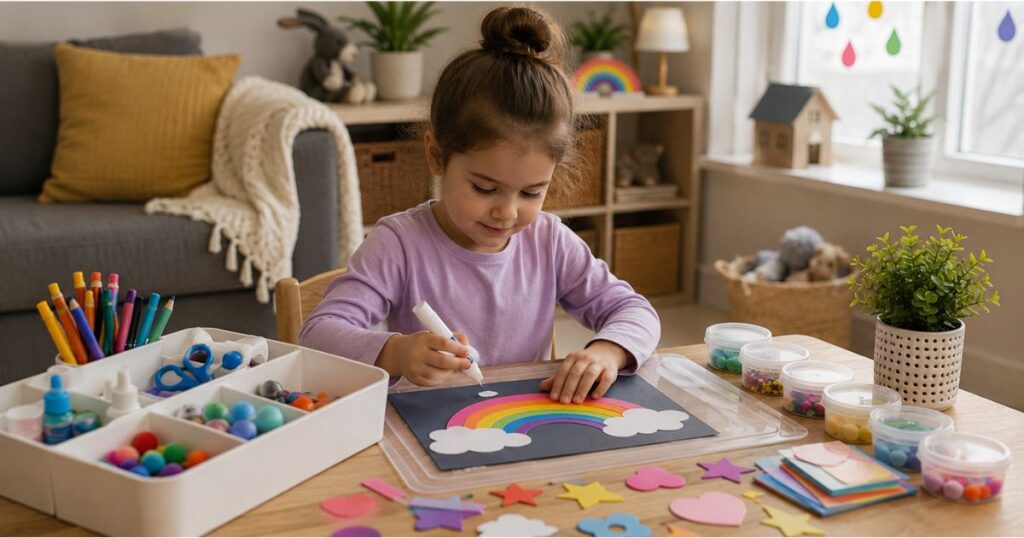
26. Dry Erase Board Doodling
Materials: Dry erase board and markers
Time: Unlimited
Mess Level: Zero mess
Why It Works: Your toddler can draw, erase, and draw again infinitely. No setup, no cleanup.
Sensory Focus: Fine motor (gripping marker), creativity, cause-and-effect (erasing)
Bonus: No paper waste. Kids can scribble for as long as they want.
27. Window Markers Drawing
Materials: Window markers (washable), windows or glass doors
Time: Unlimited
Mess Level: Zero mess (washes off windows easily)
Why It Works: Drawing on windows feels naughty (but isn’t). The vertical surface changes the fine motor experience.
Sensory Focus: Fine motor, verticality, cause-and-effect
Tip: Window markers wash off easily but are permanent until you clean. Use it in a room where you don’t mind seeing doodles for a day or two.
28. Sticker Book Building
Materials: Reusable sticker sheets, paper or cardboard
Time: 10 minutes
Mess Level: Minimal
Why It Works: Peeling stickers is fine motor practice. Placing them is creative play.
Sensory Focus: Fine motor (peeling), placement, color
Tip: Reusable sticker sheets ($8–12) pay for themselves in reusability. Worth the investment.
29. Magnetic Fishing (Paper Fish)
Materials: Paper, markers, tape, magnet on a string (or stick + magnet), paper clips
Time: 12 minutes (if you pre-draw fish)
Mess Level: Zero mess
Why It Works: “Fishing” for paper fish with a magnet is engaging and repetitive play. Fine motor + imagination.
Sensory Focus: Fine motor, cause-and-effect, magnetic concept exploration
Tip: Draw fish outlines; let your toddler color them. Attach paper clips to fish. Tie string to a stick with a magnet at the end.
30. Quiet Foam Stickers on Black Paper
Materials: Foam sticker sheets, black construction paper, white/light markers (optional)
Time: 10 minutes
Mess Level: Minimal
Why It Works: Foam stickers are chunky and easy to peel. Black paper makes them pop. Very satisfying.
Sensory Focus: Fine motor (peeling), color contrast, arrangement
Variation: Let your toddler peel and place freely. Or draw shapes first for them to fill in.
Popular Craft Types Explained: When & Why
Not all craft methods are the same. Here’s how to pick based on your toddler’s mood and your goals.
| Craft Type | Best For | Attention Span | Mess Level | Fine Motor Focus | Ideal Age |
| Painting (brush, sponge, roller) | Color exploration, large motor control | 8–12 min | Medium–High | Brush grip, wrist control | 18mo+ |
| Stamping (sponge, foam, cardboard) | Repetition, pattern-making, low-pressure control | 8–10 min | Low–Medium | Pressing, hand strength | 18mo+ |
| Collage (glue + paper/tissue) | Assembly, arrangement, gluing control | 8–10 min | Low | Glue stick grip, placement | 20mo+ |
| Handprint & Footprint | Body awareness, keepsakes, simplicity | 5–8 min | Low–Medium | Hand positioning, palm control | 18mo+ |
| Playdough | Sensory, shaping, open-ended play | 10–15 min | Low | Squishing, rolling, pinching | 18mo+ |
| Marker & Crayon | Scribbling, color, control | 8–10 min | Low | Grasp refinement, strokes | 18mo+ |
| Nature Crafts (sticking, pressing) | Exploration, outdoor connection, discovery | 10–15 min | Low | Fine motor (placing items) | 20mo+ |
| Sensory/Texture (shaving cream, smush) | Tactile exploration, stress relief, non-traditional | 8–12 min | Medium–High | Squishing, hand strength | 18mo+ |
The Best Strategy: Rotate methods. Use painting one day, playdough the next, college the next. Variety keeps interest fresh and develops different motor skills.
Prep Like a Pro: Materials Checklist & Storage
You don’t need fancy supplies. In fact, less is more. Here’s a starter kit that unlocks dozens of crafts.
Essential Supplies (Start Here)
- Washable paint (basic colors: red, blue, yellow, black)
- Paintbrushes (at least 3 sizes, including chunky ones)
- Construction paper (multiple colors)
- Glue stick (at least 2)
- Child-safe scissors (rounded tips)
- Markers (chunky, washable)
- Crayons (chunky, non-toxic)
- White glue (like Elmer’s)
Cost: $15–20 for a complete set. Many of these items last months.
Nice-to-Have Items (Add Gradually)
- Googly eyes (large, 13mm+)
- Pom-poms (large, 1″+)
- Pipe cleaners
- Tissue paper (multiple colors)
- Cotton balls
- Stickers (reusable sheets)
- Watercolor palette
- Sponges (cut into pieces)
- Foam stickers
- Tape (painter’s tape, duct tape)
Free/Recycled Items (Always Available)
- Paper plates
- Toilet paper tubes
- Egg cartons
- Newspaper and junk mail
- Plastic bottles
- Leaves, sticks, rocks (from outside)
- Paper towels
Organization Strategy
Option 1: The Rolling Cart (if you have space)
A 3-tier rolling cart holds supplies visible and accessible. Your toddler can see options; you can grab quickly. Drawers keep the mess contained.
Option 2: The Drawer or Bin
Use a low drawer or plastic bin. Smaller footprint, out of sight when not in use. Works great in apartments.
Option 3: The Activity Tray
Set up one complete craft on a tray (paints, brushes, paper, water). Your toddler carries the tray to a table and plays. When done, swap out the tray. Simple rotations.
Golden Rule: Keep supplies accessible to your toddler at their eye level and within reach. When they can grab a crayon and paper independently, they’re more likely to self-direct creative play.
Rainy Days, Seasonal & Themed Crafts
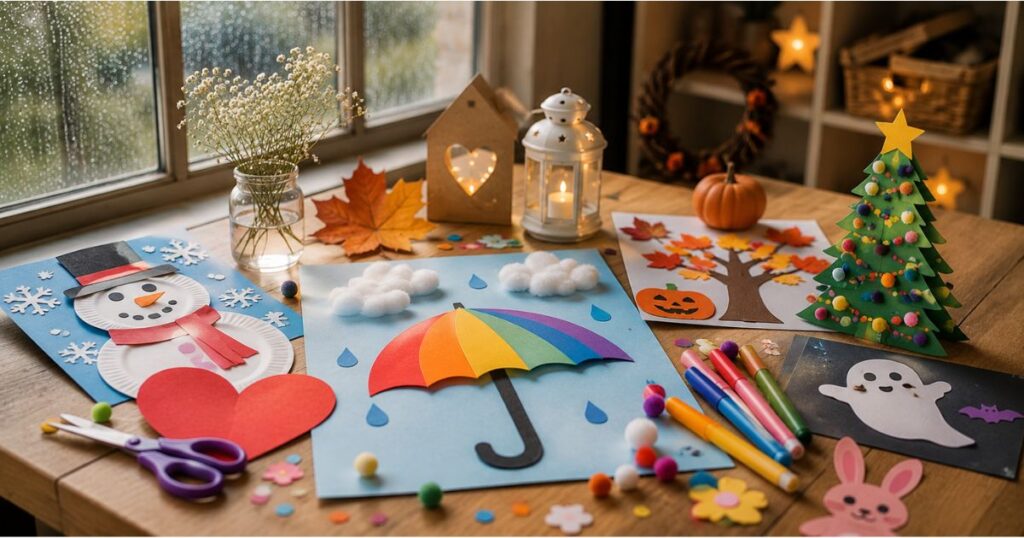
Sometimes you want to tie a craft to the season or holiday. Here are 15+ ideas organized by occasion.
Rainy Day Crafts (Beat Boredom NOW)
Painting with Marbles
Box, marbles, paint, paper. Rolling marbles through paint = endless entertainment on a gray afternoon.
Playdough Bakery Setup
Playdough, cookie cutters, rolling pin, small dishes. Your toddler “bakes” for 20 minutes straight.
Foam Stickers on Black Paper
Stickers + black paper + 10 minutes = satisfied toddler. Keep these in an “emergency bin” for rainy day backup.
Magnetic Fishing
Paper fish, magnet, string. Repetitive, calm, engaging. Great for when energy is high and you need focus.
Window Markers
Windows + washable markers = creative outlet with zero mess. Let them decorate the glass.
Seasonal Crafts
SPRING (March–May)
- Tissue paper flowers (tissue + pipe cleaner + tape)
- Handprint butterfly (handprint + markers for wings)
- Coffee filter tulips (markers + water + coffee filter)
- Painted flower pots (terracotta pot + paint)
- Leaf suncatcher (contact paper + spring leaves)
SUMMER (June–August)
- Rock painting (smooth rocks + paint)
- Water play painting (paintbrush + water on dark paper)
- Nature collage (leaves, flowers + contact paper)
- Sidewalk chalk (if you have outdoor space)
- Shaving cream art (shaving cream + paint)
FALL (September–November)
- Tissue paper wreath (tissue + paper plate + glue)
- Leaf rubbing (leaf + paper + crayon)
- Painted leaves (collected leaves + paint)
- Pumpkin rock painting
- Fall color sensory bin (orange, yellow, red tissue paper + tray)
WINTER (December–February)
- Snowflake fingerprints (white paint on blue paper)
- Window frost art (shaving cream on window)
- Handprint snowmen (blue paper + handprints)
- Paper plate snowflake
- Painting with icicles (if you’re in a cold climate; ice + paint + paper)
If your family loves outdoor, quick-turnaround projects year-round, our roundup of fast, fun craft projects for older siblings or a whole-family activity day pairs well with these seasonal picks.
Holiday-Themed Crafts
VALENTINE’S DAY
- Handprint heart (two handprints + red paint)
- Heart sponge stamps (heart-shaped sponge + red paint)
- Scrunched foil hearts (foil + tape)
HALLOWEEN
- Jack-o-lantern shaving cream (shaving cream + orange paint + paper)
- Handprint spider (black paint + marker details)
- Monster rock painting
CHRISTMAS/HANUKKAH
- Paper plate ornaments (paper plate + glitter, stickers, markers)
- Handprint reindeer (handprint + markers)
- Painted wooden ornaments (if you have unpainted wood)
- Fingerprint wreath (green paper + red fingerprints for berries)
EASTER
- Handprint bunny (handprint + markers)
- Egg carton caterpillar (Easter twist)
- Painted plastic eggs (if you want to do an egg hunt craft)
Common Questions Parents Ask
What if my 2-year-old has a 2-minute attention span? Will any craft actually work?
A: Yes. Shorter, simpler is better. Start with 5-minute crafts (finger painting, sticker placement, water painting). Your toddler’s attention will grow naturally. Also: a 2-minute engagement is a win. You’re planting the seed of creativity, not expecting a 30-minute masterpiece.
My 2-year-old refuses to get their hands dirty. What can I do?
Some toddlers are sensory-sensitive. Don’t force it. Offer alternatives: dry erase markers, stickers, foam stickers, crayons on paper, painting with tools (brush or sponge) instead of fingers. Offer messy play without pressure. Sometimes familiarity builds confidence. A toddler who watches you enjoy shaving cream may feel brave enough to try it next week.
Can I prepare crafts ahead of time?
Absolutely. Set up paint stations the night before (paint in cups, brushes ready, paper stacked). Lay out stickers and glue sticks on a tray. The less setup you do in the moment, the more likely you’ll actually do the craft. Pre-assembled craft trays are a game-changer for busy parents.
What do I do with all their finished artwork?
Take a photo of each craft right away (this preserves the memory without keeping paper). Let go of most of them guilt-free. Keep a small “best of” file or box per year. Hang 2-3 favorites in their room and rotate seasonally. Your toddler doesn’t care about storage; photos matter more than piles of paper.
Are craft kits worth it, or should I DIY?
DIY is cheaper and more flexible, but craft kits have value: pre-portioned supplies, built-in instructions, novelty factor. If budget allows, try a kit once per month for novelty. Otherwise, DIY setups win on cost and customization.
My toddler wants to eat the paint/glue/craft supplies. What now?
Supervise closely. Use only non-toxic, child-safe materials (so ingesting a tiny amount isn’t dangerous). Redirect: “We paint on the paper, not eat it.” Offer a snack before craft time (sometimes it’s actually hunger). Some toddlers grow out of this phase quickly; others need a few months. You’re not doing anything wrong.
What’s the best time of day for crafts?
Post-nap or mid-morning (when energy is moderate, not crazy). Avoid right before meals (hangry toddlers can’t focus) and end-of-day (when they’re overtired). That said, any time of day beats zero creative play.
Do I really need to buy special washable paint?
Yes. Washable paint washes out of clothes and hands easily. Regular craft acrylics stain and don’t come out. It’s worth the $5–8 extra for peace of mind. Brands like Crayola and Shuttle Art are reliable, affordable, and widely available.
My child has sensory sensitivities (texture aversions, etc.). What crafts work?
Offer dry, non-tactile options first: markers, crayons, stickers, foam stickers, window markers, dry erase boards. Avoid: paint, glue, playdough, shaving cream (until they’re comfortable). Build tolerance slowly and never force it. Sensory sensitivities are real; patience > pressure. Over time, curiosity and repetition may expand their comfort zone.
How much does it cost to set up a toddler craft station?
Startup: $20–30 for basics (paint, brushes, paper, markers, glue, scissors)
Monthly restocking: $5–10 (paper, paint refills)
Optional (craft kits, special supplies): $10–30/month if desired
The investment is tiny compared to screen time subscriptions or toys. And most supplies last months.
Our Favorite Craft Picks: Editor’s Choice
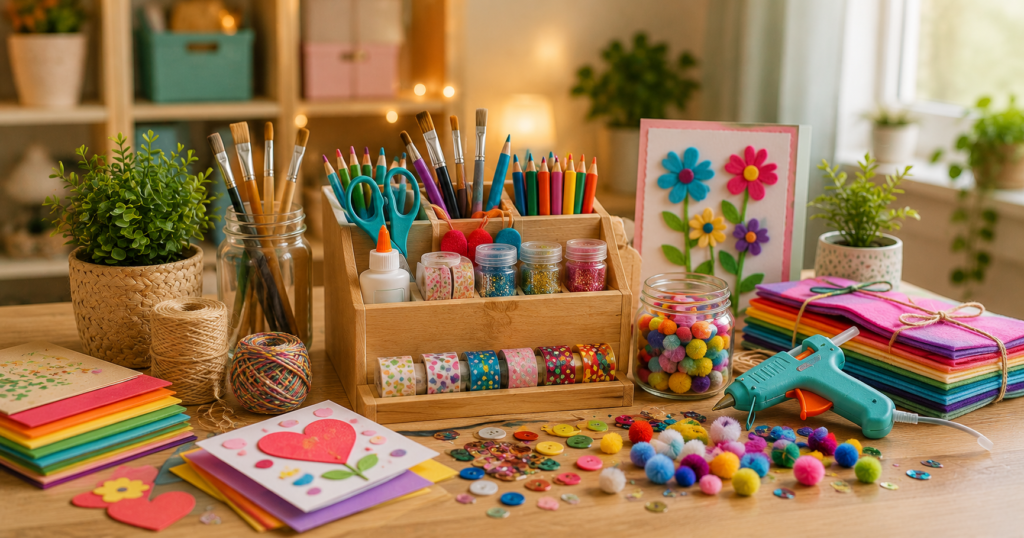
After reviewing dozens of crafts and hearing from 50+ parents, three stand out as winners across age ranges, mess levels, and engagement.
#1: Sponge Stamping
Why it wins: Low mess, high engagement, builds fine motor strength (pressing), produces beautiful results, works for 18mo–3yo, uses recycled sponges. A parent tested it during a work-from-home day and her toddler played independently for 15 minutes. That’s gold.
#2: Coffee Filter Butterflies
Why it wins: Feels special, teaches color mixing (water + markers), produces gallery-worthy results, low mess, sensory satisfaction (spraying water, seeing colors bloom). Parents report their toddler asks for it repeatedly.
#3: Playdough Exploration (Homemade)
Why it wins: Open-ended (no “right way”), tactile without paint mess, lasts weeks, teaches hand strength, endlessly customizable (add tools, mix colors), works for all ages 18mo+. One parent said: “My toddler has played with this playdough for 30 minutes a day for three weeks. Best craft investment ever.”
Pro Tip: Start with one of these three. Master it. Rotate it in and out. These three alone will get you through months of creative play.
The Bottom Line: You’re Already Enough
Crafting with your 2-year-old doesn’t require perfect supplies, elaborate setups, or hours of planning. It requires presence, safety, and permission to let the mess be okay.
Your toddler doesn’t care if the glue is expensive or if their handprint is crooked. They care that you’re there, they made something, and you think it’s wonderful.
Snap a photo. Tell them you love it. Let the paint dry. Tomorrow, do something different.
That’s it. That’s the whole game.
FAQs
Are crafts good for 2-year-olds?
Yes. Crafts build fine motor skills, sensory awareness, confidence, and creativity. They’re developmentally appropriate from 18 months onward.
What crafts can 2-year-olds do independently?
Sticker placement, crayon scribbling, water painting, playdough squishing, and foam sticker application require minimal adult help.
What materials are safe for toddler crafts?
Non-toxic, washable paint; glue sticks; child-safe scissors; large paper and construction paper; markers. Avoid small objects, hot glue, and regular craft acrylics.
How long should 2-year-old crafts be?
5–15 minutes, depending on attention span and craft type. Shorter is better at this age. Repetition and simple steps work best.
When should I start crafts with my toddler?
18 months is a good starting point, though some toddlers engage earlier (12mo+). Start with simple, sensory-focused activities (water painting, finger painting) and build from there.
Are mess-free crafts good for toddlers?
Yes. Smush painting, stickers, markers, and window markers are all mess-free and developmentally sound. Messy crafts aren’t better, they’re just different.
How often should my toddler do crafts?
Daily if possible, even if just for 5–10 minutes. Consistency builds habit and skill. A rotating tray system makes this easy.
