

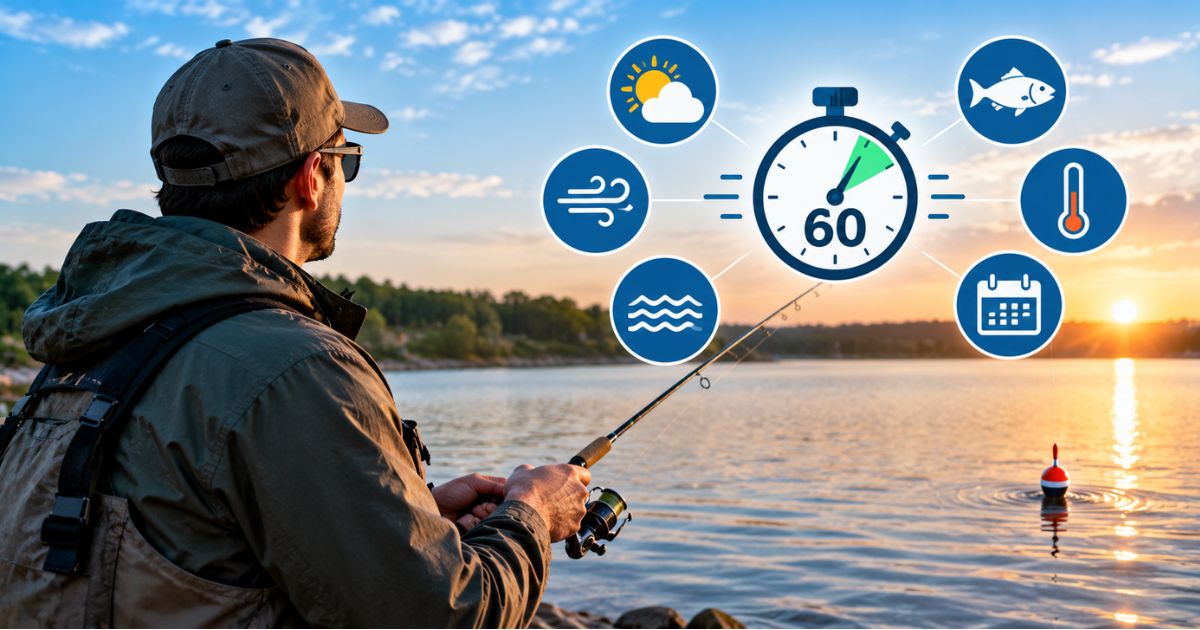
It’s a good day to go fishing when it’s safe, the weather is steady, and the wind is light. The best days also give you a dawn, dusk, or cloudy window, and water that isn’t muddy or extremely hot or cold. Use the moon as a tie-breaker, not the deciding factor.
The Safety Gate (When the Answer Is Always No)
Run this before anything else. If any item below is true, skip the trip, no matter how good the “fishing score” looks.
- Thunder or lightning nearby. The National Weather Service advises waiting 30 minutes after the last thunder before heading back out.
- High wind alerts. On big water, a small craft advisory means stay off in a small boat.
- Flooding or fast, rising rivers. Check river gauges before you go.
- Dangerous heat or cold. Cold water and wet clothes are a fast route to hypothermia.
- You’re boating without life jackets. Wear one.
Check weather.gov for alerts and forecasts. Rivers and streams have live gauges at waterdata.usgs.gov. Coastal anglers can check tides at tidesandcurrents.noaa.gov.
The 5-Signal Fishing Day Check
Here’s the quick method. Score each signal 0, 1, or 2, then add them up for a total out of 10.
| Signal | 2 points | 1 point | 0 points |
| 1. Pressure | Steady or rising | Dropping fast (short window) | Low and flat, or just after a big front |
| 2. Wind & weather | Calm to light breeze | Moderate wind | Strong wind |
| 3. Light | Dawn, dusk, or overcast | Bright sun, but shade or deep water available | Bright, midday only |
| 4. Water | Comfortable temperature, clear enough, steady flow | One problem | Very cold, very hot, or muddy and rising |
| 5. Moon | Within a couple days of new or full moon | Quarter moon | Crescent phases |
Your score:
- 8–10: Go. Clear your schedule.
- 5–7: Worth it, especially if you hit your best hours.
- 0–4: Skip it, or lower your expectations and go for the fun of it.
Editor’s note: This is an original, judgment-based framework, not a scientific formula. The weights, including the cap that keeps the moon from rescuing a bad weather day, should be reviewed by an experienced angler or guide. [YOUR INPUT: add a quote from a guide, or your own catch-log results scored against the 5 signals.]
Signal 1: Pressure (Steady, Rising, or Crashing?)
Air pressure is the weight of the air above you. Fish can’t read a barometer, but many anglers believe they react to pressure changes.
Sources disagree on the details, so here’s the safe summary:
- Steady or rising pressure tends to get good reports. One fishing-forecast site says the best fishing comes on a rising barometer and just before it falls, and that a steady high reading is also good.
- Before a storm, falling pressure can spark a short feeding burst. After the storm, fishing is often slow for a day or two before it picks up again, according to the Old Farmer’s Almanac.
- Low pressure that just sits there is usually a poor sign.
Is fishing better before or after a storm? Before is often better, but that short window only counts if you pass the Safety Gate. Lightning ahead of a front means you stay home.
Signal 2: Wind and Weather
Light wind helps. A gentle ripple hides your line and breaks up surface light. Strong wind scatters fish, tangles your line, and can make boating risky.
Anglers love a rhyme here: wind from the east, fish bite least. Wind from the west, fish bite best. It’s folklore, not science. Still, west winds often come with warmer, steadier weather, which is probably why the saying stuck.
Is it good to fish when it’s raining? Light rain with clouds can be fine, since it cuts bright light and fish may feel safer. Heavy rain, thunder, or runoff turning the water muddy is a different story.
Signal 3: Light (Dawn, Dusk, and Clouds)
Fish often feed when the light is low. Sunrise and sunset are the classic bite windows, because predators can hide while they hunt and smaller fish move around.
Clouds count too. An overcast sky can make a midday trip behave like an early morning. Bright, high sun usually pushes fish deeper or under cover.
Signal 4: Water (Temperature, Clarity, and Flow)
Fish are cold-blooded, so water temperature shapes how hungry and active they are. Each species has its own comfortable range. Trout, bass, catfish, and walleye don’t all want the same water.
- Muddy water after heavy rain can slow sight-feeding fish.
- Fast, rising rivers are both a poor bet and a safety risk.
- Steady flow is better than a sudden change.
For ranges that match your target species, check your state wildlife agency’s fishing pages. They know your local waters.
Signal 5: The Moon (The Tie-Breaker)
New and full moons get top ratings on most calendars. The next section explains why we give the moon only a small share of the score.
Does the Moon Really Matter?
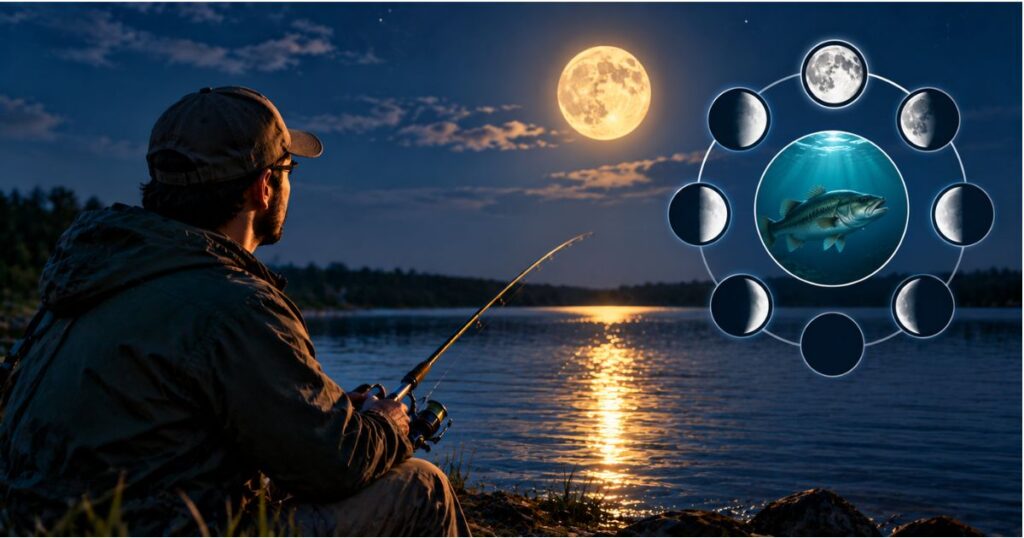
Maybe a little, but less than most calendars suggest. The research is mixed.
- Some studies find no link. One peer-reviewed study found no correlation between catch rates and moon phase or how much of the moon was lit up. It also reported no correlation for solunar calendars that use moon phase and position. Fishing success showed no correlation to moon phase or percent illumination.
- Other studies find a modest effect. Research on pike has reported higher catches around full and new moons. But in one German-lake example, the moon effect was smaller than the effect of time of day, fishing pressure, and water temperature.
- Results vary by species. NOAA-hosted research on reef fish found that lunar cycles influenced catch rates for some species.
- Working anglers weigh it lightly. One angler-focused guide notes that weather, water temperature, bait presence, and current matter as much or more than moon phase on any given day.
What this means for you: The moon may give a small nudge for some fish in some places. Weather, light, and water likely matter more. That’s why the moon is only 2 of your 10 points.
Why Fishing Calendars Disagree About the Same Day
Here’s something no competitor explains. We checked three fishing calendars on Friday, October 9, 2026, and got three different answers.
| Source | Verdict for Oct 9 | How it works |
| Old Farmer’s Almanac | Good | Moon-phase-based ranking |
| Fishingreminder (Columbus, OH) | Excellent | Solunar theory (sun and moon positions) |
| Farmers’ Almanac | Poor (morning) | Moon phase, the moon’s zodiac sign, and “previous experience” |
Data was fetched on Oct 9, 2026. Ratings can change. Rerun this check yourself.
The first two lean on the new moon, which is almost here. The third uses a different recipe that includes zodiac signs. None of these can see your local wind, pressure, clouds, or water.
The lesson: A calendar is a rough guess for everyone. Your 5-Signal Check uses what’s happening where you actually are.
Is It a Good Day in Fall? (And Other Seasons)
Season changes what “good” looks like. Always check species-specific advice from your state agency, but here are the general patterns anglers talk about.
| Season | What tends to change |
| Fall | Cooling water and shorter days. Many anglers find fish feed more actively in the cooler hours. In many lakes, surface water cools and layers can mix, which can move fish. |
| Winter | Cold water slows fish down. Midday, the warmest part of the day, can be the best window. |
| Spring | Warming water and spawning activity. Check local closures and rules. |
| Summer | Heat pushes fish deeper or into shade. Dawn and dusk often beat midday. |
Lake, River, Pond, or Surf: What Changes?
Some tools only work on one kind of water. FishNotify, for example, covers coastal fishing only. Here’s how the 5 signals shift.
| Water type | What matters most |
| Lake | Wind (it pushes baitfish to shorelines), water temperature, pressure trend |
| River | Flow and clarity first. Check gauges, and skip high, muddy, rising water |
| Pond | Temperature, light, and shade. Small waters change fast |
| Surf / pier | Tides (many anglers fish an hour before and after high or low tide), swell, wind |
Pick Your Best Hours Inside a Good Day
A good day is only half the plan. Here’s how to pick your hours:
- Find sunrise and sunset for your location.
- Mark a window from about an hour before to an hour after each.
- Add moonrise/moonset or solunar “major” and “minor” periods if you like. Treat them as small bonuses.
- On tidal water, pair your window with the tide change.
- If clouds roll in, your midday window can count as a bonus.
Where to Check Your Conditions
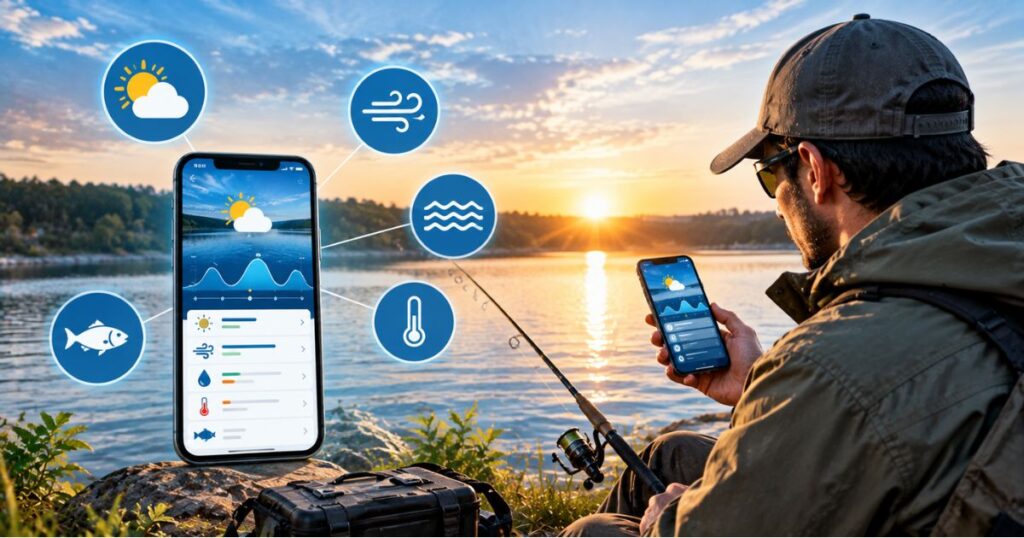
Skip guesses. Use official sources:
- weather.gov: forecasts, wind, alerts
- waterdata.usgs.gov: river and stream flow and water levels
- tidesandcurrents.noaa.gov: tide predictions
- Your state wildlife or fish and game agency: species, stocking, local advice
Quick Legal Check Before You Go
A perfect day doesn’t help if you’re not allowed to fish. Before you leave:
- Make sure you have a valid fishing license, if your state requires one for your age.
- Check season dates, size limits, and bag limits for your species.
- Look for closures on your specific water.
Your state wildlife agency’s website is the right place to confirm all of it.
What Is a “Good Day” for a Beginner or Kid?
If you’re fishing with kids or you’re new, a good day may not mean a big catch. It might mean calm weather, easy access, and a short window so nobody gets bored or cold.
Pick mild weather, bring snacks, and keep the first trips short. A comfortable day makes people want to come back.
FAQ
Is it a good day to go fishing in the rain?
Light rain under clouds can be fine, and lower light may help. Skip it for thunder, heavy rain, or runoff that turns water muddy and fast. Check the Safety Gate first.
What barometric pressure is best for fishing?
There’s no single magic number. Steady or rising pressure usually gets good reviews. Low, flat pressure is typically poor, and a fast drop ahead of a storm may bring a short, risky bite window.
Is a full moon good or bad for fishing?
Calendars often rate full and new moons highest. Research is mixed, and some studies find little or no effect. Use the moon as a tie-breaker, not a reason to go or stay home.
Is fishing good right after a cold front?
Often it’s slower for a day or two, according to the Old Farmer’s Almanac. It tends to improve as pressure settles.
What time of day is best for fishing?
Dawn and dusk are the classic windows because of low light. Overcast skies can extend that window into the day.
Does wind direction matter?
The rhyme about west and east winds is folklore, but light wind helps and strong wind hurts. Watch how it changes your casting and your safety.
Can I trust fishing calendars?
Treat them as a rough starting point. As our Oct 9 comparison shows, calendars can give different answers for the same day. Your local weather and water conditions are usually the better guide.
