

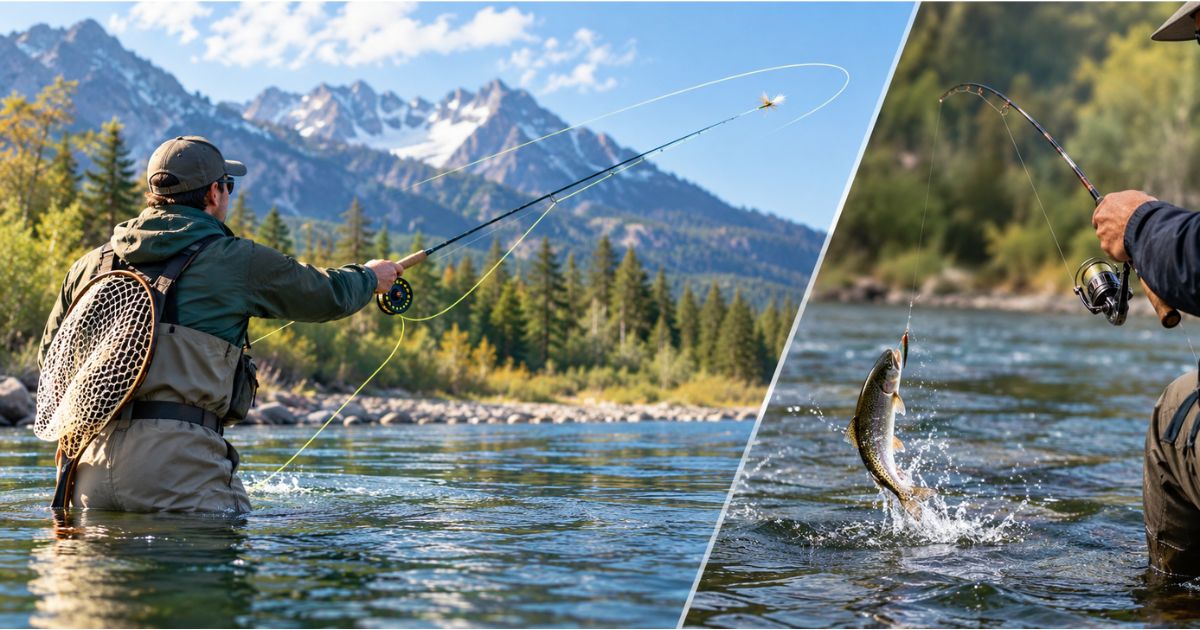
Fly fishing is harder than conventional fishing because the line, not the lure, carries the cast. You’re loading energy into a rod with a nearly weightless fly, which takes real technique to control. This is one of the main reasons Why Fly Fishing Is More Challenging Than Conventional Fishing, especially when you add reading water, matching insect hatches, and presenting a fly so it looks alive. Regular (spin or bait) fishing skips most of that: the lure’s weight does the casting work for you.
If you’ve ever watched someone false-cast a fly line back and forth like they’re conducting an orchestra, and wondered why they don’t just tie on a worm and a bobber like everyone else, you’re asking the right question. The answer isn’t “fly fishing is snobbier.” It’s physics, biology, and practice. Three things regular fishing mostly lets you skip.
The Core Difference What Actually Makes Fly Fishing Harder
Fly fishing is a casting system built backwards from every other kind of fishing. In spin or bait fishing, a weighted lure or sinker pulls the line off the reel you flick your wrist, and the weight does the work. In fly fishing, the fly weighs almost nothing. Instead, the fly line itself is weighted and tapered, and your job is to load the rod, bend it using the line’s mass and your own timing, then release that stored energy to send the fly forward.
That single structural difference is why fly casting takes longer to learn. You’re not launching an object. You’re managing energy through a flexible rod, a moving line, and (usually) a back cast and forward cast in sequence, with almost no margin for sloppy timing before the whole thing collapses into a tangle at your feet.
Conventional (spin) casting, by contrast, rewards a much shorter learning curve. Open the bail, flick the rod, close the bail. The lure’s weight does the heavy lifting, which is exactly why most anglers learn to spin fish as kids and pick up a fly rod if they ever do as adults.
Fly Casting vs. Spin Casting
| Factor | Fly Fishing | Conventional (Spin) Fishing |
| What propels the cast | The weighted, tapered fly line | The weighted lure or sinker |
| What’s on the end of the line | A nearly weightless artificial fly | A weighted lure, bait, or rig |
| Rod design | Flexible must load with line weight | Stiffer built to fling a heavier lure |
| Typical time to first clean cast | Several hours of dedicated practice | Minutes |
| Time to real competency | Months to years | Weeks to a few months |
| Skill ceiling | Very high casting, entomology, water reading | Moderate presentation and lure selection |
| Starting gear cost (estimate) | Roughly 300–1,500 for a starter-to-quality setup | Roughly 80–400 for a comparable setup |
Cost figures above are informed estimates drawn from typical retail starter-to-mid-range setups reported by fly shops and outfitters; not a single audited source treats them as a general range, not a quote.
It’s Not Just Casting Reading Water and Matching the Hatch
Even a flawless caster isn’t a good fly angler yet. Fly fishing layers three separate skills on top of each other: casting mechanics, reading the water, and matching what fish are actually eating.
- Reading the water means identifying where fish are holding usually behind current breaks, near structure, or in deeper “lies” where they can feed without burning energy and figuring out how to approach without spooking them.
- Matching the hatch means knowing which insects are active at that moment (mayflies, caddis, midges) and choosing a fly that imitates the right one, at the right stage of its life cycle.
- Presentation means delivering that fly so it drifts naturally with the current a “drag-free drift” because a fly dragging unnaturally across the surface reads as fake to a wary trout almost instantly.
Conventional fishing sidesteps most of this. A spinner or crankbait relies on flash, vibration, and motion to trigger a reaction strike; it doesn’t need to convincingly be an insect. That’s a fundamentally lower information requirement, which is a big part of why conventional tackle has a gentler learning curve.
How Long Does It Actually Take to Get Good?
There’s no single honest answer here, and any article that gives you one number is guessing. What’s more useful is the real range experienced anglers report:
- Basic casting competency laying out 25–30 feet of line without tangling is commonly taught in a single guided session or a few hours of focused practice.
- Landing your first fish on a fly often happens the same day, especially with an instructor or guide pointing you at forgiving water and eager fish.
- Consistent, reliable success reading water correctly, picking the right fly without help, and hooking fish on a regular basis is where anglers diverge widely. Practitioner accounts on longtime fly fishing forums describe this stage taking anywhere from one to three full seasons of regular fishing.
- True mastery is the kind that lets someone read a stretch of river in seconds and adjust on the fly is something even anglers with 40–50 years of experience describe as ongoing. As one veteran angler put it on a fly fishing forum, he’s “definitely still figuring it out” after five decades on the water.
That spread is the honest picture: fly fishing has a low floor (you can catch a fish on day one with help) but a very high ceiling (mastery is a lifetime project). Conventional fishing has a similarly low floor, but its ceiling is reached much faster for most anglers.
The Cost Gap Fly Gear vs. Spin Gear
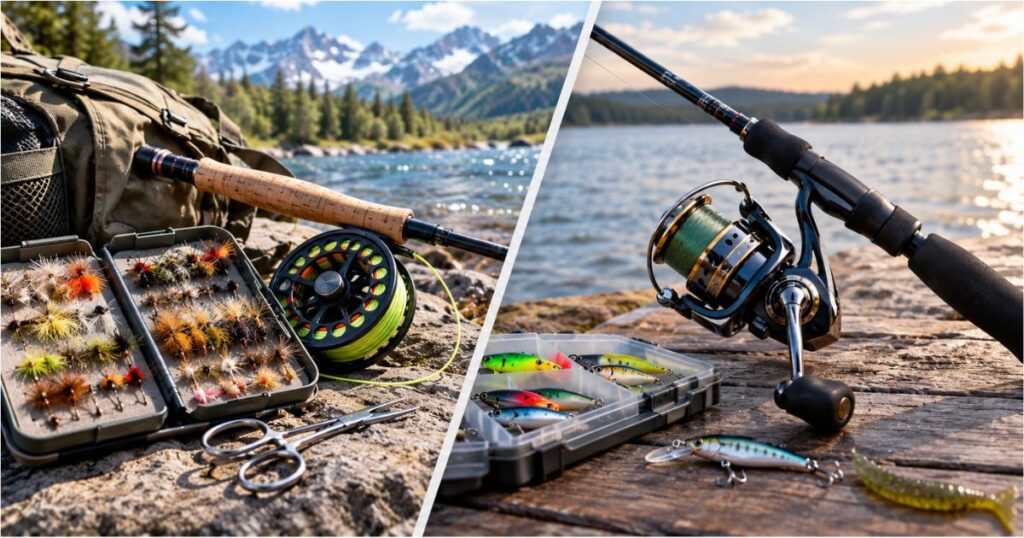
Difficulty isn’t only about skill it’s also a barrier of entry cost, and fly fishing is the pricier way in.
- A basic fly fishing setup rod, reel, line, leader, and a small fly box typically starts around 300–500, with quality setups running 800–1,500. Waders, boots, and a vest can add another 200–500 if you’re fishing cold water.
- A basic spin fishing setup rod, reel, and a handful of lures can be assembled for roughly 80–400, and a functional combo is often available at any big-box store or even a gas station.
This gap matters because it changes the risk of trying the sport. Spin fishing lets a beginner test the waters (literally) for under $100. Fly fishing typically asks for a bigger upfront commitment which is one reason guided trips or rental gear are a popular low-risk way to try it before buying anything.
(These figures are general market estimates, not pulled from a single pricing source; actual costs vary by brand, region, and retailer.)
Is Fly Fishing Always Harder? The Counter-Argument
Not every experienced angler agrees fly fishing deserves its reputation. Some argue the sport’s difficulty has been overstated by the way it’s often taught and talked about. The core counter-argument: fly casting is a mechanical skill anyone can learn with the right instruction. The rod and line do most of the work once you understand the motion and the perception of difficulty comes more from bad teaching and intimidating online content than from the sport itself.
There’s something to this. A well-taught beginner really can cast competently within a day. What tends to separate the two camps isn’t whether fly fishing is learnable quickly it clearly is, at a basic level but whether reaching consistent, independent success takes meaningfully longer than it does with conventional tackle. On that narrower question, the weight of practitioner experience and the added layers of entomology, water reading, and presentation still points toward fly fishing having the steeper overall curve.
Species Matters Trout vs. Bass vs. Saltwater Difficulty
“Fly fishing” isn’t one fixed difficulty level it shifts with what you’re chasing:
- Trout are the classic fly fishing target and, ironically, one of the harder starting points. Wild and heavily pressured trout are wary, feed selectively, and punish sloppy presentation.
- Bass and panfish are far more forgiving for beginners; they’re aggressive, less picky about exact fly patterns, and abundant enough that mistakes don’t end the day.
- Saltwater fly fishing (for species like bonefish, permit, or tarpon) adds wind, bigger gear, and less forgiving casting windows, pushing difficulty back up toward the higher end.
If you’re wondering whether fly fishing is “too hard” to start, the honest answer depends heavily on what you’re targeting first. A trip aimed at bluegill or bass is a much gentler introduction than heading straight for wild trout or saltwater flats species.
Is the Extra Difficulty Worth It?
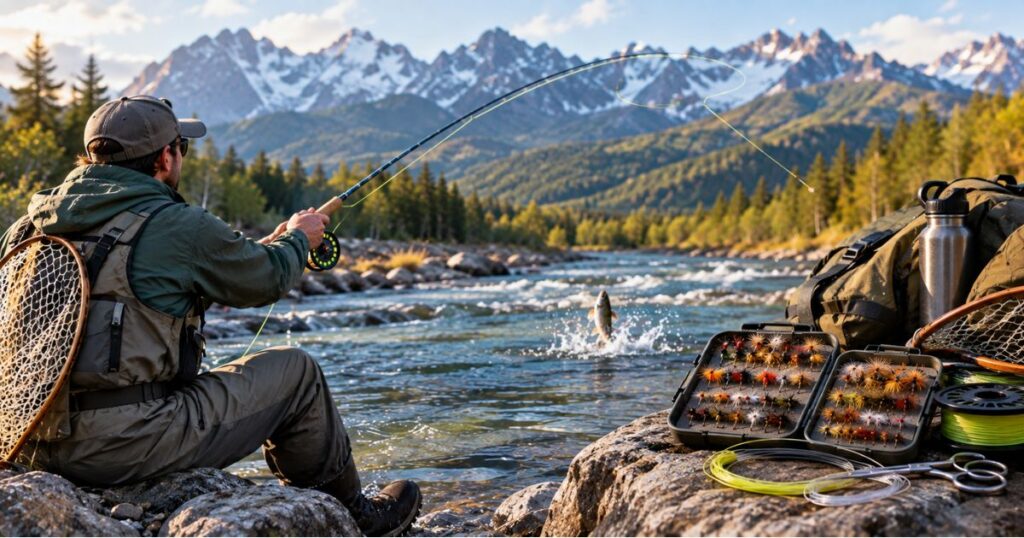
This is where the “why bother” question actually gets answered. Anglers who stick with fly fishing consistently point to the same thing: the payoff isn’t just catching fish, it’s the process of figuring out what a fish wants, presenting it convincingly, and being rewarded with a strike you essentially predicted. That’s a different kind of satisfaction than a reaction strike on a lure and it’s the reason people describe fly fishing as addictive despite (or because of) the difficulty.
Whether that trade-off is worth it depends entirely on what you want from time on the water: reliable action and simplicity, or a slower, more technical game with a higher ceiling.
- Fly fishing is harder because the line, not the lure, does the casting work a fundamentally different physical skill than spin casting.
- Beyond casting, fly fishing layers in reading water, matching hatches, and drag-free presentation skills conventional fishing mostly doesn’t require.
- Expect a low floor, high ceiling: you can catch a fish on day one with instruction, but consistent independent success often takes one to three seasons, and true mastery is a lifelong pursuit.
- Gear costs more to start (roughly 300–1,500 vs. 80–400 for spin gear), which raises the entry barrier alongside the skill barrier.
- The species you target changes the difficulty bass and panfish are a gentler start than wild trout or saltwater species.
- Fly fishing isn’t harder in every sense; basic casting is learnable fast but reaching consistent results still takes longer than with conventional tackle.
FAQs
Is fly fishing harder than spin fishing?
Yes, generally. Fly casting requires loading the rod with the weight of the line itself, a more technical motion than spin casting, where the lure’s weight does the work. Beyond casting, fly fishing also demands reading water and matching insect hatches skills spin fishing doesn’t require to the same degree.
How long does it take to learn fly fishing?
Basic casting can be learned in a few hours to a day with instruction, and many beginners land a fish on their first outing. Consistent, independent success typically takes one to three seasons of regular practice, while true mastery is something many lifelong anglers describe as an ongoing process.
Can you fly fish with a spinning rod?
Not really. A spinning rod can’t load energy into a fly line the way a fly rod can, and a fly rod can’t cast a weighted lure effectively. Hybrid rigs (like a bubble-and-fly setup) let spin anglers fish with flies, but that’s not true fly casting.
How much does it cost to start fly fishing versus regular fishing?
A basic fly fishing setup typically runs 300–500 to start, with quality gear reaching 800–1,500. A basic spin fishing setup is usually available for 80–400. The gap is one reason many beginners try fly fishing through a guided trip or rental gear before buying.
Is fly fishing worth the extra difficulty?
For many anglers, yes the appeal is in outsmarting a fish through presentation and observation rather than triggering a reaction strike. Whether it’s “worth it” depends on whether you want a technical, slower-paced challenge or a simpler, faster-action style of fishing.
Is fly fishing harder for every species of fish?
No. Difficulty varies by target. Bass and panfish are a forgiving entry point for fly fishing beginners, while wild trout and saltwater species like bonefish or tarpon are considerably more demanding, requiring precise presentation and casting under tougher conditions.
