

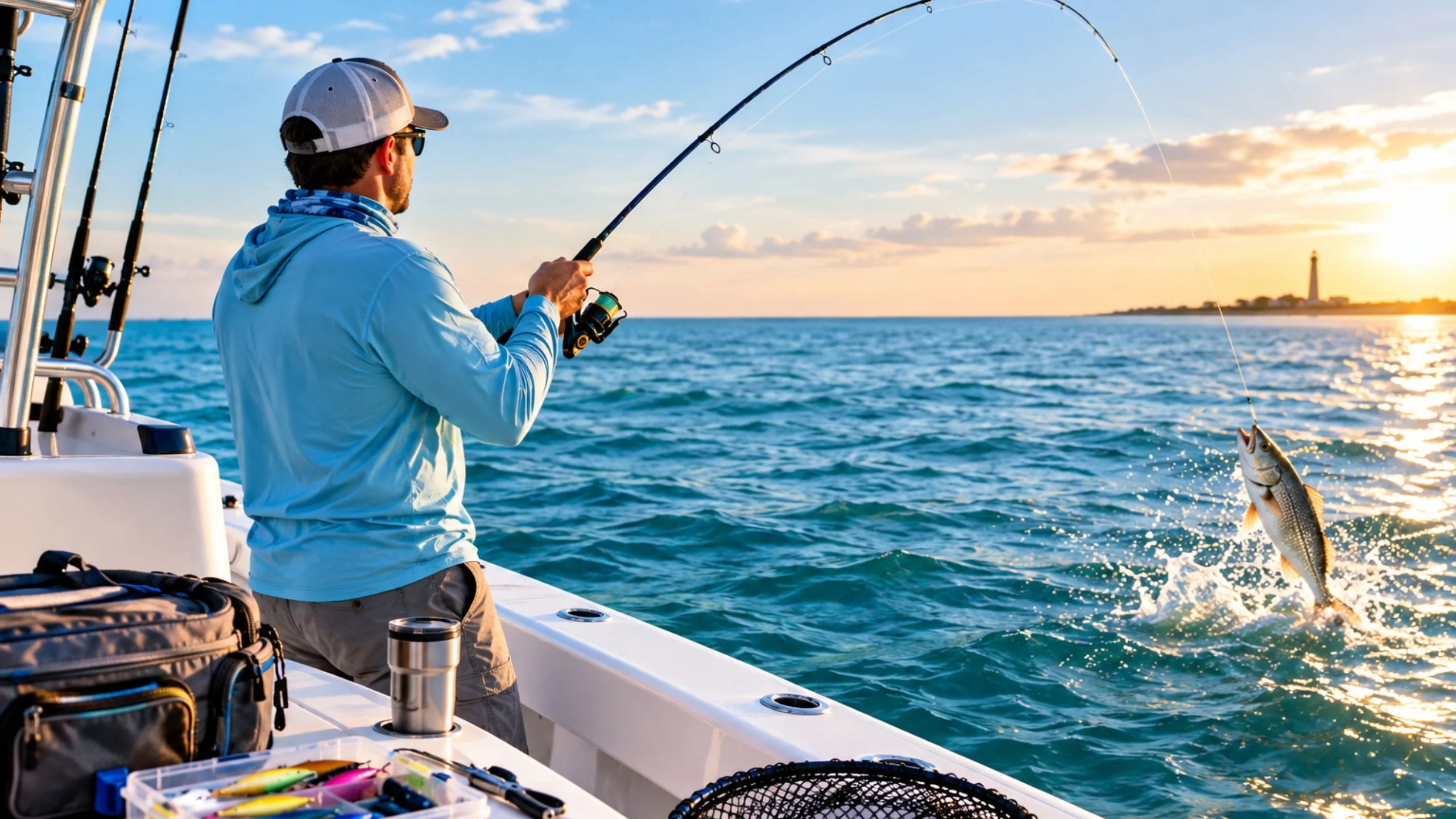
To improve your Gulf fishing results, choose your target species first, then match your location, season, tide, tackle, and technique to that fish. Check current regulations before leaving, monitor weather and wind, and ask your guide how local conditions are affecting the bite.
How Do You Improve Your Chances of Catching Fish in the Gulf?
A productive Gulf fishing trip starts with a simple principle: don’t use the same strategy for every fish or every location.
Redfish feeding on shallow flats require a different approach from red snapper holding around offshore structures. Likewise, a calm inshore morning can call for a completely different tackle than a deep-water trip.
Use this basic process before you fish:
- Choose your target species.
- Identify its likely habitat.
- Check the season and current regulations.
- Look at the tide, wind, water clarity, and weather.
- Match your bait and tackle to the conditions.
- Adjust your technique once you see what the fish are doing.
This approach gives you a logical starting point instead of simply changing lures at random.
Start With the Target Species
Ask yourself what you actually want to catch.
If your goal is redfish or speckled trout, you may spend more time around bays, flats, grass, marshes, channels, or other inshore habitat. If you’re targeting reef fish, your guide may take you toward structure and deeper water.
The target fish should influence almost every decision that follows.
Match the Location to the Fish
Fish don’t distribute themselves evenly across the Gulf.
Look for the features that provide food, shelter, current, or a combination of all three. These can include:
- Grass beds
- Oyster areas
- Channels
- Points
- Flats
- Jetties
- Piers
- Artificial reefs
- Natural structure
- Offshore reefs
- Current breaks
A good fishing guide can save time here because local knowledge helps identify productive areas that may not be obvious from a basic map.
Adjust for Tide, Current, and Weather
Conditions can change the fishing strategy quickly.
Tides can move baitfish and predators. Wind can affect water clarity and boat positioning. A weather change can alter feeding behavior or make certain areas uncomfortable or unsafe.
Instead of asking only, “Where are the fish?”, also ask:
“Where will the food be under today’s conditions?”
That question can lead you toward a much more productive starting point.
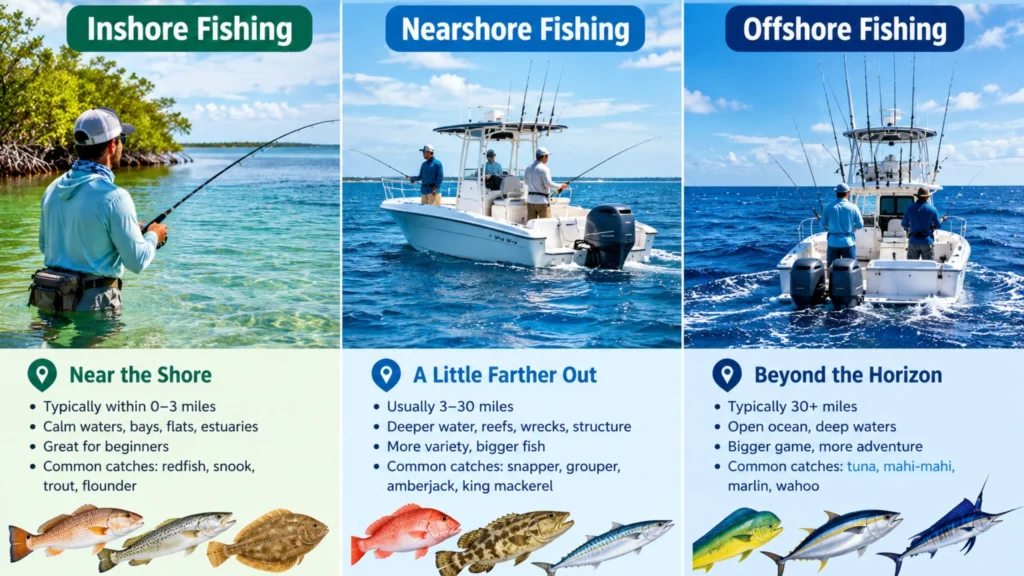
Inshore vs. Nearshore vs. Offshore Fishing
Choosing the right type of trip is one of the most important decisions you’ll make.
| Trip Type | Typical Environment | Often Suits | ommon Target Examples |
| Inshore | Bays, flats, marshes, estuaries | Beginners, families, light-tackle anglers | Redfish, speckled trout, flounder |
| Nearshore | Coastal waters and shallow structure | Anglers wanting variety | Mackerel, cobia, reef fish |
| Offshore | Deeper Gulf waters and structure | Experienced anglers and trophy-focused trips | Snapper, grouper, amberjack, pelagic species |
These categories aren’t rigid boundaries. The exact location, depth, and target species depend on the coast, season, weather, and local regulations.
Which Gulf Fishing Trip Is Best for Beginners?
Inshore fishing is often the easiest starting point for beginners because trips can involve shallower water, shorter travel times, and a wide variety of techniques.
That doesn’t mean offshore fishing is unsuitable for beginners. A good captain can tailor the trip to the group’s experience, age, comfort level, and goals.
If you’re booking your first trip, tell the guide exactly who is coming and what you want from the day.
Which Trip Is Best for Bigger Fish?
Offshore trips generally provide access to deeper habitats and species that aren’t commonly found in shallow inshore environments.
But bigger water doesn’t automatically mean more fish or a better experience. Offshore trips can involve longer travel, larger waves, more demanding conditions, and greater exposure to weather.
Choose the trip based on your goals, not just the distance from shore.
What Is the Best Time to Fish the Gulf Coast?
There isn’t one universal “best month” for Gulf fishing.
Fishing conditions vary by location, target species, water temperature, weather, bait movement, regulations, and seasonal fish behavior. A productive month for one species can be very different from the ideal period for another.
Spring Fishing
Spring can bring changing water temperatures and increased bait and fish activity in many Gulf areas.
It’s a good time to watch for transitions. Fish may respond differently as water temperatures rise and forage becomes more active.
Summer Fishing
Summer often means warm water, strong sunlight, and increased recreational fishing pressure.
Early mornings can be attractive because temperatures are more comfortable and conditions may be calmer before afternoon weather develops. However, the best fishing window still depends on the species and local conditions.
Fall Fishing
Fall brings another major seasonal transition.
Cooling water can change fish movements and feeding patterns. Bait activity can also become an important clue for locating predators.
Winter Fishing
Winter fishing can still be productive, but strategies often need to change with cooler water and weather patterns.
Rather than assuming fish have disappeared, ask your guide which species remain active and where they’re likely to hold under current conditions.
What Is the Best Time of Day?
For many trips, early morning can be a useful starting window, especially during warmer months.
But tide and species behavior can be more important than simply choosing sunrise. A strong tidal movement during a later period may be more productive than a weak tide early in the morning.
The best time is the intersection of species behavior, tide, weather, and local conditions.
How Tides, Current, and Weather Change Your Fishing Strategy
Tides are one of the most useful pieces of information for coastal anglers.
Moving water can transport food and create feeding opportunities. Predatory fish often position themselves where they can take advantage of that movement without spending unnecessary energy.
Reading Incoming and Outgoing Tides
An incoming tide moves water toward shore or into certain shallow areas, while an outgoing tide moves water away.
Neither is automatically better everywhere.
Instead, look for how the moving water interacts with structure.
For example, a point, channel edge, creek mouth, grass line, or other structure can create a current break where bait and predators concentrate.
Finding Current Breaks
A current break is an area where water movement changes.
Fish can use these locations as feeding stations because current can bring food toward them.
Look for:
- Points
- Channel edges
- Creek mouths
- Inlets
- Bridges
- Jetties
- Structure
- Changes in bottom depth
Your guide’s local knowledge becomes particularly valuable when identifying these areas.
Use Baitfish Activity as a Clue
If you see baitfish flicking across the surface, birds working, or obvious feeding activity, pay attention.
Predators frequently follow available forage. Surface activity isn’t a guarantee that fish will bite, but it can provide useful information about where the food chain is active.
Wind and Water Clarity
Wind can be helpful or harmful depending on its direction, strength, and duration.
Moderate movement may stimulate feeding or push bait toward certain areas. Strong wind can make navigation, casting, visibility, and boat positioning more difficult.
Water clarity matters too.
If visibility drops, fish may respond differently to brightly visible artificial lures than they would in clear water. That’s one reason having several lure and bait options is useful.
What Should You Do After a Weather Change?
Don’t assume yesterday’s productive spot will automatically produce today.
After a major weather change, reassess:
- Water temperature
- Water clarity
- Wind
- Tide
- Current
- Bait activity
- Fish location
Successful anglers adjust instead of stubbornly repeating yesterday’s strategy.
Gulf Fishing Gear: What Should You Actually Bring?
The correct gear depends on your fishing environment and target species.
Inshore Gear
For many inshore situations, a medium or medium-light spinning setup can provide a practical combination of casting ability and sensitivity.
Common components include:
- Spinning rod
- Spinning reel
- Braided main line
- Fluorocarbon leader
- Appropriate hooks
- Jigheads
- Soft plastics
- Topwater lures
- Live-bait rigs
Your exact setup should match the fish you’re targeting and the structure you’re fishing around.
Nearshore Gear
Nearshore fishing can require more strength than light inshore fishing.
Depending on the target, you may need:
- Heavier spinning tackle
- Conventional tackle
- Stronger leader
- Heavier hooks
- Metal or trolling lures
- Live bait
- Bottom-fishing rigs
Offshore Gear
Offshore fishing can involve significantly heavier tackle because you’re dealing with deeper water, stronger fish, current, and heavier terminal tackle.
Your charter will often provide the specialized equipment required for the trip, but always confirm what is included before booking.
Basic Personal Gear
Even when the boat supplies rods, reels, bait, and tackle, you may still want:
- Polarized sunglasses
- Hat
- Sunscreen
- Non-slip footwear
- Weather-appropriate clothing
- Water
- Motion-sickness medication if appropriate for you
- Phone or camera
- Personal identification
- Any required license or documentation
Never assume what is included. Ask before the trip.
Best Baits and Techniques for Popular Gulf Fish
There is no single “best bait” for every Gulf species.
Your choice should reflect the target fish, habitat, water conditions, forage, and local regulations.
| Species | Typical Habitat | Bait/Lure Direction | Common Technique |
| Redfish | Flats, marshes, bays, channels | Live bait or artificial lures | Casting, drifting |
| Speckled Trout | Grass, flats, channels | Shrimp, soft plastics, other lures | Casting, drifting |
| Red Snapper | Offshore structure and reef habitat | Natural bait or suitable artificial options | Bottom fishing |
| Grouper | Deeper structure | Natural bait and appropriate tackle | Bottom fishing |
| King Mackerel | Nearshore/offshore waters | Live bait and trolling lures | Trolling |
| Cobia | Structure and surface activity | Live bait or artificial lures | Sight fishing |
This table is a starting framework, not a substitute for local knowledge or current regulations.
Live Bait vs. Artificial Lures
Live bait can be highly effective when fish are actively feeding on the same forage.
Artificial lures give you flexibility and allow you to cover water without constantly maintaining live bait.
Neither approach wins in every situation.
Ask your guide:
“What are the fish feeding on today?”
That answer is often more useful than asking for the single “best lure.”
Gulf Coast Fishing Licenses and Regulations
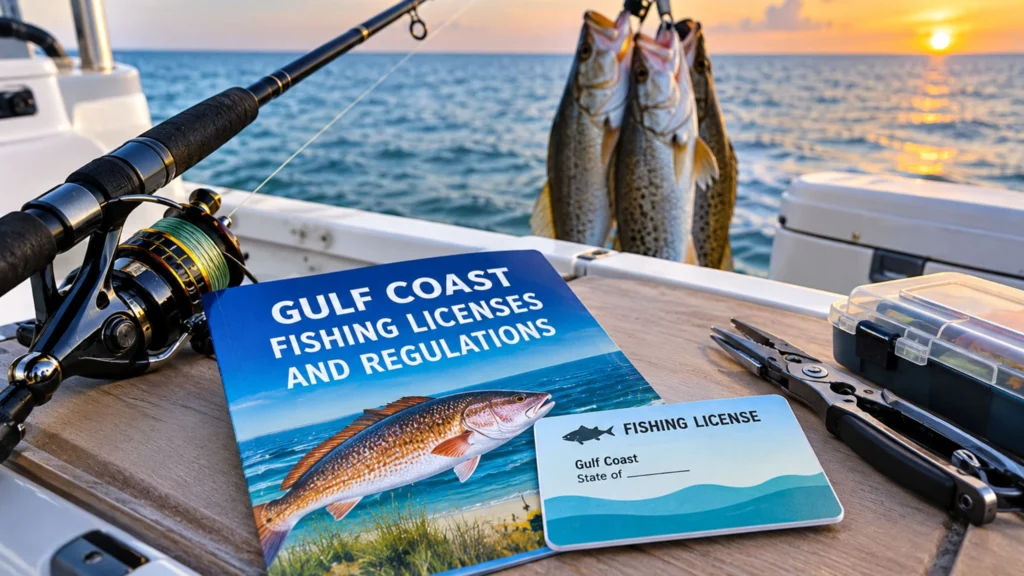
Fishing regulations are one area where you should never rely on an old blog post or a memory from your last trip.
Rules can vary by state, species, location, fishing method, and whether you’re in state or federal waters. Federal Gulf regulations are managed by NOAA Fisheries and the Gulf Council, while states can have additional requirements. NOAA specifically notes that regulations can change and that current rules should be checked before fishing.
State Waters vs. Federal Waters
Federal waters begin where state waters end and extend outward into the Exclusive Economic Zone. NOAA notes that federal Gulf management generally extends to 200 miles offshore.
That distinction matters because a fish caught in federal waters can be subject to federal regulations, while state rules may also apply in particular circumstances.
Florida
Florida requires a saltwater fishing license for many recreational saltwater activities, including taking or attempting to take saltwater species. Florida also states that its license is required to land saltwater species in Florida regardless of whether they were caught in state or federal waters.
Check the current Florida Fish and Wildlife Conservation Commission rules before your trip.
Alabama
Alabama requires a saltwater fishing license for people fishing or possessing fish in Alabama saltwater areas, with specific exemptions. Alabama also has Saltwater Angler Registration requirements for certain residents who don’t need to purchase an annual saltwater license.
Louisiana
Louisiana requires anglers age 18 and older fishing recreationally in applicable saltwater areas to have the required Basic Fishing License and Saltwater License, subject to the state’s specific exemptions and license categories. Louisiana also offers a charter passenger saltwater license for certain charter situations.
Mississippi
Mississippi’s licensing rules depend on where you’re fishing. The Mississippi Department of Marine Resources states that a saltwater fishing license is required south of Highway 90, while different license rules apply in areas farther north.
Texas
Texas requires an appropriate fishing license and saltwater endorsement for fishing in public saltwater. Current Texas regulations also address state and federal waters and specify additional requirements for fish taken from federal waters and landed in Texas.
Check Current Regulations Before You Go
Regulations can change during the year.
For example, NOAA’s current 2026 Gulf information lists species-specific seasonal closures and notes that additional in-season closures can occur. Current federal information includes 2026 recreational seasons for species such as gag, greater amberjack, and red snapper.
Never use this article as a substitute for checking the current rules for your exact fishing location and target species.
For a trip planned around a regulated species, check:
- State wildlife agency rules
- NOAA Fisheries
- Current fishery bulletins
- Gulf Council information
- Your fishing guide or charter captain
How to Choose the Right Gulf Fishing Guide
A good guide should match your goals, not simply advertise the biggest boat or the longest trip.
Before booking, ask these questions.
1. What Species Do You Target?
If you specifically want redfish, trout, snapper, grouper, or another species, ask how the trip is designed around that target.
2. What Type of Water Will We Fish?
Ask whether the trip is:
- Inshore
- Nearshore
- Offshore
- Reef-focused
- Deep-water
- Sight-fishing oriented
3. What Is Included?
Confirm whether the price includes:
- Rods and reels
- Tackle
- Bait
- Ice
- Fishing licenses
- Fish cleaning
- Fuel
- Other equipment
Never assume.
4. How Large Is the Group?
A six-person family trip and a private two-person trip can provide very different experiences.
Ask about:
- Maximum passengers
- Private vs. shared trips
- Available deck space
- Boat layout
5. What Happens if the Weather Turns Bad?
Ask about the guide’s cancellation, postponement, or rescheduling policy before paying.
Weather decisions should prioritize safety rather than forcing a trip to happen.
6. What Experience Level Should We Have?
Tell the captain if you’re bringing:
- First-time anglers
- Children
- Older family members
- Experienced anglers
- Someone prone to seasickness
That information can help the guide recommend an appropriate trip.
Gulf Fishing Safety and Responsible Fish Handling
A productive trip should also be a safe trip.
Boat and Weather Safety
Listen to your captain’s instructions.
Wear appropriate footwear, keep walkways clear, use handholds when the boat is moving, and avoid standing unnecessarily during rough conditions.
Weather should always be taken seriously on the Gulf.
Prepare for Seasickness
If you’re prone to motion sickness, prepare before departure rather than waiting until symptoms become severe.
Ask your healthcare professional or pharmacist about appropriate options if you’re unsure what is suitable for you.
Other practical steps include:
- Get adequate rest
- Eat a light meal
- Stay hydrated
- Avoid excessive alcohol before or during the trip
- Follow your captain’s advice about where to sit
Handle Fish Carefully
If you’re keeping a legal fish, follow the captain’s instructions for handling and storage.
If you’re releasing a fish, minimize the time it spends out of the water and avoid unnecessary handling.
Understand Barotrauma
Deep-water reef fish can experience barotrauma, an injury associated with pressure changes when fish are rapidly brought toward the surface.
Signs can include a distended abdomen, bulging eyes, an everted stomach, or difficulty returning to depth.
NOAA Fisheries supports the use of descending devices for reef fish experiencing barotrauma and explains that these devices can help return fish to depth so pressure can normalize.
Federal Gulf reef-fish rules and equipment requirements should always be checked against the current regulations before a trip because regulatory requirements can change.
What Should You Bring on a Gulf Fishing Trip?
Use this simple checklist before leaving for the marina.
Gulf Fishing Packing Checklist
- Polarized sunglasses
- Sunscreen
- Hat or sun protection
- Non-slip footwear
- Light, breathable clothing
- Rain gear or an extra layer
- Water
- Small snacks
- Motion-sickness preparation
- Phone or camera
- Personal identification
- Any required license or permit
- Cash or payment method for applicable expenses or gratuity
Don’t bring your entire tackle box unless your guide specifically asks you to.
Many charter boats provide rods, reels, bait, tackle, and other fishing equipment. Confirm the inclusions before you arrive.
Original Expert Insight: The Gulf Fishing Decision Framework
Here’s a simple framework you can use before almost any Gulf fishing trip:
SPECIES → PLACE → TIME → TIDE → TECHNIQUE → RULES
1. Species
What do you want to catch?
2. Place
Where does that fish normally hold under current conditions?
3. Time
What season and time of day make sense for the target?
4. Tide
How will moving water affect bait and fish positioning?
5. Technique
Which bait, lure, rig, retrieve, or presentation matches the situation?
6. Rules
Is the species currently legal to keep, and do size, bag, season, gear, or location restrictions apply?
This framework prevents a common mistake: choosing equipment before deciding what you’re actually trying to catch.
The smartest preparation isn’t necessarily having the most tackle.
It’s knowing why you’re using each piece of tackle.
Conclusion
Choose your target species, match it to the right habitat, consider the season and tide, watch the weather, use suitable bait and tackle, and verify the current regulations before keeping anything.
If you’re booking a guided trip, tell your captain what you actually want from the day. Whether you’re introducing your family to saltwater fishing, chasing a specific species, or looking for a more technical offshore experience, the right trip should match your goals.
FAQs
What is the best time to fish the Gulf Coast?
There is no single best time for every Gulf species. The ideal window depends on the target fish, location, season, tide, water conditions, weather, and current regulations. Early morning can be productive, but a strong tide or favorable conditions later in the day may be more important.
What fish can you catch in the Gulf?
Common Gulf recreational targets include redfish, speckled trout, red snapper, grouper, king mackerel, Spanish mackerel, cobia, flounder, sheepshead, black drum, mahi-mahi, tuna, wahoo, tarpon, and other species. Availability varies by location, season, habitat, and regulations.
Do you need a fishing license for Gulf fishing?
Often, yes, but requirements depend on the state, fishing location, species, and whether you’re fishing from shore or a vessel. Florida, Alabama, Louisiana, Mississippi, and Texas have different requirements, while federal Gulf waters can have additional rules. Always check the current official requirements before fishing.
What should you bring on a Gulf fishing charter?
Bring sun protection, polarized sunglasses, suitable clothing, non-slip footwear, water, snacks, motion-sickness preparation if needed, identification, and any required documentation. Many charters provide rods, reels, bait, tackle, and other equipment, so confirm what is included before the trip.
What is the difference between inshore and offshore fishing?
Inshore fishing generally takes place in bays, flats, estuaries, marshes, and other coastal areas. Offshore fishing moves into deeper Gulf waters and can target reef fish and larger pelagic species. Nearshore fishing falls between these broad categories and often focuses on coastal structure and species that move between shallow and deeper water.
How do tides affect Gulf fishing?
Tides move water and can concentrate bait around structure, channels, points, inlets, and other current breaks. The incoming and outgoing tide can produce different conditions, so instead of assuming one tide is always best, look at how current interacts with the habitat and target species.
Is Gulf Coast fishing good for beginners?
Yes. Beginners can choose trips designed around their experience, comfort level, age, and target species. Inshore trips are often a practical introduction because they may involve shallower water and shorter travel times, but an experienced captain can also help beginners enjoy appropriate nearshore or offshore trips.
How do you choose a Gulf fishing guide?
Choose a guide based on your target species, preferred fishing environment, group size, experience level, boat, safety practices, equipment, trip duration, what’s included, and weather policy. Ask specific questions before booking rather than choosing solely from price or marketing claims.
What should you do if a deep-water fish shows signs of barotrauma?
Follow current regulations and your captain’s instructions. NOAA Fisheries explains that descending devices can help reef fish experiencing barotrauma return to depth and improve release survival. Appropriate release equipment and knowledge should be part of responsible deep-water fishing.
Do Gulf fishing regulations change?
Yes. Federal and state fishing rules can change, and some species may have seasonal or in-season closures. NOAA’s current Gulf regulations page specifically notes that regulations are subject to change and that anglers should consult current official rules and fishery bulletins.
