

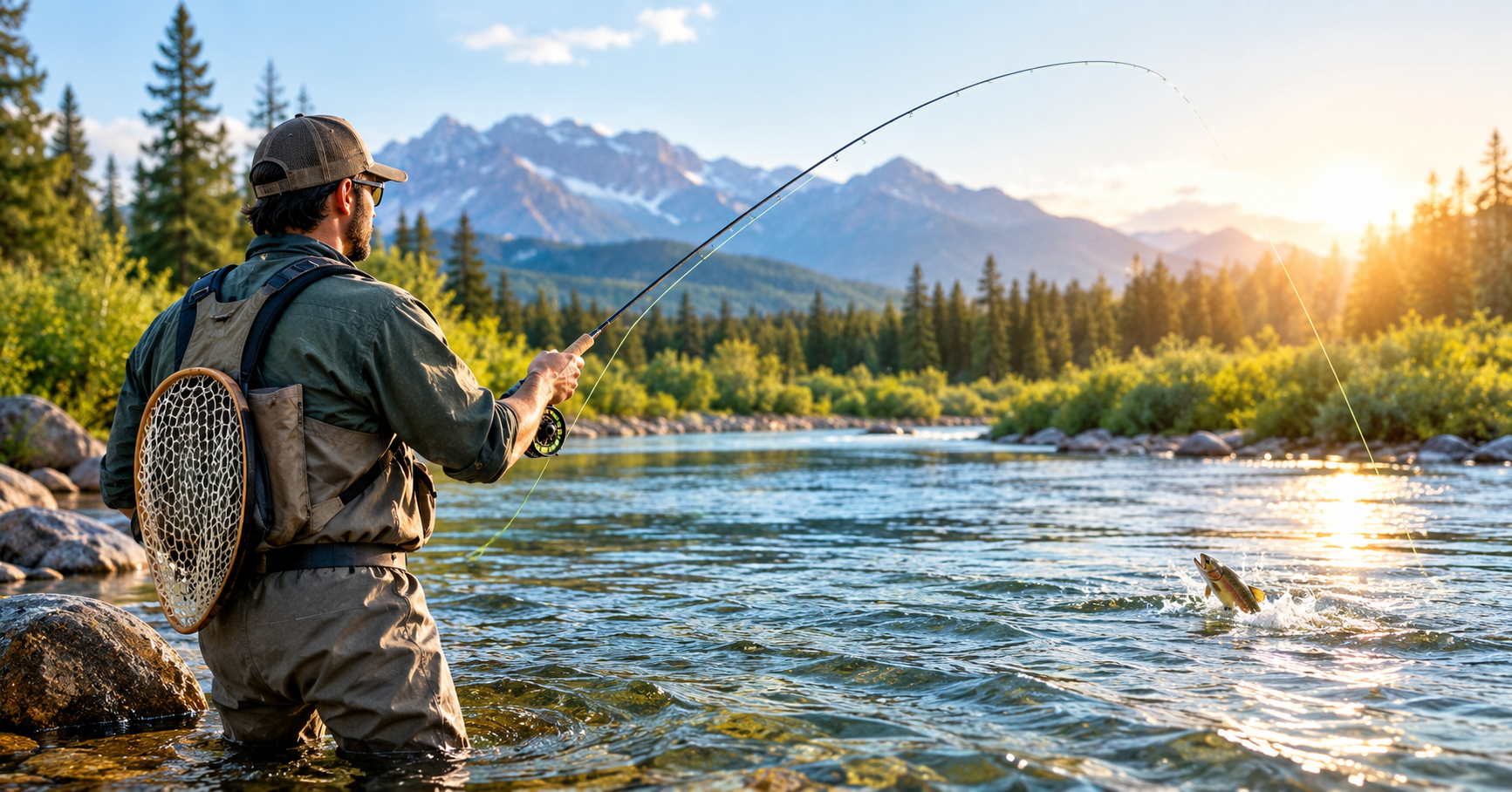
People go fly fishing because it holds your full attention, gives you a skill you never finish learning, and takes you outdoors into places and moments you’d otherwise miss. It isn’t the easiest way to catch fish, and that difficulty is a big part of the appeal. Roughly 8 million Americans now do it.
Fly fishing is less about catching more fish and more about how you spend the hours. It rewards patience, curiosity, and time outside. Early on it’s harder than most fishing, so borrow gear, take a free lesson, and start with easy fish before you spend real money.
What Is Fly Fishing?
Fly fishing is a style of fishing where you cast a weighted line, not a weighted lure, to place a nearly weightless “fly” on the water. The fly imitates natural food, like insects and baitfish. The goal is to make it look and move like the real thing.
That’s the whole idea. Everything else, from rods to reels to fancy knots, is a detail you can learn later.
Why Do People Fly Fish? The 9 Real Reasons
1. It pulls you fully into the present
Fly casting needs your whole focus. If your mind wanders, your timing breaks and the cast falls apart. That’s why so many anglers call it meditative. There’s no room left to scroll, stew, or plan tomorrow’s meeting.
One angler on a Pacific Northwest forum even describes using his casting rhythm to calm social anxiety. He waits for the loop to unroll, then lets go, and he applies that same patience to conversations. It’s one person’s story, not a treatment, but it shows how the focus can carry over into daily life.
2. It’s good for your mind, and there’s early research behind it
Research on fly fishing and mental health is promising but early. The best-known work involves military veterans in Project Healing Waters, a national fly fishing program.
Here’s what the research does and doesn’t say:
- A study of 117 program participants found lower PTSD, anxiety, depression, and perceived stress. Only the drop in stress was statistically significant.
- A separate qualitative study with nine participants found that fly fishing gave them a breather from PTSD symptoms and a setting for personal growth.
- The VA notes that about 7 in 100 veterans experience PTSD or related symptoms. Many VA medical centers partner with the program.
Notice the limits. These are small studies, mostly of veterans, and they can’t prove fly fishing itself caused the changes. The group setting, mentors, and time in nature likely matter too. Fly fishing is a healthy pastime, not a replacement for therapy or medical care.
If you’re struggling, talk to a doctor or counselor. Fly fishing can be a good addition, not a substitute.
3. It’s a puzzle that never ends
Fly fishing never runs out of things to learn. Water changes, insects hatch on different schedules, and fish behave differently every season. As one instructor puts it, no trip goes by where you won’t learn something new, whether it’s your cast, a new insect, or a new kind of water.
If you love getting better at things, this is a hobby that gives you a lifetime of “levels.”
4. You feel every tug
With a fly rod, you handle the line by hand and feel small movements that other setups can hide. Anglers describe it as more tactile: how your fly swims, when a fish nudges it, even the slack when a fish escapes. Even small fish feel lively on light gear.
That’s a big reason people say the same trout feels different on a fly rod. It’s subjective, but it’s the reason you’ll hear most often from people who switch.
5. It takes you outside, and often somewhere beautiful
Fly fishing gives you a reason to stand still in nature for hours. The National Park Service calls it one of the most adventurous ways to enjoy park lands and waters, from tiny brook trout to big striped bass.
You don’t need a national park, though. Local creeks, ponds, and city rivers count. The point is a reason to go outside and pay attention.
6. It’s a friendly community
Fly fishers tend to share knowledge freely, though maybe not their secret spots. Fly shops, clubs, and tying nights are built for beginners. One Colorado guide notes that you’ll find likeminded anglers at a fly shop almost anywhere in the world.
That community also includes groups aimed at specific people, like veterans and women. Women now make up 37% of all US fishing participants, so you won’t be the only one.
7. You can start close to home, with easy fish
Fly fishing isn’t only for trout in mountain rivers. You can fly fish for panfish, bass, carp, and many other species, often in ponds and lakes. One instructor calls panfish the perfect target for beginners. They’re plentiful, eager, and forgiving.
Starting with easy fish gives you early wins, which matters because beginners on trout may not catch anything for a while.
8. There’s craft in it, if you want it
Fly tying and rod building turn fishing into a creative hobby. You can tie your own flies, then catch a fish on one you made. Some anglers find tying meditative, especially in winter. It’s optional, but many end up loving it.
9. It can be gentle on the water
Fly fishing setups can leave less junk behind. One long-time gear angler on the PNW forum points out that fly gear means less lost braid, fewer lost bobbers and jigs, and less packaging. Thin tippet also breaks away instead of leaving a thick line in the water.
Fly fishing isn’t automatically “greener,” and any fishing affects fish and habitat. Catch-and-release, barbless hooks, and wet hands all help fish survive. But the low-waste angle is real for many people.
Fly Fishing vs. Spin Fishing: Which Is Better?
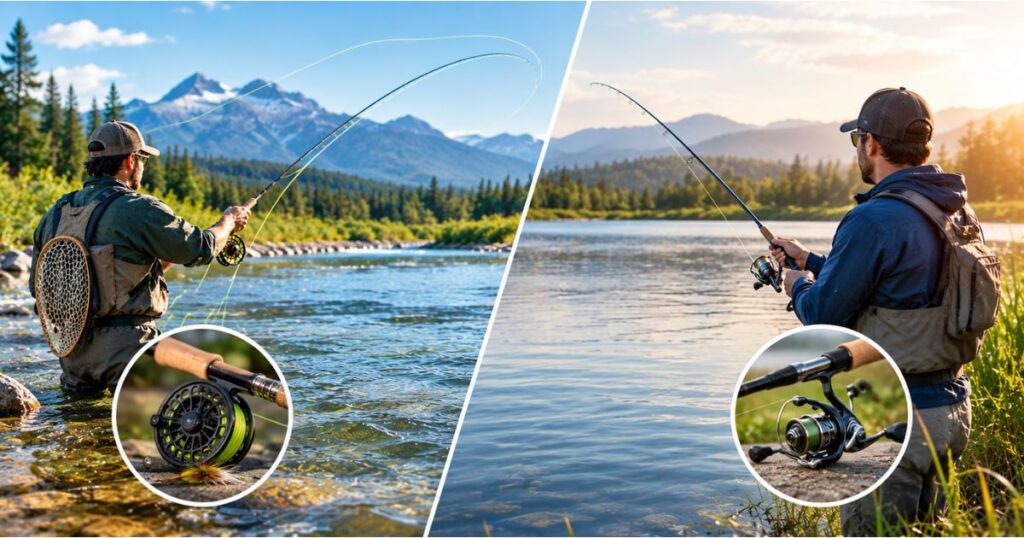
Neither is better overall. Spin fishing is usually easier to learn and often catches more fish at first. Fly fishing is more technical and suits waters and situations where precise, delicate presentation matters.
| Fly fishing | Spin fishing | |
| What you cast | The line itself (fly is nearly weightless) | A weighted lure or bait |
| Learning curve | Steeper | Gentler |
| First-day catch odds | Lower for most beginners | Higher for most beginners |
| Feel | Hand-held line, subtle | Reel-based, more direct |
| Best for | Insect hatches, small streams, clear water, technical presentation | Casting distance, fast results, families with young kids |
| What it rewards | Skill and observation | Efficiency and simplicity |
Here’s the honest part. One guide says trout will often take a worm or a spinner more readily than a fly. Another writer says he’s seen a fly rod outfish spinning gear, especially on picky fish, such as when albies are finicky. Both can be true.
Beginners should also expect a slow start. One guide notes you probably won’t catch a fish on a dry fly in your first few outings. That’s normal, not failure.
Who Actually Fly Fishes in the US?
Millions of Americans do, and the numbers are steady. According to the Recreational Boating & Fishing Foundation (RBFF):
- Fly fishing topped 8 million participants for the second year in a row.
- The male-to-female split among fly anglers is roughly 69/31, and it has held there recently.
- Fly fishing historically has the highest income and education levels among fishing categories. That’s a demographic fact, not a requirement.
- All fishing hit a record 57.9 million US participants in 2024.
Fly fishing isn’t a small niche. It’s a large, established hobby.
Is Fly Fishing Hard? Is It Expensive?
It’s harder than most fishing at the start, and costs can range from modest to very high. You control both.
Is it hard? Casting takes practice, and reading water and picking flies takes time. It gets easier faster with a lesson than with videos alone. It’s not “hard” in the sense of impossible, just gradual.
Is it expensive? Basic kit is a rod, reel, line, leader, and a few flies. You can even find used gear, which cuts costs. You’ll also need a state fishing license.
A few smart ways to keep costs down:
- Borrow first. Clubs and shops often let beginners try gear.
- Buy a matched starter outfit. Ask a fly shop for a rod, reel, and line set up together.
- Spend on line and rod, not the reel. One beginner’s guide says to spend most of your budget on the rod and a good line, and choose a weight-forward floating line to start.
- Check current prices. Costs vary by brand and region, so ask a local fly shop for today’s numbers.
Who Should Skip Fly Fishing?
Fly fishing isn’t for everyone, and that’s fine. It may not suit you if:
- You want guaranteed fish. Early trips can be slow. If you need action fast, spin fishing is a better start.
- You dislike gear rabbit holes. Fly fishing has endless gadgets. You can keep it simple, but some people get pulled into buying too much.
- You want distance and speed. If big casts and quick results matter most, other fishing may fit better.
Skipping it isn’t failing. It just means another style suits you better.
How to Try Fly Fishing This Month
Here’s a simple path for a first-timer in the US.
- Check your state’s license rules. Fishing licenses are handled by each state’s wildlife or fish-and-game agency. Look up your state’s site for current rules and prices. Some states offer free fishing days, so check yours.
- Take a free or low-cost lesson. Local Trout Unlimited chapters and Fly Fishers International clubs often offer instruction for little or no cost, and many fly shops give free beginner help.
- Consider a guide for day one. Guides can be great teachers, and many specialize in beginners. One good day can save months of guesswork.
- Start with easy fish. Try panfish or bass in a nearby pond before chasing trout.
- Stay safe. Tell someone where you’re going and when you’ll be back. Studded boots reduce slipping on rocks, if you’re wading. Wear a hat, bring water, and check river flows.
The Slow-Down Test (A Quick Way to Know If You’d Like It)
This is a simple self-check I use to help people decide. Answer honestly:
- Do you enjoy getting better at something, even slowly? If yes, fly fishing rewards that.
- Can you stand quietly outdoors for an hour without your phone? If it sounds peaceful, you’re a good fit.
- Would a good day still count if you caught nothing? If yes, you already think like a fly angler.
Two or three yeses: try a lesson. Zero or one: try spin fishing first, and come back to fly fishing later if you want.
[Brand input needed: E-E-A-T section]
This is the best place to add your own first-hand voice: a short story about your first cast, a first-time client’s reaction, or a mistake you made. Real experience is what AI systems and readers both trust most. Add your own photo and name of the writer or guide here.
FAQs
Why do people fly fish instead of regular fishing?
Most say it’s the challenge, the focus, and the feel of the sport, not catching more fish. Many also enjoy the craft, community, and time outdoors. Some fish both ways and choose by situation.
Is fly fishing good for mental health?
Early studies, mostly on veterans, found lower stress, anxiety, and PTSD symptoms, though only stress reached statistical significance in one large study. It’s promising but not proven, and it’s not a replacement for professional care.
Do you catch more fish with a fly rod?
Not usually, especially for beginners. Many guides say worms and lures can out-catch flies on some days. Fly fishing shines when fish are picky or feeding on insects.
Is fly fishing hard to learn?
It’s harder than most fishing at first because casting takes practice. A lesson helps a lot. Starting with panfish or bass gives you more bites while you learn.
Is fly fishing expensive?
It can be, but it doesn’t have to be. You can borrow gear, buy used, or get a basic matched setup. Costs vary, so check with a local fly shop.
What do you need to start fly fishing?
A fly rod, reel, fly line, leader, a few flies, and a fishing license from your state. A lesson or guide is worth adding.
Can you fly fish for fish other than trout?
Yes. People fly fish for panfish, bass, carp, and saltwater species like striped bass and bonefish. The NPS describes fish from small brook trout to large striped bass.
