

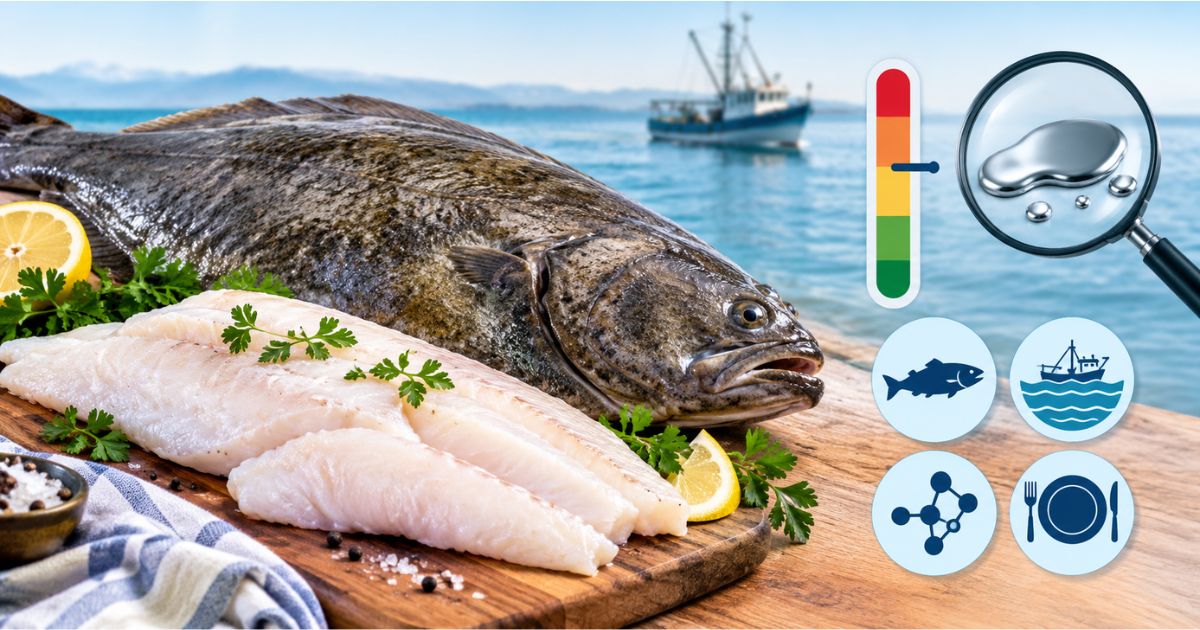
Yes, halibut contains mercury, a mid-range amount averaging about 0.24 ppm in FDA testing. The FDA and EPA rank it a “Good Choice”: one 4-ounce serving a week for pregnant or breastfeeding women and young children. Size matters: bigger, older halibut carry more.
How much mercury is in halibut?
Here are the numbers from FDA testing of 101 halibut samples, one fact per line:
ppm means “parts per million.” It’s how scientists measure tiny amounts of mercury in food.
The average is higher than the middle value because a few high-mercury fish pull it up. The top sample was more than six times the average. That’s why two pieces of halibut can differ a lot.
A fair warning about the data. The FDA table covers testing from 1990 to 2012. The Pacific halibut study we use below sampled fish between 2002 and 2007. These are still the main public numbers, but they aren’t brand new.
Is halibut a “best choice” or “good choice” fish?
It’s a Good Choice. The FDA and EPA sort fish into three lists. Best Choices are for 2 to 3 servings a week, Good Choices for 1 serving a week, and a short Choices to Avoid list covers the highest-mercury fish. Halibut is on the Good Choices list.
Here is how the agencies drew the lines. Fish at or below 0.15 ppm on average land in “Best Choices.” Fish above 0.23 and up to 0.46 ppm land in “Good Choices.”
Halibut’s 0.241 average sits just above the 0.23 line. It’s near the bottom of the Good Choices range, not the top.
Who does the weekly limit apply to? It is written for pregnant women, women of childbearing age, breastfeeding mothers, and parents of young children. If you’re in one of those groups, treat “1 serving a week” as your guide.
Halibut vs. salmon, cod, tuna and swordfish
Using FDA average mercury levels:
| Fish | Average mercury (ppm) | FDA/EPA list |
| Salmon (fresh/frozen) | 0.022 | Best Choice |
| Cod | 0.111 | Best Choice |
| Tuna, canned light | 0.126 | Best Choice |
| Halibut | 0.241 | Good Choice |
| Tuna, canned albacore | 0.350 | Good Choice |
| Sablefish (black cod) | 0.361 | Good Choice |
| Swordfish | 0.995 | Avoid |
Halibut has roughly 11 times the mercury of fresh salmon. It has about a quarter of the mercury of swordfish. It’s in the middle, which is where the official advice puts it.
Does halibut size change the mercury?
Yes. Mercury builds up over a fish’s life. A halibut that is big and old has had more time to collect it.
The International Pacific Halibut Commission tested 981 Alaskan Pacific halibut. Their findings:
| Size (round weight) | Average mercury (ppm) |
| Under 20 lb | 0.248 |
| 20–40 lb | 0.263 |
| Over 40 lb | 0.440 |
| All sizes | 0.340 |
Source: IPHC Report of Assessment and Research Activities 2008.
Notice the pattern. Small and medium fish look alike. The big jump comes above 40 pounds.
Where the fish was caught matters too. Average mercury by area ranged from 0.104 ppm near St. Paul Island to 0.501 ppm near Attu in the Aleutian Islands.
Our “3S Check” for halibut
This is a simple rule of thumb we built from the data above. It is not an official guideline.
- Size: Choose smaller fish when you can. Ask your fishmonger how big the fish was.
- Source: If the seller knows where it was caught, great. Regions differ.
- Serving: Keep to one 4-ounce serving a week if you’re in a higher-risk group. And don’t eat one giant halibut all year (more on that below).
Pacific vs. Atlantic halibut: what the data says
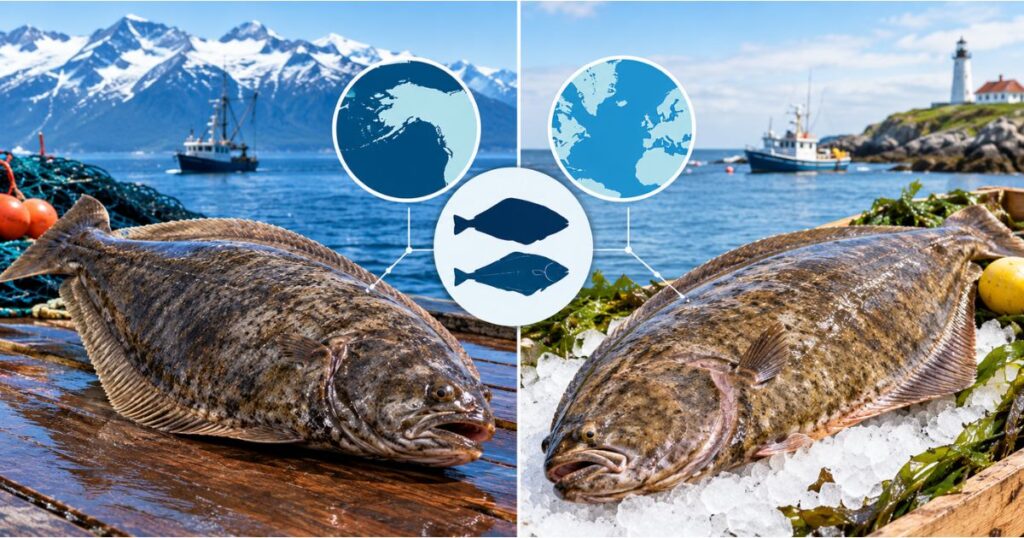
You’ll see claims online that one type has far less mercury. Here’s what we can actually support:
- The FDA’s table lists “halibut” as one line. It doesn’t separate the Pacific from the Atlantic.
- The Pacific-specific data is the IPHC study above.
- Atlantic data is thin. One Norwegian analysis found only one of 14 back-meat samples of Atlantic halibut above the EU’s 1.0 mg/kg limit. That’s a small sample, so we can’t say much from it.
- An older Environmental Defense Fund listing put Atlantic and Pacific halibut (Alaska and Canada) in the same serving tier. It also noted that wild Atlantic halibut is off-limits to commercial fishing in U.S. waters, so what you find in stores is likely Pacific.
The honest answer: there isn’t strong evidence that one is clearly lower. Follow the Good Choice advice either way.
Can you eat halibut when pregnant or feeding kids?
Pregnant or breastfeeding: The advice is 2–3 servings a week from the Best Choices group, or 1 serving a week from the Good Choices group. So if you pick halibut, it’s your fish for that week.
How big is a serving? The FDA and EPA define it as 4 ounces before cooking. Some websites say “4 ounces cooked,” which is a bit more fish. Alaska’s health guidance counts 6 ounces as one meal. Weigh the fish raw if you can.
Two more things to know:
- Cooking doesn’t help. Cooking reduces risks from bacteria, but it does not lower methylmercury.
- Skip raw fish while pregnant. The advice recommends only cooked fish for pregnant women.
Kids: Portions depend on age, so check the current FDA/EPA chart. One health-system summary of the advice, dated February 2026, suggests Best Choices only for children ages 1 to 11. When in doubt, serve salmon or cod and ask your pediatrician.
Everyone else: The weekly limit isn’t aimed at you. Alaska’s public health guidance, from 2007, encouraged other adults to eat Alaskan fish, including halibut, freely. Newer guidance may differ, so ask your doctor if you eat a lot of fish.
What if you catch your own halibut?
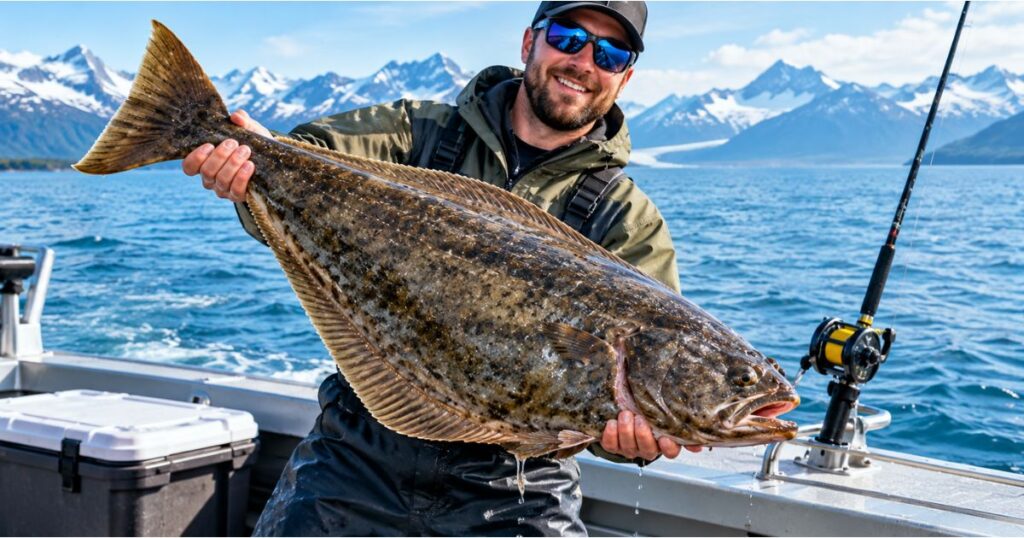
Anglers face a different risk. It isn’t one fillet. It’s been eating one huge fish for months.
Alaska’s toxicologist put it this way: the real worry is someone who catches one large halibut with a lot of mercury and eats it all year.
Simple fixes:
- Mix your freezer: halibut one week, salmon or cod the next.
- Keep the fish’s size in mind. Over 40 pounds carries the higher numbers.
- Check local advisories. If none exist for your area, the advice is to eat only 1 serving a week of locally caught fish.
Is halibut still worth eating?
Yes, for most people. The FDA and EPA call fish part of a healthy eating pattern. The goal is the right fish in the right amounts, not no fish.
Halibut is also nutritious. A 3-ounce baked serving has about 94 calories, 19.1 grams of protein, and 47.1 micrograms of selenium. It’s lean, filling and mild-tasting.
FAQ
Is halibut high in mercury?
No. It’s mid-range. Its 0.241 ppm average is far below swordfish (0.995) but above salmon (0.022). The FDA and EPA list it as a Good Choice.
How much halibut can I eat per week?
If you’re pregnant, breastfeeding, or may become pregnant, the advice is one 4-ounce serving a week. Other adults aren’t the target of that limit, but varying your fish is smart.
Is halibut safe during pregnancy?
Yes, in limited amounts. Eat it cooked, keep it to one serving that week, and skip other Good Choice fish that week.
Which has more mercury, halibut or salmon?
Halibut. Its average is about 11 times higher than fresh or frozen salmon.
Is Pacific halibut lower in mercury than Atlantic?
There isn’t clear public data showing a big gap. The FDA treats them as one fish.
Does cooking remove mercury from halibut?
No. Methylmercury stays in the fish no matter how you cook it.
