

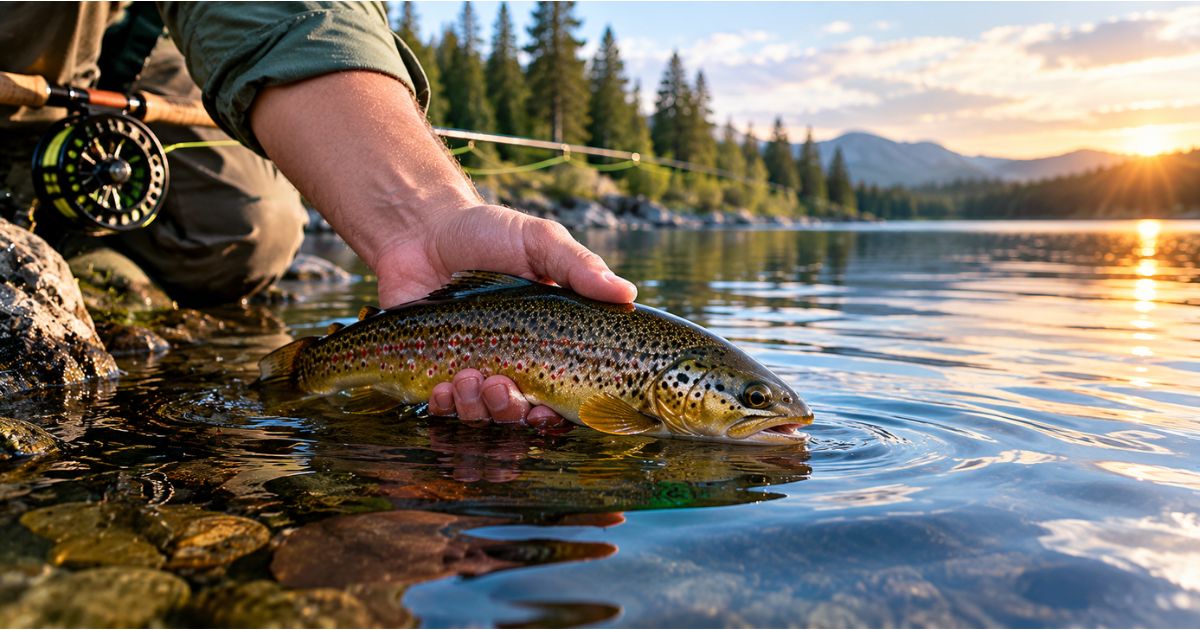
Yes, in most states you need a fishing license for catch and release. Florida’s wildlife agency says it plainly: a license is required to attempt to take fish, and that includes casting a line or catch and release.
Idaho and California officials give the same answer. California’s wildlife agency explains that you need a license to engage in the act of fishing whether or not you keep the fish.
I checked the state agency pages I could verify (Florida, Idaho, California), and I reviewed Texas, Oregon, Pennsylvania, and Indiana for exemption rules. Your state’s rules may differ, so confirm with your state agency before you fish.
Why You Need a License Even If You Release Every Fish
The law counts the attempt, not the keep
Fishing laws don’t ask what you plan to do with the fish. They ask what you’re doing with the hook.
Idaho’s law defines “take” broadly. An Idaho Fish and Game officer cited code language covering any attempt to catch, capture, or take a fish, and a separate rule bars fishing without a license. No fish has to come out of the water for the rule to apply.
Think of it like driving. You don’t need to arrive anywhere for the law to say you need a driver’s license. The act itself is what’s regulated.
Released fish don’t always survive
Releasing a fish is kinder than keeping it. It isn’t risk-free for the fish, and researchers have measured that.
- Across 53 studies, the median release mortality was 11%, the mean was 18%, and the range ran from 0% to 95%. Where the hook lands was the most important factor.
- In freshwater studies, average hooking mortality was about 15.9%, but the median was 7.8%. Most estimates were low, and a few were very high.
- 2026 U.S. Geological Survey dataset on river fish found release mortality from 0 to 73 percent, averaging about 11 percent.
- So the numbers vary a lot by species and method. Even careful anglers sometimes lose fish after release. That’s part of why agencies treat catch and release as fishing.
Where your license money goes
License fees fund fish management. Idaho officials note that law enforcement and resident hatcheries are funded by license dollars. Catch and release anglers use the same waters, so they chip in too.
Who Doesn’t Need a License? The Who-Where-When Test
Here’s an easy way to remember the exceptions. Your license needs are decided by who you are, where you fish, and when you fish. Your intent to release is not one of the three.
Who: age, seniors, disability and military
Age is the biggest exemption, and the cutoff changes by state.
- Texas exempts residents under 17.
- Florida exempts anglers under 16.
- Indiana exempts residents and non-residents under 18.
- Pennsylvania requires a license at age 16 and over.
- Oregon requires one at age 12 or older.
Seniors: Many states have senior exemptions, but the rules differ. For example, Florida exempts resident seniors 65 and older with proof of age or residency, while Indiana exempts residents born before April 1, 1943.
Disability and military: These exemptions are narrow. Indiana exempts residents who are legally blind or have a developmental disability. Florida exempts resident service members home on leave for 30 days or less, with orders. Check your state’s exact wording.
Where: private water, piers and charters
Private ponds: Many states exempt fishing in a truly private pond, but the details matter.
- Indiana exempts private ponds that don’t let fish enter or exit to public waters, with the owner’s permission.
- Florida exempts freshwater fishing in a fully private pond of 20 acres or less with no surface connection to public waters.
- Pennsylvania exempts landowners and families who live on the land year-round, but a pond owned by a homeowners association or private club doesn’t qualify.
Piers and charters: Florida exempts saltwater anglers on a pier with a valid pier license, and on a licensed charter boat. California allows fishing without a state license on public piers and jetties that are open 24 hours a day.
When: free fishing days
Many states offer a few days a year when you can fish license-free. New York’s free days let residents and non-residents 16 and older fish without a freshwater license, and kids under 16 always fish free.
Two warnings:
- Other rules still apply. Size and bag limits don’t go away on free fishing days.
- Some “free” days need a free permit. Connecticut’s free fishing license days require a free one-day license, which you get online up to three weeks ahead .
- Dates change every year, and many states pick days in June. Check your state’s page for next year’s dates.
How the Rules Differ by State: A Five-State Snapshot
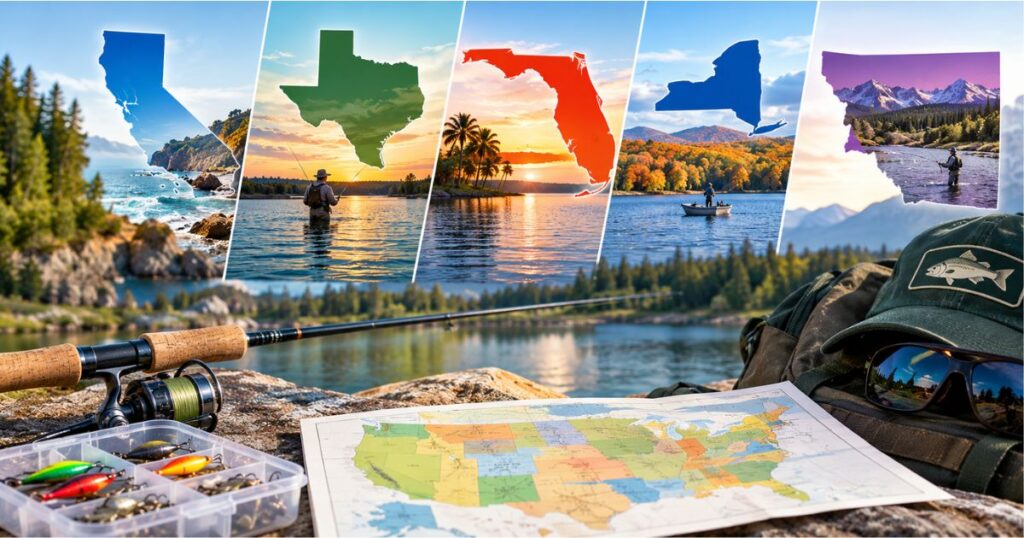
Based on each state agency’s page as reviewed in October 2026. Rules change, so verify before you go.
| State | Age rule | Add-ons to know | Mentions catch and release? |
| Texas | Under 17 exempt | Freshwater or saltwater endorsement | Not on the page reviewed |
| Florida | Under 16 exempt | Separate freshwater and saltwater licenses | Yes, license required |
| Oregon | 12 and older need one | Basic license covers trout and bass | Not on the page reviewed |
| Pennsylvania | 16 and older need one | Trout and Lake Erie permits in some cases | Not on the page reviewed |
| Indiana | Under 18 exempt | Trout/salmon stamp | Not on the page reviewed |
Takeaway: Five states, five different age rules. Never assume the rule from the last state you fished in.
Is a License Enough? Endorsements, Stamps and Permits
Sometimes the license is just the starting point. Many states add a stamp, endorsement, or permit for certain fish or waters, and some apply even if you release everything.
- Texas: Residents need a freshwater or saltwater endorsement to fish or take aquatic life in public waters.
- Indiana: To legally fish for or take trout and salmon, you need a trout/salmon stamp and a valid fishing license.
- Pennsylvania: A trout permit is needed in several cases. Some triggers don’t depend on keeping fish: fishing in waters under special trout regulations, in Class A wild trout waters, or in stocked trout waters from March 1 through May 31.
Practical rule: If you’re targeting trout, salmon, or fishing special waters, check for an add-on before you leave home.
Can You Help Your Kid Fish Without a License?
It depends on your state, and the rules are surprisingly different.
Pennsylvania is generous. An adult can cast or retrieve for a child without a license if the child stays within arm’s reach and is actively fishing. The adult can also bait hooks, net fish, and untangle lines.
Florida is stricter. Anyone who helps in the take, such as baiting hooks, needs a license. Someone who only watches or films, without assisting, doesn’t.
Other states fall in between. Some states require only the child’s license if you’re teaching and not fishing yourself. If you’re the adult helper, ask your state agency before you hold the rod.
Do You Need a License for Catch and Release in Saltwater?
Usually yes, if your state requires a saltwater license. There’s also a federal layer called the National Saltwater Angler Registry (NSAR).
Most anglers don’t need to join it. You’re exempt if you hold a valid saltwater fishing license or permit from a U.S. state or territory. You may also be exempt if you’re fishing in a state that doesn’t require a license for you, such as when you’re under 16 or on a licensed for-hire vessel.
You may need to register if you lack any state saltwater license. Unless you’re exempt, registering with NSAR is the law. Non-exempt anglers must register every year.
Simple way to think about it: a valid state saltwater license usually covers you for both.
What Happens If You Fish Without a License?
Short answer: You can expect a fine, and sometimes more.
I couldn’t find consistent, authoritative fine amounts across states, and amounts vary widely. Here’s what the state pages say:
- Indiana says there are fines and penalties for fishing without a license, a license can be revoked after a conviction for violating fish and wildlife rules, and gear used in a violation can be seized.
The smarter move is to buy the license. A one-day license is cheap. Texas charges $11 for a resident one-day all-water license and $16 for non-residents. Indiana’s one-day license is $10 for residents and $15 for non-residents.
A Conservation Officer’s View: Three Mistakes Anglers Make
1. Assuming “I’m releasing it” is an exemption. It isn’t. Exemptions are about who you are, where you fish, and when, not what you plan to do with the fish.
2. Forgetting the add-ons. The license may be fine, but the trout stamp or endorsement is missing.
3. Not carrying proof. Pennsylvania anglers don’t have to display a license but must produce it, in print or on a device, if an officer asks. Indiana requires an ink-signed or signed electronic copy.
Fishing Out of State or on Border Waters
Your home license generally doesn’t cover other states, and non-residents usually pay more. Indiana’s annual license is $23 for residents and $60 for non-residents.
A few shared waters have special rules:
- Lake Texoma: A Lake Texoma license lets you fish both the Texas and Oklahoma sides of the lake, but it’s valid only there.
- Florida/Georgia waters: Florida lets anglers on the St. Mary’s River and Lake Seminole use a valid Georgia license.
Is there one license that covers all states? No. Each state issues its own. A few have limited arrangements, so check your target water.
Guided trips and tournaments: If you’re paying a guide, check the guide’s license rules. Florida exempts anglers on a licensed for-hire vessel. Tournament entry doesn’t change your license requirement, so confirm with the organizer.
National Parks, Federal Lands and Tribal Waters
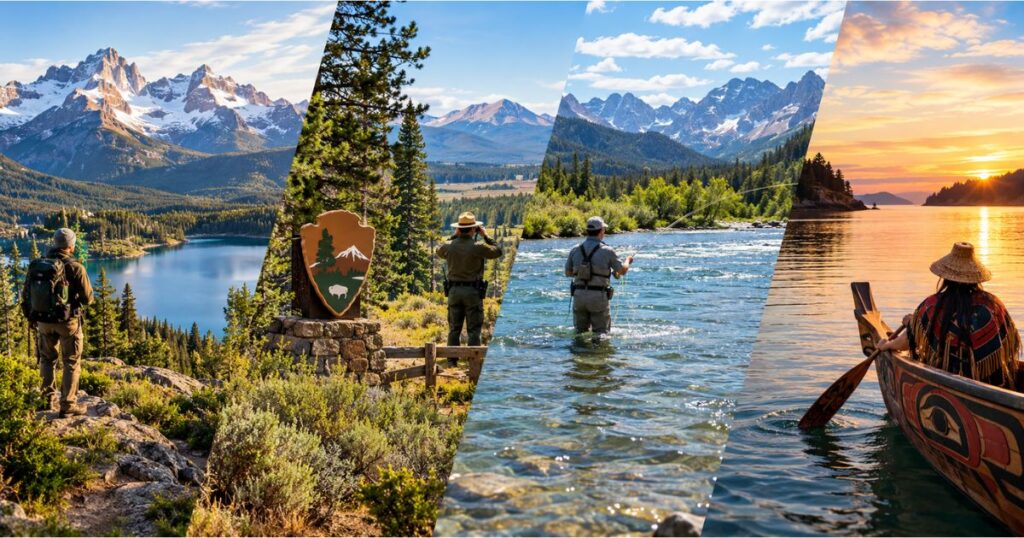
Rules change park by park. Many national parks follow state licensing. For example, Golden Gate National Recreation Area follows California’s license rules, and Canaveral National Seashore follows Florida’s. Others use their own permit. One travel article says Yellowstone requires a park permit instead of a state license.
Tribal waters and other federal lands often have their own rules. Always check the park, tribe, or land manager’s official page before you go.
How to Buy and Carry Your License
- Find your state agency’s official site. Search the agency name, not “fishing license,” to avoid look-alike sites.
- Choose the right type. Pick resident or non-resident, then annual or short-term. Oregon offers one-day and three-day licenses, which suit first-timers.
- Add any stamp or endorsement you need for trout, salmon, or special waters.
- Buy online or in person. Online purchases carry added fees. Retailers, bait shops, and agency offices also sell licenses.
- Carry proof. A saved digital copy on your phone works in many states, but confirms your state’s rule.
FAQ
Do you need a fishing license if you release every fish?
In most states, yes. Laws count the attempt to catch fish, not just keeping them. Florida, Idaho, and California officials say so directly. Check your state’s rules.
Can you fish without a license if you throw the fish back?
Generally no. Throwing fish back isn’t an exemption. You’d need to qualify through age, location, or a free fishing day.
Do you need a fishing license on private property?
Sometimes not. Fully private ponds are often exempt, but the details vary. In Pennsylvania, a pond owned by a homeowners association doesn’t qualify.
What age do you need a fishing license?
It depends on the state. In the five states I reviewed, the age ranges from 12 (Oregon) to under 18 exempt (Indiana). Check your state agency.
What happens if you fish without a license?
You may face a fine, and in some states license revocation or gear seizure. Fine amounts vary by state, so check your agency’s page.
Is there a free fishing day?
Many states offer a few each year, often in June. Other rules still apply, and some need a free permit.
Is there a fishing license that covers all states?
No. Each state issues its own. A few shared waters have special arrangements.
