

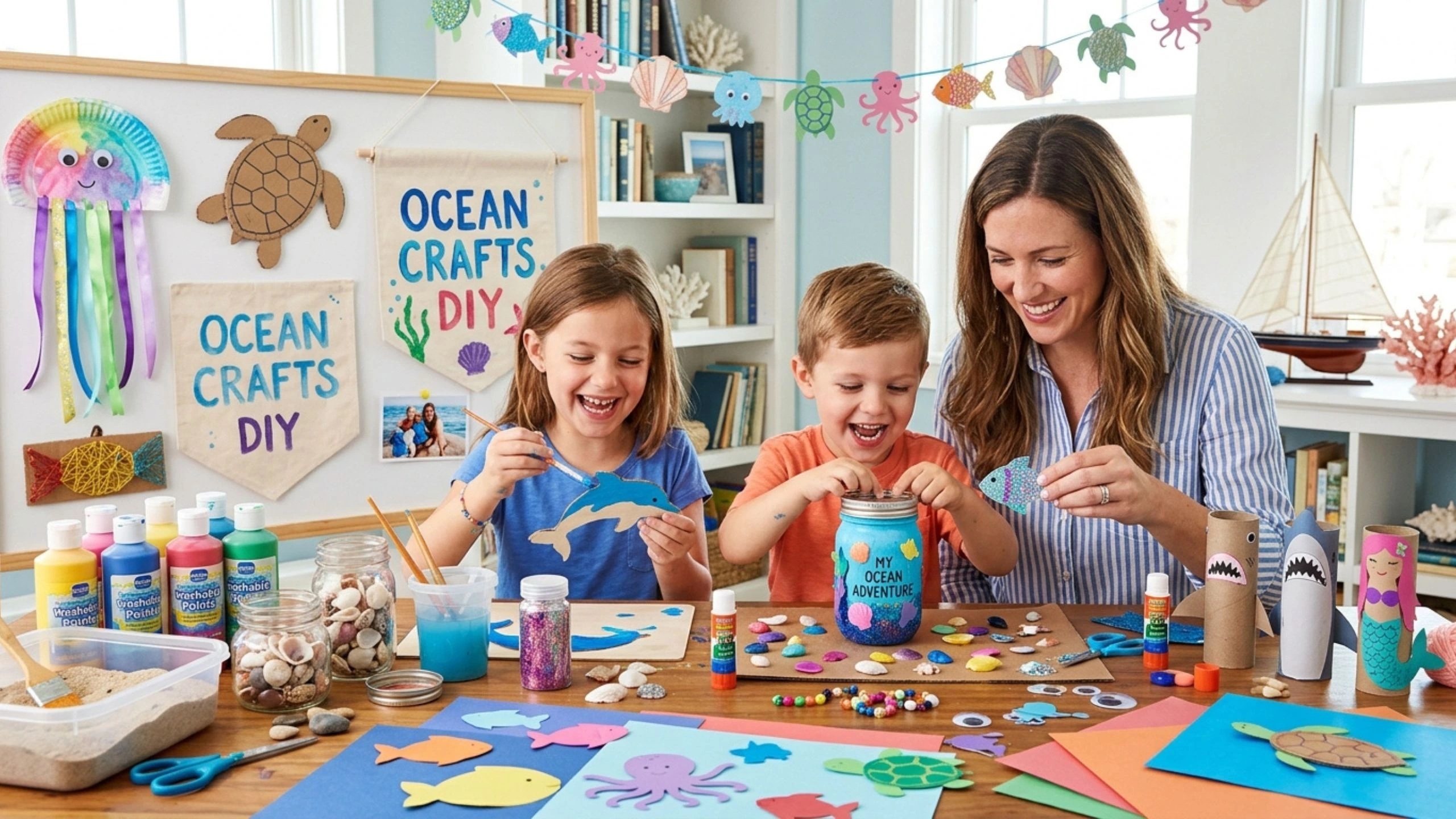
Ocean themed crafts are DIY art projects inspired by marine life, beaches, coral reefs, underwater habitats, and ocean conservation. For a family activity, start with a simple paper-plate fish or jellyfish; older children can move on to recycled aquariums, ocean dioramas, and conservation-themed art.
Which Ocean Craft Should You Make?
Choose your project based on your child’s age, available supplies, time, and how much cleanup you want afterward.
| Craft | Suggested Age | Time | Difficulty | Mess Level |
| Paper Plate Fish | 3+ | 15–20 min | Easy | Low |
| Paper Plate Jellyfish | 3+ | 20 min | Easy | Low |
| Cardboard Tube Octopus | 4+ | 20–30 min | Easy | Medium |
| Egg Carton Whale | 4+ | 20–30 min | Easy | Medium |
| Rock Fish | 4+ | 20–30 min | Easy | Medium |
| Ocean Suncatcher | 4+ | 20–30 min | Easy | Medium |
| Coral Reef Collage | 5+ | 30–45 min | Easy | Medium |
| Recycled Aquarium | 5+ | 30–60 min | Medium | Medium |
| Ocean Diorama | 6+ | 45–60+ min | Medium | Medium |
| Ocean-Zone Art | 7+ | 45–60 min | Medium | Low |
Age and time suggestions are practical planning estimates, not universal developmental standards. Always adapt tools and materials to the individual child.
If you’re working with younger children, choose projects with fewer cutting steps and larger materials. For older kids, add research, writing, 3D construction, or an environmental message.
20+ Ocean Themed Crafts for Kids and Families
1. Paper Plate Fish
A paper plate can become a colorful fish with very little preparation.
Materials
- Paper plate
- Paint or crayons
- Scissors
- Glue
- Construction paper
- Googly eyes, optional
How to Make It
- Cut a small triangle from one side of the plate.
- Turn the triangle around to make a tail.
- Glue the tail to the opposite side.
- Paint or color the fish.
- Add fins, eyes, scales, and patterns.
Let your child invent the fish’s colors rather than copying a real species. This turns a basic craft into an exercise in creativity and decision-making.
Easy variation: Make several fish and create a paper ocean scene.
2. Paper Plate Jellyfish
Jellyfish are another easy choice for younger children.
Materials
- Paper plate
- Paint
- Yarn, ribbon, or paper strips
- Glue
- Googly eyes or markers
Steps
- Cut the paper plate in half.
- Paint the rounded portion.
- Add eyes and a face if desired.
- Glue several strips underneath for tentacles.
- Hang the finished jellyfish or add it to an underwater mural.
For younger children, an adult can handle the cutting while the child focuses on painting and decorating.
3. Cardboard Tube Octopus
Save an empty cardboard tube and turn it into an octopus.
Materials
- Clean cardboard tube
- Paint
- Scissors
- Glue
- Paper or markers
- Googly eyes
Steps
- Paint the tube.
- Allow it to dry.
- Cut several strips upward from one end.
- Curl the strips outward to create tentacles.
- Add eyes and decorations.
You can use different colors to create an entire family of imaginary octopuses.
4. Egg Carton Whale
An empty egg carton can become a small whale with a little paint and cardboard.
Materials
- Clean egg carton
- Blue, gray, or other paint
- Cardboard scraps
- Glue
- Marker
- Scissors
Steps
- Cut an appropriate section from the carton.
- Paint it.
- Cut fins and a tail from cardboard.
- Attach the pieces.
- Add eyes and a water spout.
This is also a good opportunity to talk about reusing materials instead of throwing them away. Recycled-material ocean crafts are already used in ocean education and craft resources, including NOAA’s marine-debris activities.
5. Paper Sea Turtle
Make a simple turtle using construction paper.
Materials
- Green construction paper
- Brown or yellow paper
- Scissors
- Glue
- Marker
Steps
- Cut a large oval shell.
- Add four flippers.
- Add a small head and tail.
- Decorate the shell with patterns.
- Glue everything together.
Learning idea: Ask your child what makes a turtle different from a fish.
6. Ocean in a Bottle
Create a simple miniature ocean scene using a clear bottle or container.
Materials
- Clear container with a secure lid
- Water
- Blue coloring, if appropriate for your materials
- Small ocean-themed decorations
- Optional glitter or floating items
An adult should handle containers that require cutting or any step involving tools.
Instead of treating the bottle as a scientific model, use it as a visual craft and conversation starter about water, floating objects, marine life, and ocean habitats.
7. Coral Reef Collage
Create a colorful coral reef from scraps of paper.
Materials
- Blue paper
- Construction paper
- Tissue paper
- Glue
- Scissors
- Markers
Cut or tear colorful pieces to represent coral, seaweed, fish, and other marine life.
NOAA provides educational resources about corals, marine life, and ocean science, making a coral-reef craft a useful starting point for an age-appropriate ocean lesson.
8. Salt-Watercolor Ocean Art
Create textured ocean artwork with watercolor paint and salt.
Materials
- Thick paper
- Watercolors
- Paintbrush
- Water
- Table salt
Steps
- Paint a wet area with blue and green watercolors.
- Sprinkle a small amount of salt onto the wet paint.
- Let it dry completely.
- Brush away the remaining salt.
- Add fish, bubbles, seaweed, or other details.
Always protect your work surface because wet watercolor can spread beyond the paper.
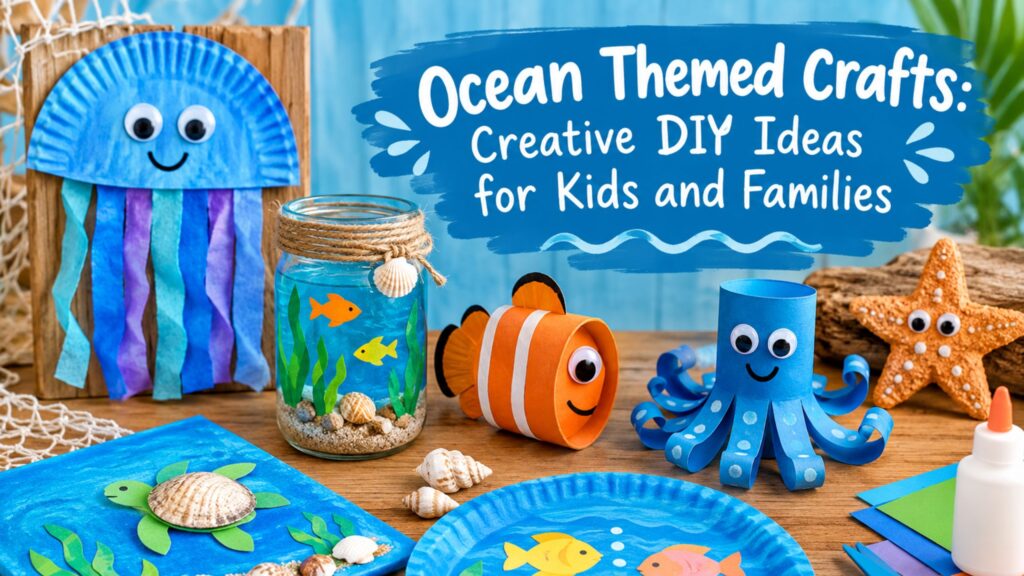
9. Rock Fish
Smooth rocks can become colorful fish.
Materials
- Clean, dry rocks
- Acrylic or craft paint
- Paintbrushes
- Markers or other decorating materials
Paint each rock like a different fish.
You can make a whole school of fish and arrange them on a shelf, in a garden display, or as part of an ocean-themed play scene.
10. Ocean Suncatcher
Create an ocean-inspired decoration for a window.
Materials
- Clear contact paper or another suitable transparent craft material
- Tissue paper
- Construction paper
- Scissors
- String
Arrange blue, green, turquoise, and other colors to create an underwater scene.
Add silhouettes of fish, turtles, jellyfish, or coral.
11. Paper Bag Shark
A paper lunch bag can become a shark puppet.
Materials
- Paper bag
- Gray, blue, or white paper
- Glue
- Scissors
- Marker
Add teeth, eyes, fins, and a tail.
Once finished, use the shark for a marine-life storytelling game. Your child can invent a story about where the shark lives, what it sees, and which animals share its habitat.
12. Cupcake-Liner Fish
Cupcake liners make an easy base for colorful fish.
Flatten a liner and decorate it with:
- Paper fins
- Googly eyes
- Markers
- Stickers
- Small paper shapes
Glue several fish onto blue construction paper to create a simple ocean mural.
13. Tissue-Paper Ocean
Give children blue paper and tissue paper and let them create an underwater scene.
Use:
- Blue tissue paper for water
- Green strips for seaweed
- Bright colors for coral
- Paper shapes for fish
- White pieces for bubbles
This is especially useful when you want a low-cost group activity.
14. Seahorse Craft
Draw or print a simple seahorse outline and let children decorate it.
Use:
- Crayons
- Markers
- Tissue paper
- Paint
- Paper scraps
- Stickers
For older children, add a short fact card beside the finished seahorse.
15. Stingray Craft
Cut a broad diamond or wing shape from cardboard or construction paper.
Add:
- Eyes
- A tail
- Decorative patterns
For an eco-friendly version, reuse a clean cereal box.
16. Ocean Puppet
Create simple ocean-animal puppets from paper bags, craft sticks, or cardboard.
Possible characters include:
- Shark
- Whale
- Dolphin
- Octopus
- Turtle
- Crab
- Fish
After crafting, put on a short underwater puppet show.
This adds imaginative play to the craft instead of making the finished item purely decorative.
17. Seashell Art
If you have clean, legally obtained shells suitable for crafting, use them to create ocean pictures.
You can make:
- Fish
- Turtle shells
- Underwater scenes
- Frames
- Ocean creatures
Avoid collecting living marine animals or disturbing wildlife. For a simpler option, use paper or store-bought craft shells.
18. Ocean Mobile
Create a hanging mobile using paper ocean animals.
Make fish, whales, jellyfish, turtles, and stars from lightweight paper or cardstock.
Attach them to string and hang them from a safe location.
For younger children, adults should handle the hanging and any cutting that is not age appropriate.
19. Recycled Ocean Aquarium
Turn a clean cereal box or similar cardboard box into an underwater aquarium.
Add
- Paper fish
- Coral
- Seaweed
- Jellyfish
- Sand-colored paper
- Blue background paper
Older children can research a few real animals and include their names beside their paper versions.
20. Ocean Diorama
A diorama is one of the best options for older children because it combines art, construction, research, and storytelling.
Materials
- Cardboard box
- Blue paper
- Cardboard
- Glue
- Scissors
- Paint
- Paper scraps
Build It
- Cover the inside with an ocean-colored background.
- Create the seafloor.
- Add coral and seaweed.
- Make ocean animals.
- Arrange the animals at different positions.
- Add labels if you’re using the project for school.
For an educational extension, ask your child to explain why different animals might live in different parts of the ocean.
What Ocean Crafts Are Best for Toddlers and Preschoolers?
For toddlers and preschoolers, the best ocean crafts are usually simple, sensory, and open-ended. Projects should allow children to paint, stick, tear, stamp, or arrange materials without requiring complicated construction.
Good choices include:
- Paper plate fish
- Sponge-painted ocean scenes
- Simple jellyfish
- Tissue-paper ocean collages
- Large paper sea animals
- Easy handprint ocean art
Best Low-Prep Crafts for Toddlers
Keep the setup simple.
Give your child a large sheet of blue paper, washable art materials, and a few large paper shapes. Let them create an imaginary ocean without worrying about whether it looks realistic.
The goal is exploration and creativity, not perfect results.
Best Cutting and Gluing Crafts for Preschoolers
Preschoolers who are ready for age-appropriate scissors can try:
- Fish
- Jellyfish
- Turtles
- Octopuses
- Coral reefs
- Paper plate animals
Adults should supervise scissors, glue, small pieces, and any other materials that could create a safety issue.
What Can Older Kids Make With an Ocean Theme?
Older children can move beyond flat paper crafts and create projects that involve building, research, explanation, and problem-solving.
Try:
- Ocean dioramas
- 3D aquariums
- Coral reef models
- Ocean-zone artwork
- Recycled-material sculptures
- Marine-life puppets
- Ocean pollution posters
- Ocean habitat models
3D Ocean Dioramas
Ask children to choose a particular setting instead of simply making a generic blue ocean.
For example:
- Coral reef
- Rocky shore
- Deep ocean
- Sandy seafloor
- Kelp forest
Then have them research a few animals associated with that environment.
Coral Reef Art
Use bright colors to represent coral and marine life.
The craft can lead into a larger discussion about ocean habitats and why marine ecosystems matter. NOAA offers ocean education resources covering corals, marine life, coastal environments, and conservation.
Recycled Ocean Scenes
Challenge older kids to build an underwater scene using only materials that would otherwise be discarded.
This adds a sustainability challenge to the art project.
How Can You Make Ocean Crafts More Educational?
An ocean craft becomes much more valuable when you connect it to a simple question.
Instead of only asking:
“What are you making?”
ask:
- Where does this animal live?
- What does it eat?
- How does it move?
- What does its habitat look like?
- What could harm its habitat?
- How can people help protect the ocean?
NOAA’s education programs use hands-on activities, visual art, science resources, and conservation projects to help children connect with ocean and environmental topics.
Turn a Fish Craft Into a Marine Biology Lesson
After making a fish, choose one real species and research:
- Habitat
- Diet
- Body features
- Predators
- Movement
- Interesting adaptations
The child can then add three facts to the artwork.
Add Ocean Habitat Questions
A coral reef craft can become a habitat lesson.
Ask:
What animals might live here?
Where would they find food?
What happens if the habitat changes?
These simple questions encourage children to think beyond the craft itself.
Teach About Pollution and Conservation
A recycled-material ocean craft is a natural opportunity to discuss marine debris.
NOAA provides kid and family resources specifically focused on marine debris, recycled-material crafts, and ocean stewardship.
For younger children, keep the message simple:
Trash that reaches waterways can become a problem for ocean environments and wildlife.
For older children, turn the craft into a conservation poster or marine-debris project.
How Can You Make Ocean Crafts With Recycled Materials?
You don’t need new craft supplies for every project.
Look around your home for clean materials such as:
- Cereal boxes
- Cardboard tubes
- Egg cartons
- Paper bags
- Paper scraps
- Cardboard packaging
- Bottle caps
- Clean containers
- Old magazines
Reusing everyday materials is already a common approach in marine-debris education. NOAA’s craft resources include recycled-material activities, marine-debris art, cardboard-roll projects, egg-carton ecosystems, and other upcycling projects.
Easy Recycled-Material Ideas
Cereal box → stingray or aquarium
Egg carton → whale or reef scene
Cardboard tube → octopus
Paper bag → shark puppet
Bottle caps → fish scales or coral details
Cardboard scraps → fins, tails, seaweed, and coral
When using recycled containers, clean them first and avoid sharp edges.
Ocean Crafts by Material
Sometimes the easiest way to choose a project is to start with what you already have.
| If You Have… | Try… |
| Paper plates | Fish, jellyfish, ocean scenes |
| Construction paper | Fish, turtles, coral, seaweed |
| Cardboard | Sharks, whales, stingrays |
| Egg cartons | Whales, reef scenes |
| Cardboard tubes | Octopuses, fish |
| Tissue paper | Coral reefs, ocean collages |
| Rocks | Rock fish |
| Paint | Ocean landscapes |
| Paper bags | Shark or sea-animal puppets |
| Cereal boxes | Aquariums and dioramas |
This approach makes crafting easier because you don’t have to shop for a specific project before starting.
Ocean Crafts for Families, Classrooms and Summer
Family Craft Night
Set out a collection of materials and let every family member choose a sea animal.
At the end, combine all the finished animals into one large family ocean mural.
This works especially well because every person can contribute at a different skill level.
Preschool Ocean Unit
Choose several simple projects across the week:
- Fish painting
- Jellyfish
- Turtle collage
- Ocean sensory activity
- Coral reef mural
Keep the educational questions short and age appropriate.
Elementary Classroom
Older students can work in groups to build a large underwater ecosystem.
Assign different groups:
- Fish
- Coral
- Seaweed
- Sharks
- Marine mammals
- Seafloor
Then combine everything into one classroom display.
NOAA’s education resources include classroom-ready ocean activities and materials organized for different student audiences, including elementary-age resources.
Summer Camp
Choose crafts that can be completed within one session.
Good options include:
- Rock fish
- Paper plate fish
- Ocean puppets
- Jellyfish
- Recycled aquariums
Shark Week
Build a shark-themed activity around:
- Shark puppets
- Shark silhouettes
- Shark fact cards
- Ocean habitat art
- Shark storytelling
The craft can become a starting point for learning rather than the entire activity.
World Ocean Day
World Ocean Day can provide a natural theme for ocean art and conservation activities.
A particularly useful approach is to pair an ocean craft with one action children can take to care for their environment.
Ocean Craft Safety and Cleanup Tips
Ocean crafts are generally low risk, but the materials matter.
Keep these points in mind:
- Supervise children when using scissors.
- Use age-appropriate tools.
- Watch small craft pieces around young children.
- Keep paint and glue away from eyes and mouths.
- Adults should handle cutting plastic bottles or other difficult materials.
- Clean and dry recycled containers before using them.
- Protect tables before painting or gluing.
- Wash hands after messy activities.
- Never use a craft activity as a reason to disturb living marine animals or wildlife.
For very young children, choose larger materials and activities that do not depend on tiny decorative pieces.
Original Expert Insight: The OCEAN Test
With hundreds of possible craft ideas, choosing the right one can be harder than making it.
Use the OCEAN Test before starting a project.
O Ordinary Materials
Can you make it with supplies you already have?
A project that requires a long shopping list may not be the best choice for a spontaneous family activity.
C Child-Appropriate
Does the project fit the child’s current abilities?
A complicated cutting project may frustrate a toddler but be perfect for an elementary student.
E Educational Hook
What can the child learn?
Even one simple question about a fish, turtle, coral reef, or ocean habitat can turn art time into learning time.
A Active Creativity
Does the child get to make choices?
Let children choose colors, shapes, characters, habitats, and stories rather than making every project look identical.
N No Unnecessary Complexity
Can you explain the project without a ten-minute setup?
The best family crafts often have a short path from “Let’s make something” to “Look what we made!”
This framework helps you choose an activity based on the child’s experience rather than simply choosing the craft with the most impressive finished picture.
Conclusion
Ocean themed crafts don’t have to be complicated to be meaningful. Start with the child’s age, the supplies you already have, and the amount of time available. A simple paper fish can become an art project, a recycled aquarium can become a sustainability lesson, and an ocean diorama can become a research activity. The goal is not perfect crafting it is giving kids a fun way to create, explore, imagine, and learn about the ocean.
FAQs
What are some easy ocean crafts for kids?
Easy options include paper plate fish, jellyfish, paper turtles, cardboard-tube octopuses, rock fish, and tissue-paper ocean collages. Choose the project based on the child’s age, available materials, and whether you want a quick activity or a longer building project.
What are good ocean crafts for preschoolers?
Preschoolers can try paper plate fish, jellyfish, turtles, tissue-paper oceans, simple coral collages, and other projects involving painting, gluing, tearing, and age-appropriate cutting. Adult supervision is important whenever scissors, small pieces, or other potentially unsuitable materials are involved.
What can kids make from recycled materials?
Kids can turn clean cardboard boxes into aquariums, cereal boxes into sea creatures, egg cartons into whales or reef scenes, cardboard tubes into octopuses, and paper bags into animal puppets. Recycled-material crafts can also introduce the idea of reducing waste and caring for ocean environments. NOAA provides marine-debris education and recycled-craft resources for children and families.
How do ocean crafts help children learn?
Ocean crafts can connect art with marine life, habitats, creativity, fine-motor practice, storytelling, and environmental awareness. The educational value increases when you add questions about the animal or habitat being represented instead of focusing only on the finished craft.
What ocean crafts can families make together?
Families can create a large coral reef mural, recycled aquarium, ocean diorama, ocean-animal puppet show, or collaborative underwater scene. These projects work well because younger children can decorate while older children handle more complicated construction or research.
What are good ocean crafts for classrooms?
Classrooms can use paper plate fish, coral reef collages, recycled-material aquariums, ocean murals, marine-animal puppets, and ocean-zone projects. For older students, an art project can be paired with research about habitats, marine debris, or conservation. NOAA provides classroom and student resources designed to support ocean literacy and stewardship.
